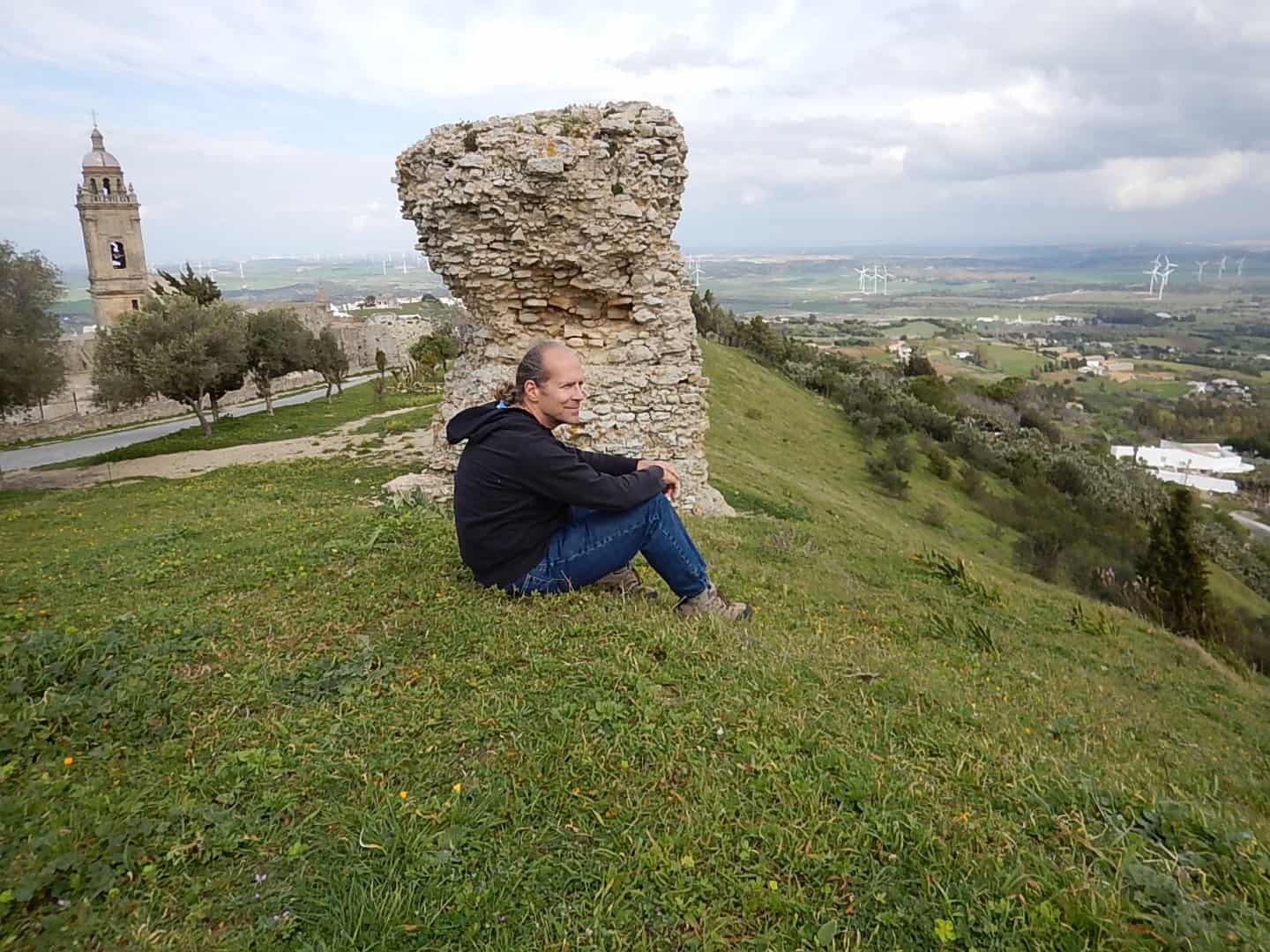
Fast Personal Growth Through Slow Travel


As I’m writing this post (four weeks before you’re reading it) we’ve been in Spain for over a month. Here are a few facts about our trip:

  • My spouse and I are financially independent. I’ve been retired for 13 years, and I’m now 54 years old.
  • We’re empty-nesters again (for the first time in over 22 years).
  • In 1983-85, my spouse was stationed in Rota at the U.S. Navy’s weather center.
  • Our daughter is stationed on a U.S. Navy ship in Rota until May 2016, doing her job and getting qualified. (We already knew she’d have limited liberty during our visit.) She’s working 12-hour days and standing duty every six days, including weekends.
  • Spain limits foreign visitors (without a visa) to 90 days.
  • The last time I was away from home this long was a 1991 submarine deployment.
Image of the coastline and cathedral of Cadiz, Spain | The-Military-Guide.com

Cadiz’s cathedral and coastline.

Given those facts, I was simply looking forward to a few months of quality family time. We’d “get away” from our Oahu routine and chores. We’d revisit the Rota naval base and the surrounding area to see what’s changed in the last 30 years. We’d help our daughter settle in to her rental home. Perhaps we’d take a few trips around Spain together.

The last thing I expected from this trip is a burst of personal growth. Some of my friends might feel that mine peaked in the 1990s, and yet this trip has shown otherwise. I’m still learning that I can re-write my personal rulebook.

I’m gettin’ pretty good at financial independence and retirement, but I can still do more with those skills. First is the epiphany that I should do more of these slow-travel trips. (All together now, “Well, duh.”) More travel might even lead to still more personal growth.

But it’s not just about travel. Let me share a couple of thousand words with other nuggets of knowledge.

Parenting (or not)

I used to fantasize that when our daughter left home for college, we parents would shift from mere domestic authority figures to higher lifelong roles like “coach” or “mentor”. Our parenting days would gradually come to an end during the college years and we’d move on to an adult relationship. Of course you other empty-nester parents are now laughing and shaking your heads, but I bet that you guys had the same illusions when your teens finished high school.

The reality is that parenting is a lifetime sentence with no parole for good behavior. Whether you know it or not you’re always going to be your progeny’s role model, a touchstone, and the human they can turn to as a last resort. You’ve terminally infected your adult offspring with a pop-up video in their head, and it’s a highlights reel of your best and worst behavior.

You love these people for the way they are, not for the way you want them to be. While you may feel ready to change your relationship with your young adult, they may not see any reason to change it. You can behave any way you want, but your coaching & mentoring only happens when someone asks you for coaching & mentoring.

Another reality is that you won’t spend as much time with your young adult as you may have thought. (Intellectually, I knew this. Now I’ve verified it.) That’s the way it should be. They’re busy creating their own lives and they know where to find you when (“if”?) they need you. They’re also busy building their own team, and that includes their own coaches. You’re not going to get those regular phone calls or texts that you used to get during the school years. You might not make the cut for their new team, but you can always be the mascot cheering from the sidelines.

These are all very good signs that you’ve created an independent adult capable of making their own decisions. The pop-up video in their head tells them when to consult you.

From a military perspective, you have trained your relief. They’ve taken the watch, and they’ll call you if they have a question, but you are no longer in the duty section.

Most importantly, it’s not about you. It’s about them and their own lives. When you were their age, it’s just the way you wanted things to be.

So where does this leave us parents? I’ve never understood empty-nester syndrome before, but now I can appreciate the temptation. When your young adults leave the nest, then once again your role is ending. You have to move toward something new instead of being “just” a parent (and, for many of us, a supreme authority figure). It’s the same as leaving the military or a bridge career and realizing that you’ll need a new identity– and a new set of interests. You can reminisce in the nostalgia, but don’t wallow in the self-pity. Mourn a little for the old version of you, and then set the empty-nester syndrome aside. You have a whole new life ahead of you.

“What day is this?”

When you’re in school or at work, you’re all too oriented to date & time. We joke about “Hump Day” and “TGIF” and “Sunday-night Syndrome”, but it’s just part of our ingrained cultural weekly shared misery routine.

You might have dealt with the “fog of work”, but now it becomes the “routine of retirement”. At first, your kids will keep you tied to the school week, but when they move out then you’ll have trouble remembering whether it’s Wednesday or Thursday. You’ll forget that it’s a weekend until you make the mistake of going to Home Depot on a Saturday morning.

You’ll eventually develop a new weekly calendar in your head: Tuesday is trash day. Friday is green waste day (or is it recycle?!?) and on Saturday your neighbors are all running their yardwork power tools. (There’s no U.S. mail on Sundays.) You might add your own structure, like shaving your face on Monday & Thursday or going surfing every Tuesday & Friday.

When you travel, you lose that self-imposed structure! You’re in a new environment with new cues and few routines. You might adopt your host’s schedule when you’re visiting family or friends, but what if you’re renting an apartment? If you travel slowly then you eventually develop your own routine. Maybe you subscribe to a daily newspaper or you check off the days with a calendar. You still don’t have to wear a watch, but your cell phone displays the day and date as well as the time.

I enjoy the temporary dislocation– it’s a chance to impose a new order on our travel chaos. My spouse and I can rebuild our new routines all over again, and redesign the type of life we’d like to live. Early morning walks or pre-dinner ones? Both? Afternoons by the pool or indoors? Lunches out and dinners in, or only go out on weeknights? Stay up late and sleep in, or early to bed for early to rise?

Your new body

Slow travel is also a fantastic opportunity for new habits. When you were working, you probably spent most of your vacation doing the things you couldn’t really do during the workweek. You used to let loose and live a little! Unfortunately, by the time you caught up on sleep (or hangovers), the vacation was over… and it was time to go back to work.

Now on travel when you’re living in a new place for weeks, you can build your new life. You’re eating new foods and trying new activities, so why not have fun with your health too? At home, it’s really hard to give up your favorite snack, but when you’re traveling then you just stop buying that food. Now you can eat exotic fruits & veggies along with indulgent desserts and adult beverages. At home, you might be “too busy” for exercise (no excuses!) but during extended travel you’ll want to work out. You’ll try different activities (and get better at them) and you’ll want to surf a new break. It’s easy to explore your destination when you know that you can relax for as many recovery days as you want.

I had a surprising experience last week– my body began to adapt to winter weather. I’ve lived in Hawaii for over 25 years and I’ve lost almost all of my resistance to cold, but it apparently returns pretty quickly. (Thank goodness.) When we first arrived in Andalusia we were shivering in the 40-degree temperatures with long pants, heavy socks, and hoodies. We sucked down gallons of hot beverages. We went outdoors with heavy coats, gloves, and hats. At night we shivered under thick blankets.

After three weeks, though, we no longer felt as cold. The thermometer had the same numbers but we felt warmer. My fingers are no longer chilled, and I can unzip my hoodie. I don’t need a hat outdoors anymore, and most of the time I can go without gloves.

Your new brain

During slow travel, the most important exercises and changes are happening in your head. You’re out of your rut and exploring new paths. You’re absorbing new sights and new cultures. You’re having new experiences and seeing a new world!

The change could be as basic as a different city (or island) in your state, or it could be a foreign country. Familiar food tastes different or you might eat an entirely new cuisine. You not only hear different accents but new languages. You might have to express yourself in those languages, too, even if it’s just a few dozen words of pidgin. Before my next trip, I should spend more time with language programs or even hire a tutor for a few hours a week. I took years of French in high school and college, and those skills are still (mostly) there. My Spanglish is improving. Andalusian accents are very challenging– it’s like learning English from watching Monty Python movies and then living in Texas.

Another interesting experience is enjoying a low-information diet. At home, every morning I checked a half-dozen websites for news and local events. On travel, however, I’ve only been reading Hawaii headlines and an occasional article. I haven’t even tried to keep up with Spain’s news, let alone global events. I can use my browser’s bookmarks whenever I want to, but I haven’t been interested.

The gear

I’ve been pleasantly surprised by how little trouble we’ve had during this trip.

It took considerable thought to pack for 90 days, especially vitamins and contact lenses and medications. (Fortunately, everyone has stayed healthy.) We also packed for two seasons but as usual, we brought too many clothes for “just in case”.

Managing finances on travel has been surprisingly easy: I’m doing less than ever before. I’ve put everything on automatic bill pay. I’ve (over)paid our 2014 tax bill and applied for a filing extension. Instead of entering every financial transaction into Quicken and breaking them down by categories, I’m just going to total our ATM receipts and credit-card bills as “Travel”. With Space A flights and our daughter’s free lodging, this has been an incredibly cheap trip.

Currencies and payments have been no problem. My USAA chip&PIN Mastercard is happily accepted everywhere (with a currency conversion fee) and my Chase United Mileage Plus Explorer Visa is also good everywhere (with no conversion fees). The only no-fee ATM cards seem to be Capital One 360 (but they have no coverage in Andalusia) or a Schwab brokerage ATM card. (There are reimbursed ATM cards for active-duty military, but not for veterans.) I’ve made one trip to the Rota naval base Navy Federal Credit Union ATM and bought some more euros from my daughter, but the vast majority of this trip has used credit cards. We only spend cash for taxis and the occasional restaurant.

Postal mail has become more challenging. The USPS website only accepts a 30-day hold, but our mail carrier agreed to take care of us for 90 days. On our next extended trip I’ll use a service to collect, open, scan, and e-mail our mail. Or maybe I should just rent a P.O. box for a few months. However, my spouse and I get very little mail (thanks to e-mail and Facebook) and our daughter finally has her new mailing address.

We’ve never been smartphone owners, and that needs to change. When we left America I shut off my LG Verizon (CDMA) clamshell cell phone and I’ve been using a Spanish Digimobil Samsung GSM clamshell. (The CDMA phone’s answering message tells callers to send us e-mail, and I check its voicemail a couple of times a month.) After watching our daughter navigate Andalusia’s twisty roads and alleys with Google Maps on her iPhone (both driving and walking), I can see that my spouse and I should join the smartphone club. We’ll eventually buy an unlocked model (Craigslist?) with pay-as-you-go service (through T-Mobile but mostly WiFi). When we’re on travel, we’ll upgrade to monthly service. The Google Translate app is also essential for viewing signs or documents through the phone’s camera to learn the obscure foreign vocabulary.

I miss my peppy desktop PC and my 23″ monitor. I’ve traveled with an iPad2 since 2012, and it’s a great lightweight tool for consuming info. My spouse enjoys using her iPad3 for TV & movie websites. However, the iPad is not so great for producing content, and when I switch apps or open new browser tabs then I spend a significant amount of time waiting for the screen to refresh. (Formatting blog posts and editing images is painful, and the WordPress iPad app is worse than using the WP site on Chrome or Safari. Notice how this post has few links and even fewer images?) The good news is that an iPad is a fantastic lightweight tool for distraction-free writing because you can’t hop among apps like a hypercaffeinated bunny. I’m writing well– as long as I don’t need to do a lot of formatting or publishing.

Speaking of writing, my head is expanding with new ideas. I’m working on the next book, and when I get back home then I can rearrange the outline (using Scrivener) to figure out the rest of the first draft. I have a couple of new financial projects to tackle from home, and I’ll eventually write more blog posts about that. I’ll also have to look for another tablet (or even a full-blown notebook) that has the lightweight versatility of an iPad.

Future travel

Is this a new expat chapter in our lives, when we’re perpetually applying for visas and seeking house sitters?

It’s tempting, and we’ll do the research. We’re enjoying ourselves, but I won’t surf my favorite break until mid-April. (I plan to surf Cadiz this month, but it ain’t Hawaii.) There’s plenty to do on Oahu, and we haven’t even visited Molokai or Lanai yet. We can leave home anytime and go anywhere we want, yet there’s a lot to be said for a comfortable routine and tending home & yard. I also don’t want to rush about the world with a short-timer’s attitude. If we’re not living in a new place for at least a month then we’re moving too fast.

Today, we know that we’re coming back to Spain in late September for more slow travel. We’ll visit our daughter wherever she’s stationed over the next few years, especially if she’s in Japan. We’d like to do Bangkok and Chiang Mai again. Maybe I need to take my growing Spanglish skills to warm-water Latin American surfing spots.

We’ll try this a year at a time, and we’ll redesign our lives every few years!

(And yes, my daughter reads this blog. Sometimes she even agrees with me!)

Related articles:
Lifestyles in Early Retirement: Long-Term Travel
Lifestyles in Early Retirement: Hawaii Long-Term Travel
Book Review: Energize Your Retirement
The Frugal Effect

Posted in Travel | 10 Comments

Lifestyles In Retirement: 90 Days In Spain


We’ve been enjoying life in Andalusia for the last six weeks.

My spouse and I have been financially independent for nearly 15 years and now we’re in our early 50s. When I retired from the military in 2002, our daughter was nine years old and we spent much of the next decade on parenting. We enjoyed the usual family activities and vacations around the public school calendar, but our longest trip in those years was the summer college tour. During her college time we still planned our travel around her campus events and holiday breaks.

College graduation was May 2014, and now we’re truly empty nesters. We’re living our lives on our own schedule again!

Today our daughter’s paying back her Navy ROTC scholarship with five years of active duty, and she’s seeing the world. She’s assigned to a destroyer that’s one of four ships based in Rota, Spain. Last December (after schools and a Mediterranean deployment) she returned to Rota to pick up her car, rent an apartment, and unpack her household goods. As soon as she finished the heavy lifting, we parents planned our vacation.

Spain:  again

The best part about visiting Spain is sentimental. In 1983 my spouse (then girlfriend) was stationed at Rota’s Navy weather center, and I used to visit her when I was between submarine patrols. We roamed the entire Iberian peninsula on the cheap. We established many of our frugal spending habits during those months, and our house is filled with Spanish furniture and other souvenirs of that tour. We’ve really anticipated seeing the changes of the last 30 years.

My spouse and I spent more of our military careers outside the continental U.S. than in it, and we’re big believers in overseas duty. However, this post is not about “orders to Rota”. (If you have more questions about Rota duty then contact me through the blog or e-mail me. You can also join the Facebook group “Rota Naval Community Q&A” and ask your questions there.) I’ll just say that Rota is an outstanding career opportunity, and a great place for military families to have an incredible experience in a friendly culture.

Instead, let’s talk about long-term vacations: Spain allows visitors to stay up to 90 days without a visa. There are also plenty of military Space A flights from the U.S. to Europe, especially the charter plane from Norfolk. Our daughter had a very short leave, so we decided to fly to Rota via American Airlines and return to Hawaii on Space-A. The easiest and quickest commercial route goes through Madrid to Jerez de la Frontera. It’s also possible to fly through Sevilla or to take trains from those cities through Jerez to El Puerto de Santa Maria.

The American military has been a guest on the Spanish naval base for over 50 years. Relations are good but access is tightly controlled by the status of forces agreement. The easiest way to get on base is to land on the runway in a Space A flight, of course, but the second-easiest way is to show your passport and a military ID at the security gate for a one-day pass. Then you can head to the air terminal to sign up for 60 days on the Space A waiting list. The flights back to the U.S. seem to have plenty of Space A seats– and there’s even an occasional aircraft manifested to Oahu! However, we really only need to leave Spain before our 90 days expire, and we don’t have any other deadlines. We can get back to Oahu (eventually) from anywhere by either Space A or commercial airline.

Living local

We came to Spain to live like locals, so we’re spending our time off the base. Rota is surrounded by resort communities that entertain large beach crowds in the summer, but the winter weather has lows in the 30s and highs in the low 60s. Many of the local shops are on off-season hours, and at least one large grocery store seems to be closed for February.

Our daughter rents a home in a local neighborhood that’s very walkable, with shops and parks every few blocks among the houses and apartments. My spouse and I take long strolls almost every day, perhaps lounging at a local coffee shop or tapas bar. We’ll usually stop by a grocery store on the walk home to stock up on staples or fresh fruit & vegetables. My Spanglish is very limited but I can understand a conversation in context and I can handle some Q&A. If the discussion turns to technical terms or off-topic questions then I’m quickly lost. However, most of the locals speak at least as much English as my Spanish and they’re happy that you’re trying to learn their culture.

The cost of eating around Rota (especially in winter) is very attractive compared to Hawaii. American cereal brands in the SuperSol and Dia grocery stores cost less than the same cereal in the Schofield Barracks commissary on Oahu. Fresh whole fish and squid are on ice in both stores, and those critters were swimming in the ocean last night. The towns are also surrounded by thousands of acres of agriculture– Spain is one of the world’s largest producers of olive oil, and local fresh fruit & veggies are also very cheap. (We paid one euro for a two-kilo bag of oranges. In January.) I’m happily snorkeling my way through a Mediterranean diet and walking it off in picturesque surroundings.

Image of Spanish house with stucco and red clay tile roof in El Puerto de Santa Maria, Spain | The-Military-Guide.com

Rental real estate.

Housing is also very affordable, due to an overbuilt real estate market and the dollar’s rising strength. Our daughter’s rental home is classic Andalusian architecture with concrete block, stucco, terra-cotta tile floors, and clay half-pipe roof tiles. It’s about 15 years old with a gated parking spot and eight-foot walls around the small yard.

The home is poorly insulated, but heat is only needed for a few months each year. (It’s heated by high-efficiency radiators from a natural gas tankless water heater, and we’re dressing warmly.) The appliances and the plumbing fixtures are modern and, in some cases, better designed than American ones. The kitchen is totally Ikea cabinets. The property was vacant for over a year before our daughter arrived, so the landlord agreed to the military housing allowance and has been generous with the extras. Our daughter is living a frugal lifestyle (when she’s even home) so she’s banking most of the utilities allowance and almost all of the COLA. She’s well on her way to her own financial independence, but that’s a whole ‘nother blog post.

However, we’re not spending much time lounging around the lanai patio sipping Kona espressos. During our first weekend we drove all over the base to check out the changes over the last 30 years. There’s a lot of new construction (both Spanish and American militarie), and four Navy destroyers will raise the American population to over 2500. Then we left the base and drove all over town: Rota has at least tripled in size, although we were able to find my spouse’s old rental apartment (looking almost exactly as it did in 1983). Some of the 1980s restaurants are still in business and a few have relocated or shut down. Many of the local stores have been replaced by big-box retailers and even a few shopping malls. The Jerez branch of Bricor feels just like Home Depot… with everything on sale.

Granada

Image of La Alhambra in Granada, Spain | The-Military-Guide.com

The Alhambra at Granada.

As soon as we recovered from our jet lag (consecutive redeye flights) we headed to Granada. Spain’s local train system runs efficiently at 160 kph and it seems to be a very affordable way to see the country. We bought our Alhambra tickets online and reserved a 2BR apartment through Booking.com.

At the summer peak season these logistics would take weeks of advance planning, but in January there are no crowds– although (for this Hawaii guy) it’s awfully darn cold. We spent two separate days in the Alhambra complex and a third day roaming the rest of Granada. Everything is uphill (both ways!), but the town is small and we probably only walked five miles each day.

There are several international universities and a sizeable “hippie” community so the people-watching is also excellent. For an in-depth review of everything that Granada has to offer, I’d recommend Rick Steves’ tour guide plus Jed’s posts at Bucking-The-Trend.com. He and his spouse have lived there for nearly a year on a visa (with their twin 9-year-old boys in a Spanish public school) and I doubt they’re ready to return to America yet.

Jerez de la Frontera

Image of sherry barrels at Gonzalez Byass bodega in Jerez de la Frontera, Spain | The-Military-Guide.com

Sherry in the barrels at the bodega.

Image of the central plaza in Jerez de la Frontera, Spain | The-Military-Guide.com

Jerez plaza for tapas– in January.

After returning from Granada we spent a day in Jerez. The sherry and brandy industries started here in the 1820s, and the Gonzalez family’s fifth generation is still running the business known as Tio Pepe. (Yes, there is a tasting room with tapas, but you have to buy tickets for the tour.) I learned more about sherry and brandy in our two hours with the tour guide than I ever discovered during more than two decades of my military-sponsored “research”. The town is also full of historic buildings and a lovely central plaza– including tapas bars.

Cadiz

Image of cathedral in old town district of Cadiz, Spain | The-Military-Guide.com

Cathedral in Cadiz old town.

The following week we spent a day in Cadiz. We took a small catamaran ferry from the pier at Puerto de Santa Maria and disembarked at the Cadiz harbor. The town has marked out four separate walking routes with painted lines on the sidewalks, so we spent our first day seeing the cathedrals and monuments. Cadiz was founded over two thousand years ago and there’s lots of both. We’ll be back during the coming weeks to finish the other three routes and see how their new harbor bridge is doing.

Cordoba

Image of the Roman bridge across the river to the Mezquita in Cordoba, Spain | The-Military-Guide.com

The bridge to the Mezquita in Cordoba.

In early February we took a day trip to Cordoba. It’s the site of the Mezquita mosque, which is just one of at least three separate religious buildings erected on that site during the last 1400 years. (At this point I’m wondering where the heck these topics were covered during my 1970s high-school “Western Civilization” history classes, but my daughter says they weren’t part of her 2008 AP World History classes either. Spanish mosques and cathedrals have reminded me that today’s strife among religious extremists is just the latest chapter in a very old book.) After a couple of hours in the Mezquita we moved on to the town’s Jewish quarter and then finished at the Roman fort by the bridge. There’s too much to see in Cordoba in just one day, so we’ll return next month.

Ronda

Image of the bullring at Ronda, Spain | The-Military-Guide.com

The bullring at Ronda.

What else will we do all day? We spent Valentine’s Day in Ronda, one of the famous “pueblo blancos” of Andalusia. By the time you read this we’ll also have visited an olive bottler for a tour, and on another day we’re taking a quick look at Gibraltar. (Does that reset our 90-day calendar in Spain? Hmmm.) Later in March, we’ll go back to Vejer de la Frontera, where in 1984 I observed the running of the bulls. (The bulls won.)

We still need to explore Sevilla along with return visits to Granada, Cordoba, and Cadiz. (The Alhambra and the Mezquita are just too big to see in one trip.) Madrid, Barcelona, and Morocco are possibilities. However, there’s plenty to browse in Puerto de Santa Maria and Rota by walking or after a short taxi ride. We’re here for slow travel, not to race around the country on a photo scavenger hunt. We’ll probably head home in April, but there are no deadlines.

At home

Image of framed Hawaii art hanging on the wall of a home in Spain. | The-Military-Guide.com

Aloha in Andalusia…

Speaking of home, we’ve spent many hours in our daughter’s place hanging shelves & pictures on the walls and making other minor improvements. When she has time then I’m sure we’ll help her organize a few closets, finish unpacking the household goods, and catch up on her car maintenance. If it gets warm enough then I’ll rent surfing gear (including a 3mm wetsuit!) and explore the local standup paddleboard options. We’ll enjoy lots of long walks and café con leche at the local watering holes. There’ll also be time for reflection, spouse talks, reading, and writing.

We’ll leave Spain before the summer crowds appear, but I think we’ll have to see what Andalusia looks like in October-December, too.

Related articles:
Lifestyles In Retirement:  Empty Nester
Lifestyles In Retirement:  Habits And Getting Things Done
Lifestyles In Retirement:  Long-Term Travel

Posted in Military Retirement, Travel | 22 Comments

Book Review: Energize Your Retirement (!)


One of the tropes of financial independence is the perpetual question about leaving the workforce: “But… but… but what will I do all day?!?

It’s by far the most popular question. Oddly enough, it answers itself.

When you’re saving and investing, you’re worried about decades of inflation and rising healthcare expenses. You might even be concerned about your longevity– or at least about having your money last longer than you do. The good news is that there are concrete solutions to all of the financial issues, they’ve all been proven to work, and your military benefits can go a long way toward achieving them.

Unfortunately, there’s never an easy answer to the question of “Whaddya DO all day?” Everyone frets about it, even when they have plenty on their “To Do” list (and on their bucket list). However, six months after people retire, they’re usually happily wondering what the heck they were worried about.

I’ve been preaching this wisdom for over a decade, yet people who are not yet financially independent still remain deeply skeptical that the “do all day” question will sort itself out.

Thankfully, Energize Your Retirement has the answers!

Image of book cover "Energize Your Retirement" | The-Military-Guide.com

Find YOUR answer.

One of the “problems” with retirement books is that many of the authors are not retired. They pontificate about the psychology or the health issues or the lifestyle without truly experiencing the challenges of a retired life. They quote studies or surveys that have already been thoroughly debunked by real retirees on Internet forums. They interview people who affirm their personal bias that retirement is either very good, very bad, or simply a fantasy. I’ve been retired for over 12 years and I can quickly spot an “advisor” who lacks personal retirement experience.

Christine Sparacino neatly resolves this issue by interviewing over two dozen happy, healthy, fulfilled, successful retirees. Their ages range from their 50s to their 80s. Each person (or couple) has found their retirement passion, and they’ve become experts at their new lifestyle.

Most of them spend very little money to enjoy their interests, and several of them generate enough revenue from their creativity to more than pay for their materials and equipment. Ms. Sparacino adds information from websites, reference books, and other resources to help you decide whether to pursue these interests. You’ll also find your inspiration for other lifestyles and hobbies that are mentioned in passing.

Sure, she could have interviewed people who claim that retirement sucks and that they should have stayed in their cubicles. But she’s offering concrete solutions to the question of what you’ll do all day, and she’s helping you move toward a better life instead of clinging fearfully to the status quo. Read the book and make the decision that’s best for you.

Here are just a few of the retiree activities that Ms. Sparacino found:

  • Amateur astronomer
  • Bird watcher and conservationist
  • Habitat restorer
  • Service dog trainer
  • Magician
  • Performing arts usher
  • Stone sculptor
  • Disaster response worker
  • National Park volunteer
  • Nonprofit board director
  • Youth mentor
  • Blogger (Nords note: “Duh!”)
  • Craft beer homebrewer
  • Motorcyclist
  • RV traveler
  • Woodturner
  • Backpacker
  • Softball player
  • Triathlete

That’s just half of the list in the book, and each of the retirees suggests other activities that they’ve tried before discovering their current pursuit. Yeah, I know, Ms. Sparacino never got around to surfing, but I have high hopes for the next edition.

It’s not just about the activities– she includes advice for socializing and working with other people who share your interests. If you reach financial independence in your 30s or 40s then you may be concerned about finding peers who have the free time. Ms. Sparacino suggests many ways to find other people and groups to enjoy your activity and help with your questions. When you know that you are not alone, you don’t have to feel lonely.

She also focuses on the money. Each retiree describes what you need to get started, how to do it as cheaply as possible, and where to find used gear. Then they describe the various levels of performance and how much you could choose to spend at an elite level. Some of them (especially the arts and beekeeping) can pay for themselves, and others (like National Park volunteer) can reimburse your expenses. A few of them have even more satisfying rewards of health and fitness, or at least enthusiastic puppies.

Several of the activities fit right into the military culture, especially disaster relief. (Team Rubicon comes to mind.) I also know literally dozens of veterans who are riding motorcycles, and there’s a huge military camaraderie among their numbers.

When Ms. Sparacino interviewed her stone sculptor, I immediately thought of Bob Clyatt– the author of “Work Less, Live More”. He’s been financially independent for a decade and he’s rekindled a passionate interest in sculpture. You could say that Bob waited nearly three decades to start his true avocation.

The retirees show that it’s not all rainbows and unicorns. Based on my personal experience, the chapter about serving on a non-profit board of directors is a cautionary tale. Ms. Ida (a military retiree) admits in her chapter that there are boards made in heaven… and in hell. However, she also describes the extensive research and discovery process that she explored to find a board that’s a good fit for her. She did her due diligence (just as she did during her employee years) and she found a good match.

Other retirees admit to coping with medical issues and age-related degeneration which limits their performance and their endurance. However, they’ve found ways to adapt and to keep doing what they love.

The best parts of the book are at the ends of the chapters and in the index. Ms. Sparacino used her interviews to research even more details about their activities. She packs those pages with a long list of associations, reference books, and websites. You could easily spend the first six months of your financial freedom just on the research and experimentation.

This book’s been out for a few months, so (as usual) I recommend that you request it from your local library. (It’s worth the wait.) However, the eBook version is a very affordable search tool for you to skip around and highlight various activities while quickly linking to other websites for more information. Try before you buy, but I think you’ll find it’s worth the price of your research.

By the way, if you retire anywhere near a body of water then I recommend taking surfing lessons. Whether you’re surfing prone, on a standup board with a two-handed paddle, or with a sail or a kite: if you can swim then you can learn to surf. I took surfing lessons on my first day of retirement partly as a joke about living in Hawaii. I never expected to be hooked so quickly or so hard, and I’ve spent nearly 13 years perfecting my skills. When I go down to White Plains Beach or up to Chun’s Reef, I can surf with mentors who are in their 70s or even their 80s. I may never do a helicopter or get tubed, but I’ll be surfing for the rest of my life.

I hope “Energize Your Retirement” helps you answer your own “What will I do?” question, and I hope you enjoy it as much as I have!

Posted in Reviews | 3 Comments

Book Review: #MoneyChat THE BOOK


Yep, that’s the title: with hashtag.

Have you ever noticed how you and your friends talk about money? Some people will perpetually complain about not having enough, or needing to borrow more, or avoiding bill collectors. They’re stressed out about their financial problems and worried about their debt.

Image of MoneyChat book cover with photo of Dorethia Connor Kelly | The-Military-Guide.com

Click here to see more.

Others have grown up with few money skills. Maybe no one discussed it in their family, or maybe they’re trying to replicate their parents’ lifestyle as soon as they leave home to start their adult life. They never really learned how to manage their finances or limit their spending, and suddenly they’re struggling to cover their basic expenses and confused at where they’ve spent it all. They’ve never even seen a budget, let alone learned how to set one up.

Dorethia Conner Kelly understands these problems. She runs a financial coaching practice, and she’s heard these stories many times. Her clients may talk about money as though it’s a foreign object that’s completely out of their control. Instead of managing their money, they see it as a mysterious force that’s ruining their lives and keeping them from achieving their goals.

But she knows that the way people talk about money will affect the way they handle it. Their money chat influences the way they feel about their money and what they do with it. In #MoneyChat, she changes the way that they talk about money and she puts them in charge of it.

She started with Twitter chats, and then she added more information to her website. After a few years of coaching, she decided to gather the recurring topics into a book. It’s based on what she’s seen during the chats and heard from her clients, and they’re passing their knowledge on to you.

She breaks down her book into three sections: getting out of the debt hole, reaching solid ground, and then investing for your goals and retirement. She’s also included a section on dealing with money while you’re dating and how to build a strong financial relationship as part of being a couple. Money is one of the most frequent sources of marital arguments and stress, and she shows you how to deal with that challenge before you exchange your vows. You’ll learn to adjust to your partner’s financial style, accommodate both of your “wants”, and have money left over for fun. When you’re raising your family, you’ll know how to educate your next generation on managing their own money.

She’s also included chapters on the problems that she’s seen in her clients: gambling, payday loans, and not paying taxes. (One man lost his family over scratch-off lottery tickets.) People have to gain the skills to deal with the behavior that’s causing their problems. It’s time to look to the future by learning from mistakes and avoiding repeats. She shows readers how to face the issues, get help, and get back on track.

Ms. Kelly combines her practical advice with a dose of tough love. You have to reach the right attitude about handling your money before you feel that you’re in control of it, and she gives plenty of encouragement. She’s survived some of these challenges in her own life and she’s helped many more people deal with the problems in their lives. She shows how to cut expenses and save money, but she also emphasizes the need to work your way out of debt. You’ll learn about doing more of your own maintenance and repairs, selling some of your possessions, finding side-hustle chores, and even getting a second job.

You’ll also practice the skills to gain your own money mastery: you put her advice to work. She shares stories from her life and about her clients to show you how to deal with adversity. Then each chapter is filled with action steps, checklists, and homework. You start by learning the techniques, then research what’s available to you, and then develop an action plan. By the time you finish the book, you’ll be moving in the right direction.

Of course, if you’re struggling to get out of debt, then you may hesitate to run out and spend even more money on a book to teach you how to get out of debt. As I always recommend, you can certainly request the book from your local public library and wait for them to buy it.  You could also save up the money to buy the book and then resell it when you’re finished with it, or share it with friends who have the same issues and questions.  But if you’ve struggled for months to get out of debt, and if the price of knowledge is far less than a week’s worth of interest payments, then this is worth the investment.  Buy it, learn to master your money, and then earn and save far more than the purchase price.

If you like what you read and you’re seeking more, then in a few months Ms. Kelly will release #MoneyChat THE BOOK Coaching. It’s an audio course that expands on each chapter of the book to help you stay on track with your finances.  As a member of the book’s launch group, I’ll give out a 25% discount code to the first person who contacts me.

Related articles:
Are You A Servicemember In Debt With Bad Credit?
Out Of Debt And Heading For Financial Independence
Save Just One Percent More
Do Military Members Need An Emergency Fund?
Survey Results For “The Millennial Next Door”
Book Review: Gold Diggers and Deadbeat Dads

Posted in Entrepreneurship, Reviews | Leave a comment

Survey Results For “The Millennial Next Door”


MoneyTips.com is launching a free eBook on financially successful Millennials!

Cover of The Millennial Next Door Revealed survey eBook | The-Military-Guide.com

Click here for your free copy!

The Millennial Next Door” is based on a survey of nearly 600 Millennials who volunteered their financial progress. They also shared their fears and regrets, and gave their advice. (Disclosure: I’m not one of them, but my adult daughter is.) You might be part of this generation or Generation X, but the median age of the U.S. military has been in the low 20s for generations. Today, that’s Millennials.

The survey is not all good news, but you can emulate their achievements and learn from their failures. You’ll read how they got out of debt, kept saving, and invested. You’ll see their progress and their plans. Best of all, you’ll note that you’re not alone in your pursuit of financial independence.

This eBook grew out of the FinCon14 project about the “The Retiree Next Door” last September. “Millennial Next Door” was also produced by MoneyTips.com and another two dozen financial professionals. (Many of them are Millennials, but a few GenXers and Boomers sneaked in there too. Including me.) MoneyTips hosts a site of volunteer (free!) financial professionals (of all ages) to answer your questions about investing, loans, insurance, and retirement. After you’ve read this eBook, take a look at the questions answered on MoneyTips and consider getting answers to your own.

The retiree survey was designed by CFPs, CPAs, wealth managers, and personal finance bloggers. Responses were collected online during the last half of November. 588 Millennials self-reported (without verification) their situation and their advice. There are no scorecards or metrics, only their self-assessment of whether they feel they’re succeeding in their choices of location and lifestyle. Although 1% of Americans are serving in the military today and another 8% are veterans, only a handful of the respondents in this survey are in uniform. Some of them are veterans, but that question was not specifically asked.

Most of the successful Millennials reported that they’re earning between $25K-$75K/year. (It’s not all about the money.) Over 60% of them are working in traditional corporations, although 15% of them are already entrepreneurs. (The Web is skewing entrepreneur demographics to people in their 20s and 30s.) Most of them have more than $10K in assets, not including their homes.

Debt is a different issue. 41% report that they have less than $5000 in debt, which probably reflects typical credit-card use. Another 20% have less than $15K in debt. Of the “upper” 40% who are more heavily in debt, a third of that cohort have more than $50K to repay. It might be mortgages, but it’s more likely to be student loans. Millennials are the most highly educated generation ever, with nearly 90% of them completing at least some college. However, 30% of them report that their student debt is holding them back.

What else keeps Millennials up at night?

  • Saving enough for a comfortable retirement
  • Earning enough to afford their lifestyle
  • Paying off student loans
  • Living within their means
  • Maintaining their lifestyle if they lose their job.

Coincidentally, those same concerns applied to most of the respondents in last year’s “Retiree Next Door” survey. (Except for the student loans.) Maybe retirees and other workers have more in common with Millennials than the media would lead us to believe.

The good news is that the successful Millennials are setting financial goals and the majority of them are on track.

Their biggest financial stumbles have involved spending:

  • Credit/debit cards
  • Impulse purchases
  • Student loans
  • Not saving enough

Despite the inter-generational conflicts that the press loves to bemoan, the survey Millennials have a healthy mix of optimism and concern. They’re probably typical of every other generation since WWII.

Want to learn more? Join the MoneyTips community and download the free eBook.

MoneyTips.com is one more way to learn financial literacy for free. You post a question anonymously on their site, and one of their credentialed volunteer members posts an answer. You can take the info and run with it, or you can request a callback from their experts. You can also search their directory to find a professional in a particular field or in your local area.

This is a fantastic way to get credible answers to your questions, and it’s far better than your average Internet forum of anonymous posters. It’s also a great way to anonymously test-drive a financial professional to see whether you’d like to sign on with them.

How is MoneyTips at answering military financial question? Hmm. They still don’t get many of those, although they discuss the basics of VA loans and student loans. Very few of the professionals listed on their site even mention military service, although more of them may have served. I’ll keep talking with the company about focusing on the military demographic.

In the meantime, I know a few CFPs who are military veterans and would be happy to help. If I can’t answer your military-specific question, they certainly can– and they can help you develop your plan, too.


IMG_0205.GIF

Related articles:
How Many Years Does It Take To Reach Financial Independence?
Interviews And Quotes Via FinCon14
Questions On The 4% Safe Withdrawal Rate
Where are all the retirees? How do we ask for their advice?
The biggest obstacles confronting all retirees
How Should I Invest During Retirement?
Survey Results for “The Retiree Next Door”

Posted in Money Management & Personal Finance | 1 Comment