Sea Story: Standing Duty During A Volcanic Eruption With A Typhoon


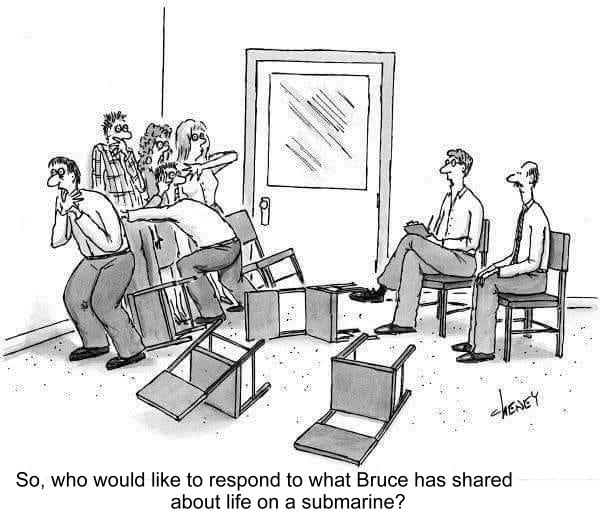
Image of a group counseling session with everyone cowering in a corner or gagging about the information that was just shared by one of the members. The counselor is asking "So, who would like to respond to what Bruce has shared about life on a submarine? | MilitaryFinancialIndependence.com

Thank you, New Yorker magazine.

This post doesn’t have a financial independence theme, but it certainly helped me develop attitudes of gratitude and abundance.  I’m also sharing it to help others.

June 15th is the anniversary of the 1991 eruption of Mount Pinatubo in the Philippines, about 20 miles north of Subic Bay.

I spent that 36-hour day mostly as the inport Ship’s Duty Officer on the submarine USS NEW YORK CITY (SSN 696), where I was serving a department-head tour as the Weapons Officer.

If you’re a Pinatubo vet too, check the “Related Articles” links at the bottom of this post about potential respiratory damage from toxic particles as part of the PACT Act.  You might want to update your VA disability claim as well, and add your name to an exposure database.

Earlier in 2023, one of my friends wrote me:

“… you likely had many scary times during your service. If you’d be willing to share them (either just with me or with the forums), I know I’d love to hear them.
Most people generally don’t think of things like this when considering what our military members have to go through in serving our country, so telling them to a broader audience will hopefully give many a better appreciation for our service members.”

My cheerful reaction was “Sure, I haven’t written about Mount Pinatubo in a while!”

Then I tried to write about it. That wasn’t so cheerful.

It turned out that all I’d written before was a short social-media post asking Pinatubo vets to get in touch. (I wanted to learn if we survivors could have a VA disability rating for lung damage from volcanic ash.) Even now, during the weeks months that I’ve displayed this post on my monitor, my brain keeps skittering away to find anything else to write about. And oh look, my coffeepot needs cleaning!

Four months and 7000 words later, this is now the blog’s longest post. With photos.

This is the hardest post I’ve ever written (out of more than 2000) over the last two decades. Maybe my aversion is a mental-healthy defense mechanism, but I’ll tackle the keyboard-therapy challenge. If this helps me, I hope it helps a few of you too.


SPOILERS:

Over 800 Filipino residents died during the eruption and thousands more were injured, but our submarine crew survived.

A few crewmembers were on liberty in Olongapo and were injured during the eruption. Several spent the night trapped under wreckage of buildings that collapsed from the ashfall and the earthquakes, and for hours we had no idea if they were alive or dead. They were rescued the next morning and came aboard before we got underway.

Our submarine initially seemed to be undamaged, but over the next year we had to replace a surprising amount of ash-damaged equipment. As the Weapons Officer, I’m surprised that our torpedo launching systems were unscathed. All we lost in our department was some topside hull paint.

For more background on the environment, you can read the Wikipedia article about the interaction of the Mt. Pinatubo eruption with Typhoon Yunya.  Yeah, I know, that sentence reads like the plot for a bad 1970s disaster movie. I wish I’d never bought that particular ticket.

I’ve researched the event from open sources, but I’ll admit up front that my memories are flawed by the stress and fatigue of 36 hours without sleep. I’ve also gone through three decades of involuntary leveling and sharpening of those memories, along with apparently suppressing the entire experience.  My subconscious has done an incredible job of fighting protecting me for nearly half of my life now.

This is a personal story with my perceptions of our experiences. I’ll gloss over some of my more… intense… interactions with the chain of command above my billet. As far as I’m concerned, the rest of the crew did an outstanding job.  If you were there with me, feel free to improve my memory in the comments. I’ll leave it to an experienced researcher to build a better chronology from our boat’s deck log in the Navy’s archives.

If you’re a veteran searching for more information about disability ratings from breathing volcanic ash, as far as I’m aware the VA has no presumptive conditions for Pinatubo. You’ll have to document silicosis or other respiratory symptoms and check a lung scan for lesions. You’re welcome to read the rest of this blog post and contact me with questions, and I’ll update this post if there’s new information.

If you’re an accredited historian, I’m happy to share more memories with you. Post a comment or contact me through this site.

Finally, this post has little to do with financial independence. (Sorry, hardcore FI fans.) This is more in the category of “You never know when you’re living your last day.”


Setup

Image of USS NEW YORK CITY (SSN 696) submarine conducting an emergency blow surfacing in open ocean. | MilitaryFinancialIndependence.com

The obligatory submarine emergency blow photo.

During NYC’s Westpac ‘91 deployment, we succeeded in one of the scariest missions I’ve ever experienced. (I’ll write about that another day, but some of you will recognize why a submarine crew was awarded the Coast Guard Special Operations Service ribbon.)  We proved that 360-foot long submarines with 32-foot drafts could operate submerged in (very) shallow water. We opened up a whole new mission area (thanks, INDO-PACOM) at a time when our traditional Cold War operations were rapidly dwindling.

At the end of that mission we were much, much further north and east of our scheduled liberty portcall in Singapore.

At the same time, we’d read many media headlines about the U.S.-Philippines diplomatic efforts to continue leasing Subic Bay’s naval station maintenance facilities and Clark Air Base.  The Philippine government wanted a lot more money, and negotiations had broken down.

Subic Bay has been one of the U.S. Navy’s most legendary ports for several generations, where you could get just about anything you wanted for your submarine. The liberty in adjacent Olongapo City was even more notorious, where you could get just about anything you wanted– period. Certain… experienced… members of our crew were agonizing that we’d never be able to have another Subic portcall, and these concerns were shared with the boat’s chief petty officers. The consensus was that we’d rather go to Subic than Singapore.

Submarine crews do not simply vote for their next liberty port. However our commanding officer appreciated that Subic was a lot closer to our current location than Singapore, and he might have had a few Subic fantasies memories of his own younger days to recreate. Our XO was smirking a little, too.

After several protracted exchanges of message traffic, our Westpac boss (the commodore at Submarine Group SEVEN in Yokosuka, Japan) agreed to arrange our liberty port in Subic instead of Singapore. CSG7’s staff location, nearly 2000 miles away from Mt. Pinatubo, had apparently left them blissfully ignorant of its emergent volcanic activity.


Arrival

When we tied up at the pier, I immediately scampered across the brow to a nearby pay telephone to check in with my spouse. (1991’s Philippine landline calls to Hawaii = $6/minute.) She was a Navy meteorology/oceanography officer stationed at the Pearl Harbor METOC center, responsible for forecasting the weather all over the Pacific. We hadn’t talked in over a month, but she had the security clearances to know when & where we’d been doing our last mission.

I’d been married long enough to know that I should phone home before all of the boat’s other spouses found out that we were inport. You don’t want to be the last spouse to check in after all the other families have had their calls.

In those days submarines only had about 2400 bps of bandwidth for radio broadcasts (with headline news), and the mail was always weeks behind. I hadn’t seen a newspaper(!) yet and wasn’t up on current events, so our spouse conversation was an unpleasant surprise.

Her: “What the #$%* is your boat doing in Subic?!? Did anyone tell you there’s an active volcano just 20 miles north of you?!? There’s also a tropical storm a few days away that’s going to turn into a typhoon.”
Me: “Um. I hope CSG7 checked with their weather center. Gosh, 20 miles away, I’m sure it’ll be fine.”
Her: “Listen to your meteorologists: you need to get out of there.”

A few days later on 12 June, Mt. Pinatubo had a brief eruption.

Image of the Mount Pinatubo volcanic eruption mushroom cloud rising above the hill and into the clear blue sky above puffy white cumulus clouds. | MilitaryFinancialIndependence.com

This was the “minor” eruption on 12 June 1991. Courtesy NASA meteorological photo.

All day we could see a gigantic mushroom cloud of the eruption to the north, and a “light sprinkling” of volcanic ash fell on Subic Bay. (The port’s base guards hosed the ash off your taxi’s windshield as it went through the gate.) The eruption was an immense distraction, let alone a threatening omen.  Understandably, many of the crew spent the morning topside to gawk and take photos as they worked on other tasks.  As the boat’s Weapons Officer, during that workday I found myself going topside to announce to the troops “All right, I haven’t seen a live volcanic eruption since we left Hawaii either, but right now we’re supposed to be on the mess decks doing department training.”  Yeah, I could still snark at a time like that.

By that evening, the Olongapo entrepreneurs were selling t-shirts: “I survived the eruption of Mount Pinatubo, 12 June 1991!” I wish I’d bought one for the irony.

Apparently the eruption didn’t cause any concerns among the Filipino authorities, let alone the U.S. Navy’s Seventh Fleet or our submarine group staff. In retrospect, we should have gotten underway that day– but we were busy with essential maintenance and even more essential liberty.

Three days later the eruption really began.


“Worst Duty Day Ever”

Every military veteran jokes about their worst duty day, and this one certainly recalibrated my definition.

Back then I’d usually show up on the boat around 4:30 AM to tour all of the spaces and chat with the offgoing watchstanders. I always learned a lot from the midwatch duty section about what was really happening… instead of what we supervisors wish had happened.

On the morning of 15 June 1991, though, the volcano’s ash was already falling. It was soft, like the first few hours of a gentle snow– but there was a lot of it and it was already forming a heavy slush.

I checked with the Weapons Department crew on our torpedo room, sonar, and fire control gear.  All of those systems had been shut down when we entered port. We’d caught up on repairs and maintenance and we’d had no problems so far.

The engineroom was a different situation.

Inport submarines have four ways to maintain power (and air conditioning): shore power, the boat’s diesel generator, the boat’s emergency battery, and… the nuclear reactor. Starting up the reactor (and generating steam for the engineroom) takes a full watch section (and consumes uranium), so when we tied up we’d usually shut down the reactor as soon as we connected to shore power. We’d post a skeleton duty section and everyone else would go on liberty.

If you lose shore power (for whatever reason) then the duty section uses a few kilowatt-hours from the battery while they’re starting the diesel to snorkel (and generate electricity) until shore power’s fixed.

If you suddenly had problems with the diesel then you could hypothetically start up the reactor. For various safety & maintenance reasons, though, the startup checklist takes several hours to make sure all of the reactor protection systems are working correctly. Starting up the reactor also takes a lot more watchstanders.

By the time I got to the boat, I learned that the midwatch team was having a Really Bad Night.

As Mt. Pinatubo exploded, the combination of falling ash and lava-boosted mudslides had damaged the local electric grid. Shore power had been down & up all night, and the boat’s electricians were very unhappy about our battery discharge.

At the same time, the diesel mechanics were equally unhappy about the volcanic ashfall. Diesels suck down a tremendous volume of air for combustion, and the ash-fouled air was quickly creating an ash-fouled diesel. We joked that the diesel sounded like a rock crusher, but it wasn’t designed to crush lava.

Our Engineer Officer had been getting phone calls all night about the shore power problems, and he was even more concerned about the diesel. By the time I wandered into the engineroom for my pre-duty tour, he was stationing the full watch section. With the CO’s concurrence, the Engineer had already ordered an emergency reactor startup.

30 years ago, submarine engineering departments trained on emergency startups and even occasionally did one for practice. Compared to the full-blown precritical checklist, an emergency reactor startup is just a cursory look that all the important switches are in the right positions, and that the core’s power-monitoring instruments seem to be working. Full switch lineups? Calibration checks? Yeah, those could be done after the boat had power & light.

The emergency startup section of the Reactor Plant Manual had a couple paragraphs about not hurting anyone or breaking anything– and try not to accidentally scram the reactor while you’re withdrawing the control rods. To us nukes, that was a welcome freedom from the hundreds of pages of detailed guidance for a normal reactor startup.

After the full team had assumed the watch, the Engineering Officer Of the Watch ordered the Reactor Operator to commence an emergency reactor startup. The RO latched the reactor’s drive motors onto the core’s control rods and pulled them out just short of the point where they expected the reactor to reach criticality. Right after that, keeping a close eye on their instruments, they withdrew them a bit more until the reactor was indeed critical.

It was going well, but most of the duty section had been up all night and the situation was getting tense. Out in the engineroom someone might have muttered “Latch ‘em and snatch ‘em, and let’s get the steam in here.”

The RO kept bumping out the rods (a little at a time) to heat up the reactor as quickly as they deemed safe, while making sure that reactor power stayed below the scram setpoint. The EOOW coordinated the rest of the watch team. As soon as the plant was hot enough, the mechanics opened the steam valves and began rolling both turbine generators to produce electricity.

Compared to a normal reactor startup and heatup of several hours, the emergency procedure had our engineroom generating our own electricity within minutes. You could almost feel the entire crew (especially me and the rest of the oncoming duty section) heaving a sigh of relief as everyone scurried around to restart air conditioning and ventilation fans.

Topside and on the pier, however, was a different situation.


“LCDR Nordman is the Ship’s Duty Officer.”

I’d seen enough in the engineroom to know that we were back on track back aft. The oncoming duty section had taken over, and I relieved the offgoing Ship’s Duty Officer around 7 AM.  That was announced throughout the boat.

Belowdecks our ventilation system was blowing cool dry air, breakfast was served, and the coffee was hot. We were doing great and we were going to get through this little natural disaster.

I went up the ladder to see how we were doing topside and stepped out of the hatch. The storm immediately blew me off balance– and almost into the harbor. An hour after dawn, the sky was still black and the air was full of ash. This duty day might not be as easy as I thought.

While Mt. Pinatubo explosively erupted its megatons of volcanic debris, Yunya had intensified into a typhoon and made landfall. That torrential downpour and the high winds spread the volcanic ash and hazardous sulfide gases to form lethal conditions.

Months later I learned that satellite imagery showed the volcanic mushroom cloud erupting straight up through the eye of the typhoon. Scientists later determined that Pintubo’s explosion pumped so much ash into the upper atmosphere (to be spread by the typhoon) that the entire earth’s climate cooled by nearly a degree. The following winter (around the globe) was the coldest in decades. The ash also led to months of spectacular sunrises and sunsets in Hawaii, but that might be my survivor bias evoking my gratitude for the little things in life.

As the ash soared, the heaviest particles spread across the peninsula and rained down with the typhoon like a shower of pebbles. Lava cascading down the side of Pinatubo had already caused galloping lahar mudslides which wiped out entire villages. The typhoon rain sent even more mud and debris rocketing down the southern slopes to flood the entire peninsula and Subic Bay. Storm surge in the channel and the harbor created waves across the moorings and flooded over the piers. Fortunately our lines and fenders kept our boat from moving– and from beating its ballast tanks on the concrete.

Although the morning was long past dawn, the sky was still black with a mixture of typhoon clouds and falling ash. Back then I wasn’t aware of the silicosis hazards of breathing the ash, but we were all uncomfortable topside with ash clogging our nostrils and our mouths. (Especially the security watches.) We broke out our 1960s MkV gas masks for the two topside watchstanders, who also sheltered from the ashfall under the sail’s fairwater planes or on the pier kiosk. Those masks were hot, heavy, and foggy– but they worked just as well with ash as they did at their main use for airborne radioactive particulates. Besides, visibility was only about a hundred feet and nobody else was wandering around on the pier.

After another hour it became clear that the ashfall was not only building up on the hull, but was heavy enough to deepen our draft. By the time we sent more crew topside with brooms (also wearing gas masks), we’d already lost a couple of inches. We shifted to shovels (found somewhere on the pier) and eventually rigged our 2” 250 PSI fire hoses to blast the sludge off the hull. Although we were using lots of seawater from our trim tanks, we were also lightening our draft and reducing the effect of the ash. We kept this up for over 18 hours, both with the fire hoses and the shovels, rotating teams every hour. The crew got years of firehose tactical training in one day, and we nearly emptied our trim tanks. Some of us inhaled way too much ash, too.

While the duty section was struggling with ashfall, suddenly more crewmembers scurried across the base up to our flooded, ash-covered pier from the barracks (several blocks away). We asked them why they wanted to come back to the boat instead of sheltering in the barracks, and they said “Don’t you feel the earthquakes?!?”

Well, no we couldn’t, not on a floating submarine. Yet the temblors were so severe that the barracks walls on several floors had started to crack, and even the boat seemed safer than being inside that building. As the day wore on we finally verified that our crew had left the barracks, but another 20 people (on authorized liberty) were still unaccounted for.

A few minutes after the crew showed up we were very happy to have the extra help– especially from the nukes.


Running Critical

By late morning the ashfall was pelting down like a concrete monsoon, when suddenly back aft the EOOW announced on the loudspeakers: “Lowering vacuum, port main condenser.”

The volcanic ash in the harbor water was clogging the suctions of our seawater pumps, and that loss of cooling water almost cascaded into a loss of electricity followed by a (controlled) reactor shutdown.

(You can scroll to the end of this post for the detailed engineering thermodynamics of why this was a serious fast-moving casualty. I’m going to continue with the main story.)

The rest of the Engineering Department had to help the mechanics clear the ash from the seawater suctions. This happened every 20-30 minutes for the next 18 hours. We barely kept the steam plant going, but the nukes were exhausted from fighting the nonstop crisis.

On my next visit topside, the ash on the hull was over a foot thick. Our draft had already deepened by a few more inches, and we were barely keeping up. Engineering had their hands full with ash problems down below, but most of the rest of the crew was doing their best to remove the topside ash under surreal conditions.

The hot ash mixed with the typhoon’s rain created weather of over 90 degrees with 100% humidity. In the early afternoon the sky was totally black with clouds and the winds were gusting to 80 knots. The ash created lightning discharges in bolts and sheets across the entire sky, but for some reason the lightning was bright red.

The constant red streaks across a black sky– along with the thunder, the howling winds, the heat, and the blowing ash– were as close to hell on earth as I ever want to see.

It wasn’t just straight out of the Old Testament or Dante’s Inferno. Some of the crew might have been regretting their liberty sins in Olongapo, but everyone else was rethinking our life choices and wishing we’d spent more time with our families.

A week ago when we’d given up our Singapore portcall, we’d had no idea that a volcano or a typhoon was threatening Subic Bay. Now we wished we’d had more warning from our military chain of command so that we could have left port before the eruption. Unfortunately a couple of other Navy ships were also trapped at different piers.

Technically, we could have cast off our mooring lines and gotten underway for open sea. (You Navy vets are already alarmed at the thought.) However we were already having enough trouble pierside just generating electricity (let alone air conditioning) and the ash in the water meant that we might not even be able to maintain reliable propulsion in a narrow channel.

By mid-afternoon, visibility in the ashfall was nearly zero. If we’d gotten underway then the winds would have been extremely hazardous to topside linehandlers, and anyone who was blown off the hull would have been lost without our ability to rescue them.

With visibility dropping to only a few yards, the black skies and the red lightning were tremendously disorienting. Our navigation team wouldn’t have been able to see enough out of the periscopes to get visual fixes to keep us on track. The stormy electronic discharges had overwhelmed our GPS receivers from using any of the satellites to track our position. Even our bridge team wouldn’t have been able to see enough of the channel to avoid collisions or grounding. After hours of ashfall we had no idea whether the channel was still deep enough for our draft. The channel might even have been blocked with debris or other vessels.

As I write this, it seems impossible that we contemplated getting underway– yet our conditions pierside were so life-threatening that we seriously considered it. Our wardroom had a contentious debate about overcoming the propulsion and navigation obstacles, and we even contacted the commodore to discuss a plan. (By now we were using HF radio to talk to the submarine group staff in Yokosuka. Telephone lines had been dead since last night and even satellite radio signals were intermittent.) There were some raised voices and forceful arguments, but we couldn’t find a way around the dangers of grounding or collisions.

Meteorologists thought the storm and the eruption would subside during the next 24 hours.

We thought we’d be lucky to live through 24 more hours.

We had to stay inport and fight through the rest of the disaster. As far as we could tell, we’d slowly lose the struggle for cooling water and we’d have to shut down the reactor. The entire boat would be dark and hot (slowly sinking under the ash) while we conserved battery power until the ashfall stopped and we could restore seawater cooling.

Nobody got any rest that day, let alone sleep.


“There’s Got To Be A Morning After”

By midnight the skies had been black all day, but the ash fall slowed down a little. Around 2 AM it finally subsided to almost a gentle snow flurry. The topside team gradually caught up with cleaning the sludge off the hull, and our draft returned to normal. By 4 AM the winds had died down.

Although most of the crew had spent the night onboard, our muster was still short by a dozen men. Shipmates knew where they’d planned to spend their liberty, but we didn’t know where we’d find them. If we were able to get underway that morning, we needed to bring the entire crew with us.

I talked it over with the Duty Chief Petty Officer, and as dawn began to appear he sent people on the pier in search of a bus or a truck. The base seemed abandoned but we finally found a stake-bed truck near our pier with keys still in the ignition. Its engine started! The team cleaned the ash off the truck and drove back to the boat.

We mustered a small search party to find whoever might still be in the barracks or in Olongapo. After some debate, I (as the Weapons Officer) agreed not to arm the searchers. Most of our crew was poorly trained to handle firearms (due to a lack of ammunition funds), while our stress and fatigue would make us even less safe. We expected that we’d have several hours to find our crewmembers before any first responders or locals were ready to worry about looters or militia.

Image of the Philippine town of Olongapo after the eruption of Mount Pinatubo, with the streets covered in ash and people walking alongside to check for survivors and damage. | MilitaryFinancialIndependence.com

Driving into Olongapo.

As soon as it was light enough, we sent the truck out to Olongapo. (All of these photos were taken on a film camera by one of the crew in the truck.) We learned later that the town was buried in several feet of ash but the main roads were navigable. The larger buildings (apartments and hotels) had minor earthquake damage but many of the smaller ones (mostly bars and restaurants) had collapsed roofs. People were wandering about, checking on each other and assessing the damage.
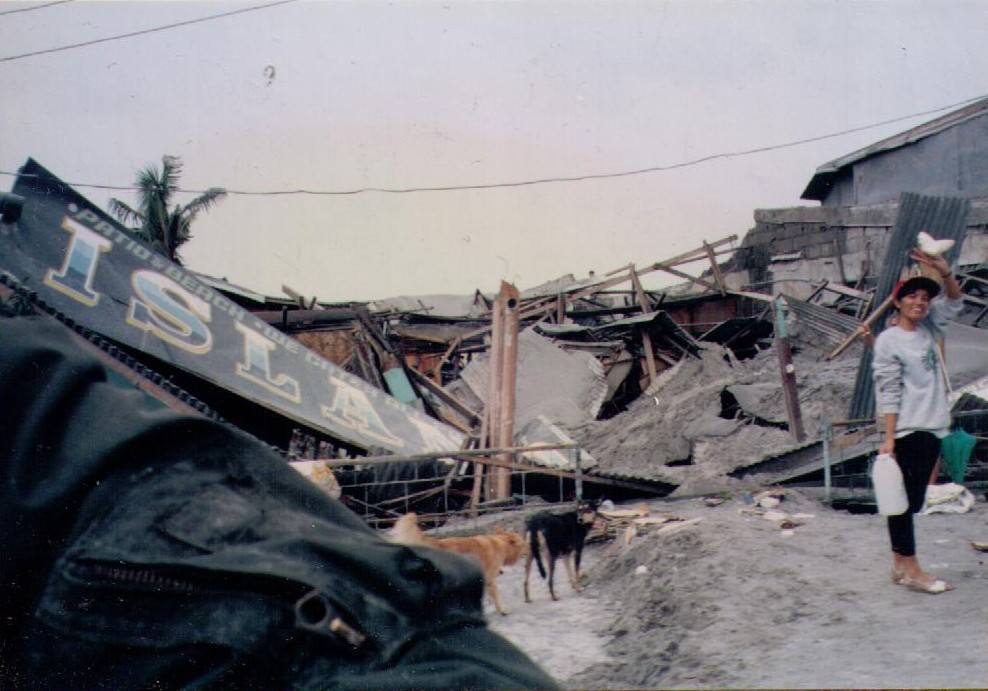
Image of a collapsed building under volcanic ash in Olongapo, Philippines the morning after the eruption of Mount Pinatubo. It might be the same bar where our crewmember spent the night trapped under the wreckage while a local Olongapo resident died of his injuries. | MilitaryFinancialIndependence.com

One of many collapsed buildings in Olongapo.
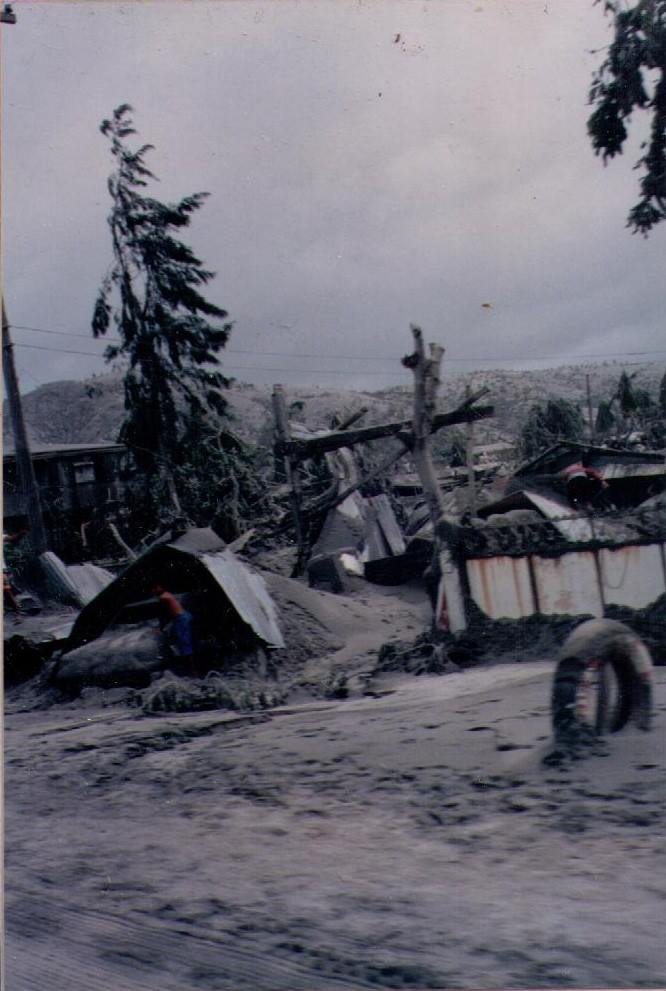
Image of the Philippine town of Olongapo after the eruption of Mount Pinatubo, with the streets covered in ash and people walking alongside to check for survivors and damage. These buildings collapsed under the weight of the ash and the force of the winds. | MilitaryFinancialIndependence.com

Heavy ash and high winds = collapsed buildings and bare trees.

Happily we found our missing crew, although most of them had minor cuts and bruises. One of them had been trapped all night under a bar with a collapsed roof and had a long wound on his forearm from metal debris. (He said he felt fortunate to be alive, because he’d listened to the screams of one of the bar’s employees as they died in the wreckage.) The truck hustled the crew back to the boat without incident, where our corpsman cleaned & stitched our injured man’s arm.


“We Gotta Get Out Of This Place”

Image of the Philippine town of Olongapo after the eruption of Mount Pinatubo, with the streets covered in ash and people walking alongside to check for survivors and damage. Cars are parked along the side of the road and the morning bus is approaching around the bend. | MilitaryFinancialIndependence.com

The municipal bus was on time.

Image of the Philippine town of Olongapo after the eruption of Mount Pinatubo, with the streets covered in ash and people walking alongside to check for survivors and damage. Debris was everywhere, especially the trees. | MilitaryFinancialIndependence.com

Downed trees were everywhere.

Back on the boat, we quickly finished our underway checklists. The typhoon had dumped its rain and was breaking down into a tropical storm, but we didn’t know whether Mt. Pinatubo would erupt for a third time. As the skies cleared, we’d regained satcom radio contact with the submarine group. They agreed with our voyage plans and assigned us the submerged operating areas to head for our maintenance port in Guam.
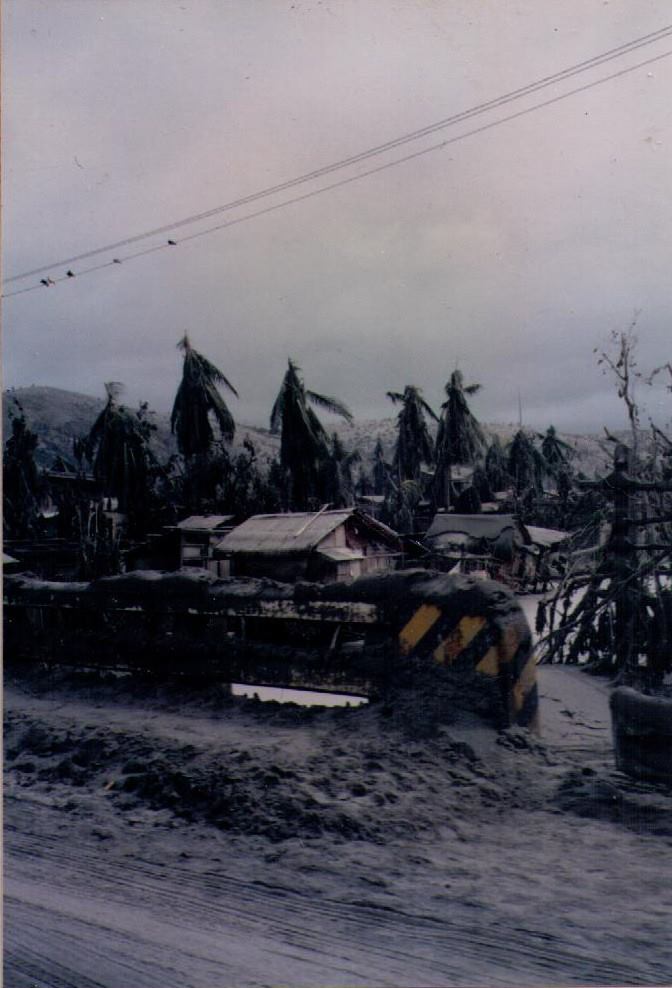
Image of the Philippine town of Olongapo after the eruption of Mount Pinatubo, with the streets covered in ash and people walking alongside to check for survivors and damage. Palm trees were stripped by the wind. | MilitaryFinancialIndependence.com

Stripped palm trees.

Aside from the ash, the boat appeared to be in surprisingly good shape. Once the Engineering Department finished cleaning the ash out of their seawater suctions, the steam plant was much more stable. With reliable air conditioning (and chill water to our computers) our sonar and fire control systems started with minimal glitches. (We could technically get underway without them, but nobody wanted to submerge without a reliable sonar system.) Our Weapons Department gear was as good as it gets but all of us were exhausted physically, mentally, and emotionally. We still had to get through today.
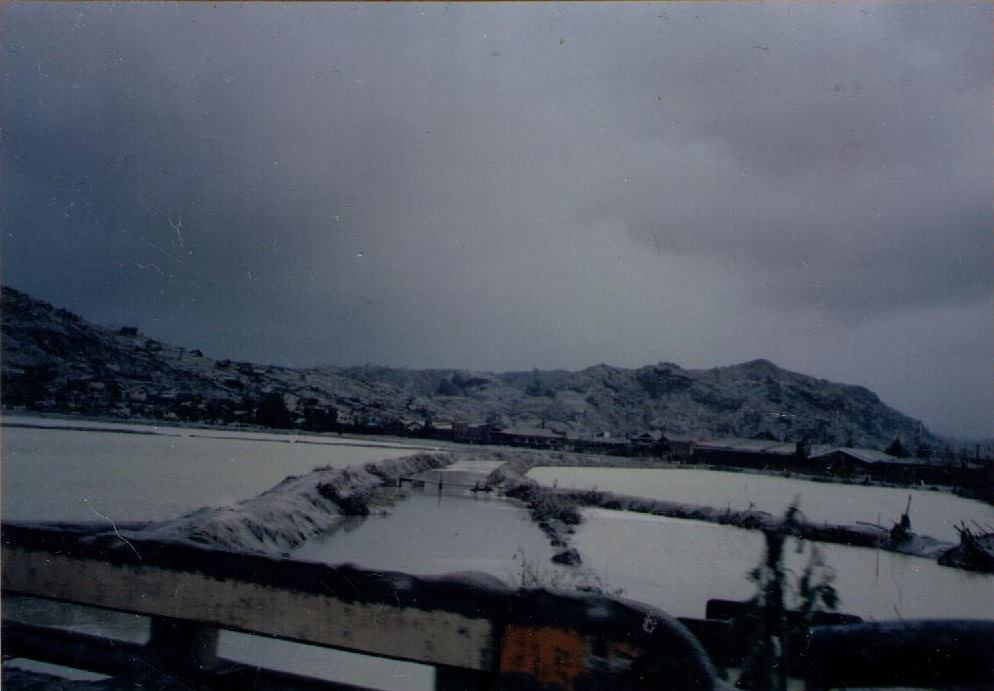
Image of the Philippine town of Olongapo after the eruption of Mount Pinatubo, with the streets covered in ash and people walking alongside to check for survivors and damage. Hillsides were covered in ash but the typhoon rain washed even more ash down into the river. | MilitaryFinancialIndependence.com

Ash-covered hills, and ash in the water too.

As the offgoing (finally!) Ship’s Duty Officer, I was also the Surfaced Officer Of the Deck for the underway. To our surprise, a few port employees showed up on the pier to check on us. (The phone systems were still down, and the shore electric grid was still dead.) We could cast off the mooring lines without assistance, and they used our borrowed truck to pull the brows off the boat. It was the ugliest underway I’ve ever conducted, and my happiest.

Image of the Philippine town of Olongapo after the eruption of Mount Pinatubo, with the streets covered in ash and people walking alongside to check for survivors and damage. The typhoon's storm surge also flooded out these homes along the river. | MilitaryFinancialIndependence.com

Storm surge and ash-filled rivers.

Our sortie was surprisingly uneventful. The channel was filled with floating debris but we were the only vessel going through it. We straddled both the inbound & outbound lanes and gave ourselves as much evasion room as possible. Both sides of the shore were blasted by the winds and the ashfall, and the surviving palm trees were mostly ragged sticks. As we passed the airfield at Cubi Point I remember seeing one plane resting on its tail, its nose in the air. It was covered with two feet of ash.

Once we reached open ocean, our speed scrubbed the last of the ash from the hull. Now in clean water, we could restart our evaporator and top off our drinking water tanks. We also had to refill our trim tanks to replace the thousands of gallons of seawater that we’d used to hose off the ash during the worst of the eruption.

The Engineering Department’s mechanics had needed so much air to blow ash out of the seawater suctions that our 4500 PSI airbanks were below 3000 PSI. These air banks would also be needed for emergency blows to reach the surface if we had an underwater casualty, and they had to be back at 4500 PSI to be effective against flooding. This meant that before we could dive, we had to run a long air charge while we were driving on the surface.

With clean air and reliable electrical power, the mechanics started all three of our high-pressure air compressors. Four hours later, we managed to get the air banks back above their minimum required pressure and we finally submerged.

After diving and getting a final neutral-buoyancy trim (happily without any surprises) we sped up and went deep.  We manned our regular underway watchstations while the rest of the crew caught a few hours of sleep. That afternoon we began cleaning up the ash that had been tracked onto (or sucked into) just about every nook & cranny. I don’t remember much about that week, but I clearly remember that we even suspended our routine training & drills so that we could focus on cleaning and resting. Not necessarily in that order.

We reached Guam in several days.  30 years later, in today’s Navy, the entire crew would have been met at the next port with a team of psychologists and counselors to help us talk through our trauma. There’d be several PTSD screenings and maybe even physical exams to check for lung damage.

As near as I can remember from 1991, none of that was even discussed. While we were on watch (or cleaning), I remember many conversations that started with “Where were you when… ?” One of our crew said that they’d planned to serve for at least 20 years, but after this natural disaster they were hoping for a Monopoly game’s “Get Out Of The Navy Free” card. (That wasn’t offered to any of us either.) We got through the rest of the week mainly through crowdsourced talk therapy.


Aftermath

The Weapons Department’s gear was largely unaffected by the ash. On the way to Guam we shot a salvo of water slugs out of our torpedo tubes, and we found a small amount of ash left in the tube. There was no other damage (like the engineroom’s seawater pump seals) but… there was ash. After more inspections and discussion we decided that the ash had flowed down along the hull inport to get trapped in nooks & crannies of the ejection system. We shot a second salvo and the tubes were clear. Thankfully there was no evidence of ash damage in any seals or gaskets in the weapons launch system.

The superstructure inside our sail had probably accumulated an amazing amount of ash through the bridge openings at the top. We never made the time to remove the sail’s access plates (always good for hours of frustration) to inspect for damage, let alone cleaning. We raised and lowered our periscopes and antennae (housed in the sail) as part of the underway and undoubtedly scraped a lot of bearings through the ash. After we submerged the ash would (eventually) have washed out of the sail through various freeflood penetrations.

During the next year we replaced just about every bearing on every mast in the sail, and at least one antenna barrel. That was probably the second-worst damage to the boat, and certainly the most expensive.

The boat’s ventilation filters were clogged with fine ash that had entered the boat through the hatches. Over the next month the crew spent hours cleaning those as the ventilation system gradually cycled the ash through all of the fans and ducting. (The air filters on our sonar and fire control computers were even worse, despite daily cleanings.) The diesel generator’s snorkel air inlet plenum was coated with ash, so it’s a very good thing that we never attempted to snorkel.

I’ve already mentioned the engineroom’s seawater systems. The seawater cooling pumps managed to handle an amazing amount of ash but their seals were permanently eroded. The mechanics dealt with the leaks for the rest of the deployment (and pumped a lot of seawater out of the bilges) until the boat’s next major homeport upkeep. Let’s just say that we depleted the Pearl Harbor submarine logistics system of seals for all of our seawater pumps.

During the rest of the deployment, nearly everyone in the crew dealt with respiratory infections. Our bodies were clearing the ash out of our lungs as quickly as possible, but we all had complaints ranging from chronic coughs to full-blown pneumonia.  A few days after leaving Subic Bay I woke up that morning gasping for air and unable to draw a full breath. Our corpsman listened to my lungs and pumped me full of antibiotics, which took care of the problem. And yes, I sucked it up and stayed on the watchbill.  I wasn’t going to be snoozing in my rack when everyone else felt at least as crappy as I did.

As far as I’ve learned from shipmates over the years, our crew recovered from the trauma. I’ve heard from several other veterans (Air Force and Navy) who now have damaged lungs from the weeks of the evacuation and closure of Clark Air Base. Please post a comment if you were there during or after the eruption and have more information (or sea stories) to share.


Epilogue

In 1992 USS NEW YORK CITY (SSN 696) was awarded its fourth Meritorious Unit Commendation.  The crew earned dozens of individual medals and other commendations.  That was mostly due to our deployment’s typical Cold War submarine missions (which we do not discuss) and possibly our mission with the Coast Guard. Someday I’ll write about that USCG operation and I’ll post a link here.

At the end of my tour in July 1992, I transferred to shore duty. In 1995 the boat deployed to the Western Pacific again and the crew finally got that Singapore port call.

The boat’s inactivation ceremony was in December 1995 at only 16 years of service. That’s less than half of a submarine’s typical lifespan, and NYC was in good material condition with plenty of nuclear fuel. The decommissioning was due to the funding cuts of the U.S. military’s biggest drawdown since the Vietnam era, not from the effects of Mt. Pinatubo.

During the next decade I dealt with repeated respiratory issues: several more cases of pneumonia, at least a dozen of bronchitis, and more ear infections than I can remember. A chest X-ray in 1992 was negative. (That was only done as a routine check for nuclear-trained submariners.) Several other X-rays over the following years diagnosed pneumonia but presumably there were no lesions or other signs of silicosis. There was no respiratory damage found during my retirement physical in 2001, and in 2013 a full pulmonary function test was rated as “normal for a man in his 50s.”

In the late 1990s when I was stationed at a submarine training command, I reunited with one of the senior enlisted Sailors who’d been in the Weapons Department with me. He was the man with the injured arm who’d spent the night trapped under the wreckage of the bar. We both agreed that we’d recovered from the incident. Maybe we were right.


“Every Blog Post Should Have A Call To Action”

My spouse and I reached financial independence during active duty, and I’ve been retired from the military for over 20 years. Three decades after the eruption I still struggled to write this sea story.  While I wrote it, I paused many times to gaze out of our windows and admire the tropical view. I’ve even had a few paragraphs of this post pop up in my brain during surf sessions, and surfing always leaves me with an extra-large helping of gratitude.

You never know your last day of doing anything. Work as long as you find it challenging and fulfilling, but keep saving & investing for your financial independence. If you’re dealing with a scarcity mentality, then appreciate your human capital and try to adopt a mindset of abundance.  That evolution can take months.

Make sure you’re living your best life without trading more of your life energy (which you might not have) for more money (that you do not need).


Related Articles:
A U.S. Navy meteorologist remembers the Mt. Pinatubo eruption and evacuation
Updated VA disability claim and medical tests (my sinus damage… and maybe yours too.)

Want to read more about (unclassified) submarine careers and lifestyles?
Poopie Suits & Cowboy Boots “Sub Tales” book series

Explanation: “Lowering Vacuum, Port Main Condenser”
A steam plant generates electricity by turning a turbine that’s connected to an electrical generator. As the hot dry steam spins the turbine, the steam gives up its energy and exits down into a condenser.  The steam has barely enough heat energy to stay vaporized. Submarine steam plants pump seawater through cooling tubes in the condensers to turn the moist steam back into hot water. Pumps move that condensate back into the feedwater system and eventually into the steam generators where the reactor supplies the heat to make more hot, dry steam.

A submarine condenser is a sealed system that normally operates at a vacuum for greater cooling efficiency. If a condenser loses its vacuum (or its seawater cooling) then it can’t turn the steam back into condensate. If vacuum is lost and pressure builds up then the turbine’s steam supply has to be shut down before the condenser blows a seal. It’s a delicate balance, but it’s sustainable as long as the condenser has cooling seawater.

If the turbine is shut down, it’s not making electricity. If both electrical turbine generators are shut down then the emergency storage battery starts discharging again. The reactor is still keeping the engineroom’s steam hot, but none of it is generating electricity. The reactor’s still (relatively) safe but this is not sustainable. The condenser has to restore its seawater cooling (and its vacuum) to bring the turbine back online and resume generating electricity before the battery runs out of amp-hours.

When vacuum started dropping during the volcanic ashfall, the engineroom’s mechanics quickly checked the condenser and realized that there was hardly any seawater flowing through the cooling tubes. The hull suctions of the seawater pumps were clogged with volcanic ash. Even worse, the seawater pumps were forcing a slurry of abrasive volcanic ash through their rotors and seals and into the condenser’s narrow tubes before trying to push the sludge back out of the hull’s discharge piping.

Under a typical loss of condenser vacuum, the Engineering Officer Of the Watch would order the Electrical Operator to unload the turbine generator. (The other turbine generator would handle all of the electrical demands.) The mechanics would shut down the steam to the unloaded generator and then shut off that condensor’s seawater cooling. They’d connect an air hose to the seawater suction piping and blow air back out of the suction’s sea chest to clear out whatever marine debris had accumulated.

But nobody ever designed a submarine cooling system to run on seawater that’s fouled with volcanic ash.

Once the cause of the problem was clear, the EOOW and the EO quickly unloaded the turbine and the mechanics blew the ash back out of the sea chest. As they restored seawater cooling to the condenser and it began doing its job again, the EOOW announced “Rising vacuum, port main condenser.”

Whew. Everyone relaxed a little as the mechanics brought steam back into the port side of the engineroom and spun up the turbine for the EO to generate more electricity.

You submarine veterans can already predict what happened next.

Suddenly the EOOW had a new announcement: “Lowering vacuum, STARBOARD main condenser.”

This caused a mad scramble from the EO and the mechanics. As the port turbine generator took over the electric loads, the starboard turbine generator was electrically unloaded and the starboard side of the engineroom was quickly shut down. The mechanics hustled the air hoses over to the starboard seawater suction, blew out that sea chest, and quickly brought steam back to the starboard turbine generator.

This continued for 18 hours. Every 20-30 minutes one side of the engineroom would have to be shut down to blow a sea chest while the other side struggled to maintain condenser vacuum long enough for the first side to be brought back online. The mechanics, normally in three-section watches, were all on continuous casualty response. The ship shut off all non-essential electrical loads, and even the air conditioning was turned off until the engineroom got too hot.

The seawater pumps continued to grind through the ash in their impellers and seals. All of the mechanics gained way too much proficiency training at shutting down and starting up a side of the engineroom. As they raced against the lowering vacuum and the seawater flow, they knew what was already happening to the pump seals– and nobody was looking forward to those repairs.



Posted in Military Life & Family, Sea Stories, Travel | 4 Comments

Fear And The Just One More Year Syndrome


“If you could stop working, why haven’t you?”

“If you’re financially independent, then why are you going to work this week?”

Image of Monopoly Millionaire character with empty pockets | MilitaryFinancialIndependence.com

Millionaires, but…

Those quotes were posted on ESIMoney’s Millionaire Money Mentors forum. I spend an hour or two there almost every day, because I enjoy the questions and the creative-writing process!

(That link is not a sales pitch and there’s no affiliate revenue. I’ve written this post to help you worry less and feel happier about the 4% Safe Withdrawal Rate, which I’ll clarify below with a classic-rock reference. The links in this post are for the search engines– and in case you want to dive deeper after enjoying the rest of these thoughts.)

I’ve written on that forum for over two years because, well: millionaire mentors. I’m learning a lot for my next book. (Better yet: paid Internet forums do not have trolls, spammers, or haters.) This is the best peer tutoring I’ve experienced in over 25 years.

The forum does not have any secret trading codes for the stock markets, and the real-estate entrepreneurs did not get rich quick. However we have many discussions about safe withdrawal rates and the potential pitfalls of our financial independence lifestyles.


“Pitfalls”…?!?

Yeah, you read that right:  just like everyone else, millionaires are concerned whether we’ll have enough money for the rest of our lives. The Just One More Year syndrome is more pernicious among this wealthy group than my years of experience on Reddit, or MrMoneyMustache, or Bogleheads, or even the Early-Retirement forum.

Some of the Millionaire Money Mentors have been happily financially independent for years, yet they’re not ready to stop working. They fall into two groups.

The first group loves what they do, and this is a very good thing. When you’re financially independent and your work is still challenging & fulfilling, then keep working! Do what you love for as long as you can. I hope we all find our avocations.

The second group of millionaires wants to use their FI to work less and live more. As much as they’d like to do that, they’re skeptical that their assets are sustainable. Before they quit their jobs, they want more safety margin.

I empathize with both groups. It takes months to change a mindset from scarcity to abundance, and we’re all reluctant to live a lifestyle that will Die With Zero.

I have over 20 years of experience with financial independence, yet spending money in retirement was harder than I expected. The skills which enable humans to earn, save, and grow our wealth (before FI) have little relevance to living a financially sustainable life without a paycheck (after FI).

Financial independence means that we might be able to afford the (higher) prices of (more) things, but we still have to perceive the value of every purchase. Does it improve our lives? Does it make us happier?

Millionaires can do math. Most of the forum understands probability & statistics. I thought that every member would embrace the strengths of the 4% Safe Withdrawal Rate while accepting its minimal risks. At age 62 I’m old enough to remember when Bill Bengen published his 1994 SAFEMAX research and started the perpetual debate on the 4% SWR. These days I expected that after three decades of analysis, a bunch of millionaires would agree that it’s become conventional wisdom.

That seems so logical, doesn’t it?

Gosh was I wrong.

At first I was shocked by the number of forum members who feel compelled to work for more years to build more wealth which– by their own math– they do not need. “C’mon, folks, I joined this group to learn the millionaire secrets of how to live with too much money! Whaddya mean, you don’t think you have enough?!?”

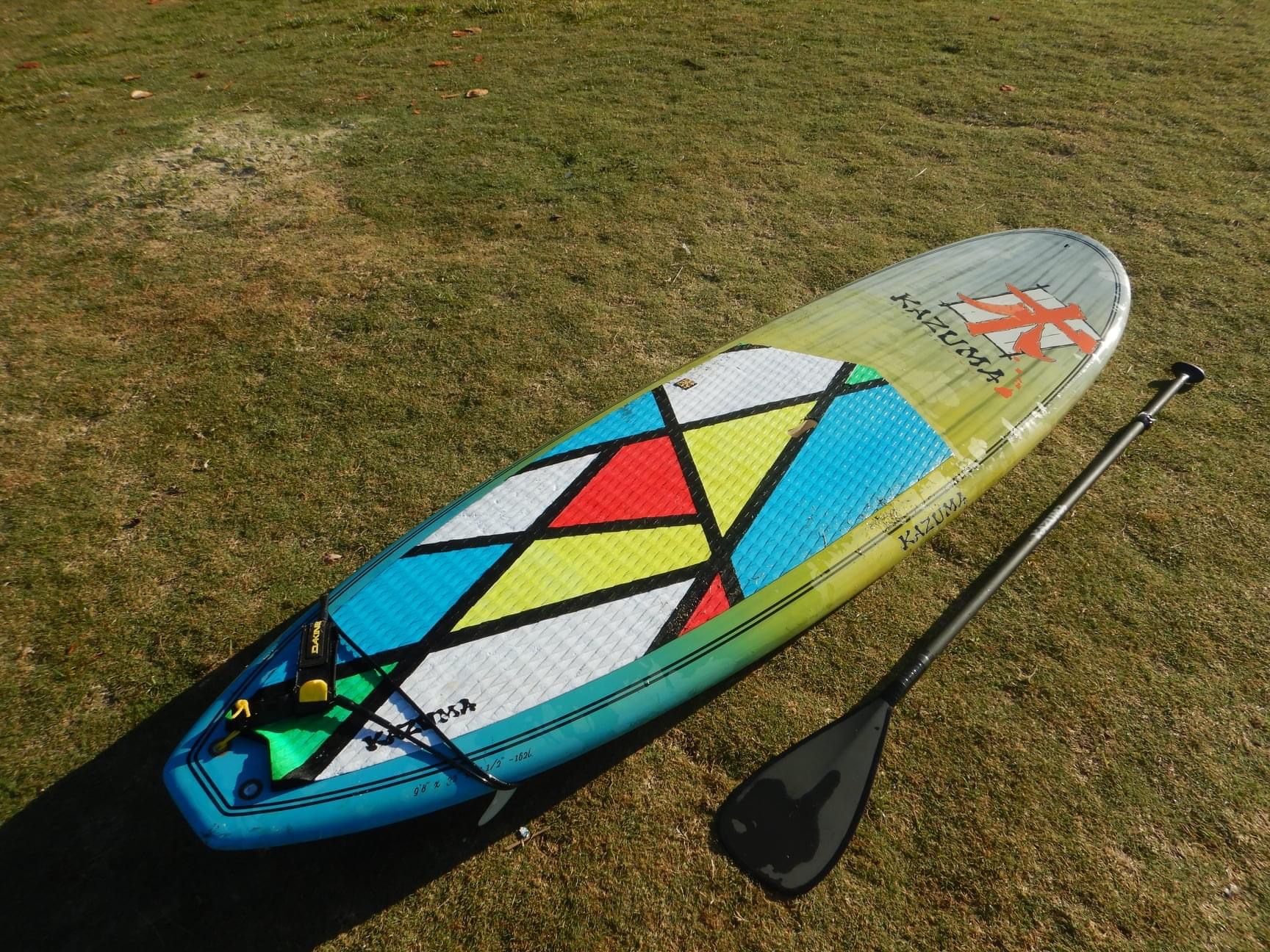
Our phrase “safety margin” isn’t fretting about our yacht’s lifeboats or the fuel ranges of our jets. We don’t have yachts or jets. (We’re not even contemplating carbon-fiber longboards.) It turns out that people in the Two-Comma Club are still stressing about mortgages, affordable health insurance, kids’ college tuition, long-term care, and the travel budget.

Image of Kazuma stand-up paddleboard at White Plains Beach Oahu | MilitaryFinancialIndependence.com

Well, I did buy a (used) carbon-fiber SUP.

The math & logic behind the 4% SWR isn’t enough reassurance, either. When you’re a millionaire, you’re still vulnerable to the emotions of behavioral financial psychology. You might be awesome at math & logic but you’re still human. Even if you’re way past the tripwire of financial independence, you still have to sleep comfortably at night after quitting paid employment.

Yes, these are millionaire #FirstWorldProblems. You wish you had them too, right?

(If you’re just starting your path to financial independence, please keep reading.  Do not despair while you’re paying off debt or feeling the pressure to sign up for that military retention bonus.  These millionaire examples are only highlighting the surprising fact that more money does not free you from worry. We can still help you reach financial independence on your terms.)


What’s wrong with working for more money?!?

Money is the easier part. As we approach FI, we have more critical resources to worry about sustaining.

Recently one of the forum’s more prolific posters, Millionaire73, explained his perspective:

… something I have been thinking about recently and might be relevant for the ‘One more year folks’ who have the means to retire but are worried about running out of money [is] how much thought they are giving to ‘running out of health.’
We always talk about SWR but never about SHR (Safe Health Rate)…
You may want to ask yourself why you have that fear around money but not around health as for all too many they are trading money not only for time but for health as they don’t have the time or energy to take care of their physical or mental health and ‘will get to it later.’
I have to think that less stress, more sleep, more time to exercise, and self-care increases the odds of staying healthier for longer. Are you only worried about the money odds?
For each person, there are the opportunity costs of making money at the expense of time and portions of life/experiences (worth way more than money) that you can never get back if you miss as well.

Then he wrote:

Three years ago I was planning on working for another 5-10 years so my perspective has done a complete 180 and I’m sure glad it did.

That’s the issue, coming straight out of the book “Your Money Or Your Life”:  trading life energy (that you might not have) for more money (that you won’t need).

It’s fascinating to learn about the fallacies and biases of behavioral finance, but we hardly ever discuss the fallacies and biases of our life energy. What’s the safety margin on our health? Maybe we feel personally invulnerable and darn near immortal, but the universe has a few surprises waiting for us. We can all figure out how much money we have– but none of us know how much time we have left.

Worrying about money might be the wrong approach. Maybe we should worry about our quality of life.


Feelings and choices, not just math & logic

I’ve spent decades explaining financial freedom with math & logic, but I’ve learned that our human emotions are more important. I’m finally beginning to understand how to explain FI with more attention to how we’ll feel, and not just more pontificating on exponential compounding.

The deeper I dive into the math & logic of personal finance, the more I appreciate that the emotions of behavioral financial psychology are far more difficult to handle. The size of your spreadsheet only matters if you feel confident about it. If you (and your family) aren’t happy with reaching the 4% SWR’s tripwire of FI, then the math & logic is irrelevant.

I should stop relying on math & logic to assuage our fears about the 4% SWR.

Financial independence gives us the freedom to make more choices. It’s our chance to completely redesign our lives.  We should feel happy about that freedom of choice!

Unfortunately there’s a paradox in all of those choices, and we’re overwhelmed like hyper-sugared toddlers in a candy store.

What do we do with too many choices? We want everything. We flounder with indecision. We procrastinate. Instead of thoughtfully and rationally identifying what we really want, we try to discard most of the other choices so that we can pick something from whatever’s left.

Then our self-confidence withers and we second-guess the choices we’ve already made. We start all over again and end up running around in circles.

Every parent has seen this toddler story before, and we all know what eventually happens. First, there’s an epic meltdown… and then someone else makes the choices for them.

“Golly, maybe it’s easier to stop tasting all the candy. We’ll circle back to these decisions in… oh, Just One More Year!”

As we grow older, eventually most of us learn to make our own choices. (Some of us take longer than others to learn that.) However the longer we flail around in the candy store of life, the more likely it becomes that someone else is going to make our choices for us.

Let’s make that fear work for you. If you’re worried about Just One More Year syndrome and hesitant to make the choices for a better life, then I’m going to help you worry constructively.


“What, me worry?”

Image of Leonard Nimoy's Doctor Spock character looking skeptical because worrying is highly illogical.

Worry? Highly illogical.

So you’re too worried about the 4% Safe Withdrawal Rate to feel that you can stop working, and you’re going to try Just One More Year?

Maybe you should worry that you’ve defaulted to spending more time at work instead of choosing to:

  • sleep well almost every night
  • eat a leisurely healthy breakfast (and lunch, and dinner), and not snack on the run
  • exercise regularly
  • spend more time with loved ones
  • enjoy nature during long walks with friends, family, podcasts, or your own thoughts
  • travel the world at your own pace instead of in between work
  • explore new interests as deeply as you want.

If you’re committing yourself to Just One More Year (with only two weeks of vacation), maybe you should worry how you’ll feel about missing the opportunities to:

  • reconnect with your spouse and family
  • focus on parenting after bringing home your next baby
  • volunteer more at your kids’ school
  • cheer on your kids at their school & sports events
  • travel with family for months at any time of year instead of two weeks in summer
  • experiment with long-term slow travel and expatriate living
  • drop everything to help family or friends with a crisis
  • be there for your loved ones.

“Just One More Year”: is your life on hold, or are you holding back your life?

You should worry that instead of making choices for a better quality of life, the side effects of the stress could be working you to death. JOMY syndrome also means that you might be raising your stress levels with:

  • business attire, workplace clothing, and occupational safety gear
  • repetitive stress injuries and other service-related conditions
  • rush-hour commutes
  • corporate travel (in coach, not in business class!)
  • meetings you don’t want to have with people you don’t want to deal with
  • deadlines
  • reorganizations
  • watching out for your team
  • new bosses
  • “mandatory” events of training, team building, and socializing
  • frequent interruptions all workday
  • assessing every life opportunity within the constraint of the work calendar
  • checking e-mail every evening
  • a 24/7 corporate culture, including nights & weekends
  • having to lay off some of your team… or even
  • being laid off.

Considering that list, maybe you should worry about your health. Meanwhile there are literally thousands of posts on personal-finance forums describing how FI people are enjoying their freedom while getting into the best shape of their lives.

While you’re contemplating those Safe Health Rate issues, here’s two more thought experiments.

First, worry about how you’d feel if you were working under the self-inflicted duress of JOMY syndrome when:

  • you’re overweight, your blood pressure is higher, you have stress headaches from chronic fatigue, and your doctor’s writing prescriptions
  • you’re hospitalized with a health crisis
  • a loved one has a severe disease or injury needing prolonged care & therapy
  • a family elder needs your help with their home, their activities of daily living, or even dementia.

Is it better to have to untangle yourself from work to take care of these situations, or would you rather already be living your freedom in financial independence?

And finally, think about Taking Stock of your life if:

  • your co-workers are dying on the job from strokes or heart attacks, or
  • even worse: you realize (before it’s too late) that you’re at risk of dying on the job from a work-related stroke or heart attack.

If you die at work then you don’t have to worry about your feelings– you’re dead. But before that happens, maybe you should worry about how your family, friends, & neighbors will feel. When you’re in the military, you already know how it feels.

That’s a lot of life events to worry about.

Are you still worried about your money and the 4% Safe Withdrawal Rate?

Or would you be less concerned if you had a better Safe Health Rate and the life energy to help you worry about more important issues?


“You Never Know Your Last Day”

Here’s a quote from another Millionaire Money Mentor:

It has struck me lately that we never know the last day we’ll do anything.
For example, I have two friends who looked like they were going to play pickleball for years to come, but have recently had injuries/situations come up.
Now it looks like their last day ever playing pickleball is behind them, not ahead of them.
Things still could turn for them, but I’m even thinking of this issue for myself…I may not be able to do _____. In fact I probably won’t be able to do lots of (fill in the blanks) in 1 year, 5 years, 10 years, etc. So I don’t want to put those off saying, ‘I can do them in the future.’ Maybe I can, maybe I can’t. One simple event could make it the last time I do X, Y, and Z.
Anyway, trying not to be a downer today, but also want to be realistic. So get out there and do what you want NOW – so your last day of doing X is not behind you…as it appears to be for my friends.


The Classic-Rock Reference

Welp, that got awfully dark.

I think you can figure out this post’s Call To Action, so now I’ll try for a more upbeat conclusion.

Let’s reach back to those paragraphs about making life choices for your Safe Health Rate.

The world’s greatest drummer in progressive rock, Neil Peart, wrote the world’s best lyric about Free Will in his chorus:

“If you choose not to decide, you still have made a choice!”

Go ahead, click through that link and enjoy the music while you read those lyrics.  We’re here to help you feel better, and that anthem has helped me get through four decades of life.

Now worry constructively: and make good life choices.  The 4% Safe Withdrawal Rate will take care of your money, and you can take care of your life.

In a future blog post I’ll share more ways to get comfortable with the 4% SWR.

(This post was written in memory of Jim Nelson– BigMoneyJim–  who reached financial independence on a high savings rate and became a digital nomad for two years before unexpectedly passing away. Even as his health deteriorated, Jim was happy that he’d had the flexibility to explore his new life.)


Related articles:
Tim Urban’s “The Tail End”
Four Thousand Weeks
After financial independence: Rich, Broke, or Dead?

Posted in Financial Independence, Military Life & Family, Money Management & Personal Finance | Leave a comment

20 Years Of Financial Independence & Military Retirement 


After 20 years of military retirement, life is better than ever!  We’ve made the shift from accumulating assets (and our former insecure attitude of scarcity) to philanthropy & gifting (from a mindset of abundance).  

Spoiler:  the 4% Safe Withdrawal Rate works.

Thanks to the reader who provided the inspiration for this post:

“I would be interested in hearing more about your FI lifestyle and wisdom you have gained after being financially independent for 20+ years.”

No, you’re not going to read clichés about “20 Lessons From 20 Years.”  This post answers over 20 questions from the audience and from the members of the Millionaire Money Mentors forum.

I’m not going to call out the millionaire questions, but here’s a hint:  millionaires asked far more questions about lifestyle, relationships, and regrets than about the money.

Image of Doug Nordman surfing Haleiwa Ali’i Beach Park | MilitaryFinancialIndependence.com

“So far so good!”

This is one of my longer posts, at over 6300 words.  (I’m not going to break it into a series.)  Feel free to skim.  I’ve highlighted the questions and bulleted them in bold text, along with portions of the answers.

But first, a recap.

My spouse and I reached our threshold of financial independence in late 1999 after 17 years of saving & investing.  (Back then the Internet bull market had peaked and everyone was financially independent… for 15 minutes.)  Back then we were also ignorant about FI (let alone the 4% SWR) and I stayed on active duty until I retired on 1 June 2002.

Even worse, by October 2002 (at what we know today was the depth of the Internet Recession), we were full of uncertainty and a little more fear.  

We were in our early 40s.  Our net worth had dropped from its lofty 1999 heights, but we were still FI by spending all of my military pension plus another 4% of our investments.  The good news was that my pension had an inflation-fighting cost-of-living adjustment and we had cheap healthcare.  The bad news was that the markets continued to drop, and our 4% SWR looked like it’d actually be 8% by 2003.

Other uncertainties back then:

  • My spouse was in the Navy Reserves (no pay, only drill points) but she didn’t know whether she’d earn her own pension (at age 60).    
  • Our rental property had negative cashflow for over eight years of the Hawaii 1990s real estate recession.  It was heavily mortgaged and worth less than we’d paid for it in 1989.
  • Our new home (bought in 2000) was a neglected, filthy money pit— and also mortgaged.  We had years of sweat-equity DIY home improvement ahead of us.
  • Our actively-managed mutual funds had expense ratios of 0.8%-1.4%, and the active management was *not* beating the markets.

Mathematically & logically, the 4% Safe Withdrawal Rate was too new to be trusted.  Bill Bengen had written about his SAFEMAX study in 1994, and research professors had published their Trinity Study in 1998, but everyone was focused on the failure modes.  

From the emotions of behavioral financial psychology, we got a lot of pushback about retirement.  We were “too young”, we’d be “bored & unfulfilled”, we’d “lose our contact network”, our “skills would go stale”, and “we’d never be able to get another job.”  Ha!

The pushback was so forceful (and annoying) that I claimed I’d “take a few months off to spend time with family & friends.”  In reality I was burned out to crispy critterness.  

We decided that “I could always get a real job after retiring from the military”, but first I wanted to try out the financial independence tactics we’d read about in “Your Money Or Your Life” and “The Millionaire Next Door.”  

The good news:  our daughter was nearly 10 years old and our family had just learned to surf!

Cut to the bottom line, Nords.

Today we’re not worrying about the failure rates of the 4% SWR.  We’ve won the game.

My spouse started her Reserve pension a few months ago.  

Today our core expenses are less than half of our gross income.

We’re solidly in the 22% income-tax bracket (before itemizing our philanthropy deductions).  We saw this tax issue coming:  we spent 16 years converting our traditional TSPs & IRAs to Roth IRAs (in lower income-tax brackets) in case our income went higher in our later years.  Now it’s happened.

Image of sunrise at White Plains Beach Oahu | MilitaryFinancialIndependence.com

Sunrises are better than ever.

Our pensions are indexed to inflation (the same CPI used by Social Security and the VA) and our expenses are rising slower than the CPI.  Our pensions also mean that we can invest our other assets in a total stock market index fund.  Over the long term (>10 years) our investments are growing faster than inflation.  Despite three recessions during the last two decades, our net worth has grown a lot faster than inflation.

After many painful money-losing years with our rental property, we’ve finally achieved good cash flow.  (By Oahu standards, that’s a capitalization rate of 3%.)  We’re still trying to figure out whether to keep landlording, or to sell it, or to give it to our daughter and her spouse.

I can start my Social Security deposits in just a few months when I turn 62 years old.  (That happened a lot faster than I expected!)  Our analysis (with the Open Social Security calculator) suggests that we both wait until age 70, because we already know that taking SS sooner will boost our Medicare premiums (IRMAA).

We won’t buy yachts or private planes, although we could certainly spend the rest of our lives on cruises or in first-class seats.  However we don’t care about cruises anymore, and we’d rather fly military Space A.  

We’ve reached “enough” and we’ve gone on to “more than enough.”

Our mindset has made the difficult shift from scarcity to abundance.  

There’s nothing more that we want to own… not even another longboard.  We’ll keep traveling (while we still can!) and we’ll ramp up our philanthropy & gifting.

Let’s go to the questions.

  • “What was your net worth when you started? How did your asset allocation evolve over time, if at all?”

Instead of a 20-year-old number, this chart indexes our financial independence (starting at 100) and shows the growth over the years.

Our asset allocation was 100% equities when we started our military careers.  When we retired, we set aside two years’ expenses in cash to help shield us from the worst failure mode of the 4% SWR against sequence of returns risk.  For the next decade our asset allocation stayed >90% equities with up to 8% cash.

After 10 years we checked our numbers again.  Our net worth had grown faster than inflation and our spending had barely grown with inflation.  Our latest withdrawal rate had dropped below 4%, which meant that our investments would last much longer than 30 years.

Let me repeat that:  after only 10 years of FI we already knew that we’d have enough for the rest of our lives.

During the next two years we spent down the cash stash.  Today we’re back to >95% equities, with only enough cash on hand to pay the monthly bills.  

  • “What were your assumptions when you started? Did they play out the way you thought?”

We hesitantly assumed that the 4% SWR would work.  (If it didn’t, we’d have to cut spending or get part-time jobs.)  More importantly, we were hyper-aware of the failure modes and we expected to see problems coming from years away.

The 4% SWR worked out, as we now know that it does more than 95% of the time.  More importantly, our aggressive asset allocation has grown our investments faster than inflation while my military pension has kept up with inflation.

  • “Many of us just starting the FI journey have angst over the sequence of returns risk. Details on alleviating the SORR fears would certainly be welcome!”

Back in the 1990s we read that most bear markets and recessions are shorter than two years.  It might take longer for our investment balances to recover their previous high values, but they’d still be able to sustain the 4% SWR.

We decided to keep two years’ expenses in cash to ride out the adverse effects on our equities.  Each year when the markets were up, we’d sell some of our equity shares to replenish the cash stash.  If the markets were down, we’d continue spending the second year of the cash stash.

We started with our cash in a money-market account, but after a few years we decided to chase yield with 3-year CDs.  

At the time CD rates were much higher than money markets, and 3-year CDs only had a six-month early-redemption penalty.  We were willing to take that redemption risk during down markets in order to have a little more interest during up markets.

This two-bucket strategy (for the first decade) allowed us to invest more aggressively in equities.  My military pension was already the equivalent of the income from I bonds or TIPS, and we did not need to include bonds in our asset allocation.  Yes, our investments were very volatile, but my pension had zero volatility— and that helped us sleep more comfortably at night.

Our tactic worked well during the 2000-2002 recession.  It worked exceptionally well (both financially and emotionally) during the Great Recession.  We used up our cash stash in 2010 and had to start selling shares of our equities, but we had enough unrealized capital gains to avoid selling at a loss.  In 2012 we replenished the cash stash for the last time, and after that we spent it down for good.

During the 2020 pandemic recession we simply sold shares (capital gains) to pay our expenses.  The lockdown lifestyle was unfortunately very cheap.

  • “Having retired early in the midst of a “lost decade” in the stock market, what specific advice would you give early retirees to plan for emerging through similar market conditions successfully?”

Pick an asset allocation that lets you sleep comfortably at night, and stick with it.  Stay the course and rebalance when your tripwires are triggered.  Don’t even think about trying to time the markets.

Keep tracking your spending.  Don’t deprive yourself— keep spending your plan— but know where the money is going in case the markets expose you to sequence of returns risk.

After our first decade of FI (and despite that lost decade), our net worth had grown faster than inflation.  Our actual withdrawal rate in 2012 had dropped below 4%.  By the end of the second decade of FI our core spending was hovering around 2%.  Even Big ERN (Dr. Doom) of EarlyRetirementNow agrees that a 3% withdrawal rate is sustainable for at least 50 years.  

Note that the “lost decade” of 2000-10 shared a benefit with the lost decade of the 1970s:  dividends.  Between 2003-17 we invested a quarter of our equity portfolio in a dividend fund (the iShares Select Dividend ETF, DVY) that grew its dividends faster than inflation.  I wouldn’t invest in it today— its expense ratio is relatively high compared to other dividend funds— but it maintained most of its payout even during the Great Recession.

  • “How have you fostered the importance of financial independence to your children? Any plans on how to impart similar lessons and inspiration to your grandchildren?”

Kids watch what you do and absorb your values.  Our daughter knew in kindergarten that financial literacy (and financial independence) are important to us.  As she grew up we kept sharing teachable moments in an age-appropriate manner.  

Today that might look smart, but we started as chronically-fatigued parents of an always-on toddler.  We talked about money with her simply to keep her brain occupied on our tasks so that we could all get through the day.

Image of Doug Nordman with toddler granddaughter Arya at the San Diego Zoo | MilitaryFinancialIndependence.com

On deck: #GranddaughterFI

She started managing her money as a preschooler by handling the coins of her small allowance and learning to make spending choices.  As she grew older we added financial incentives:  she could earn more with jobs around the house to save faster for big spending goals.  If she saved money by using coupons or making a home lunch instead of buying school lunch, we’d share the savings with her.  We scaled up as she got older, and she got more comfortable at managing ever-larger sums of money over longer periods of time.

Today she and her spouse are on the cusp of their own financial independence, and they did it a lot faster than her parents.  Our family tactics were so successful— and we got so many more questions on the details— that we shared our tactics in our book.

  • “What impact has your financial independence had on your family relationships?  Not just immediate, but siblings & cousins?”

Summary:  “Money makes you more of what you already are.”  

My father reached FI in his early 50s.  One day in 1993 when I groused about my transition out of the military, he pointed out that if we’d saved & invested then we might not have to find jobs after the military.  His observation sparked our interest in FI and grew it into a bonfire.  

My brother carved his own path to LeanFI.  He sold his business but he continues to do the things he enjoys for some side-hustle income.

My parents-in-law have been less supportive.  I think my father-in-law has worried for the last two decades that my chronic unemployment is going to leave his only daughter penniless.  And her daughter.  And her daughter too.  I don’t know how he feels today:  my last conversation with him was nearly 15 years ago.

My brother-in-law is a retired tax CPA, and his spouse retired from programming at a utility company.  They reached their FI years ago, but he has no reason to stop doing accounting.  He was going into a friend’s tax office one day a week, but he’s retired from the 100-hour weeks during tax season.

My cousins and their adult children are a mixed crowd.  Some are working because they want to while others might still have to.  We stay in touch but I only discuss money with a couple of them.

My cousin Ross and his spouse are both military vets who keenly appreciate FI.  

They’ve reached their threshold on the 4% Safe Withdrawal Rate but they’re still working for their challenge & fulfillment.  (She graduated from medical school straight into the pandemic.)  He might ease up on his hours someday, but remote work keeps him happy with his work/life balance.  His kids are about the same age as our granddaughter, so we have plenty to discuss.

In general, I’ve learned (the hard way) not to bring up our finances with family unless someone asks the question or wants my help.

Looking back… 

  • “What would you tell your younger self about any worries you had about retiring early?”

First, I stayed on active duty for longer than necessary.  Instead of gutting it out to 20 I should have gone to the Reserves or Guard at about 12 years.  Our money would have worked out about the same— FI in 2002 or 2003– and I would have had a much higher quality of life with better work/life balance.  

I never made the time to learn about alternatives to an active-duty pension.  I was ignorant, overworked, chronically fatigued, and overwhelmed.  I stayed on active duty out of fear, and I paid the price in chronic stress.

Now I’m paying it forward so that people can learn from my mistakes.

Second, we made a ton of classic investing errors in the 1980s and 1990s.  No new lessons were learned from these incidents, and today I’d simply invest in passively-managed index funds with low expense ratios.  Fortunately, a high savings rate makes up for a lot of investing ignorance.

  • “What advice would you give a 20 year old today about preparing for early retirement (which may differ from what you actually did)? What are the things to consider, watch out for, and plan for that no one tells you about?”

Well, first I’d suggest that alcohol is overrated.  By age 20 I’d already been drinking for seven years, and I majored in it at college.  (I minored in chemistry.)  Back then it never even occurred to me that beer & wine were wasted spending, and I’m amazed that I survived my alcohol-inspired dumb ideas.

Second, the FIRE acronym has aged badly.  In the 1980s-90s it was popular to claim that we hated our jobs and wanted to FIRE as early as possible.  Today I’d advise reaching FI with a combination of a high savings rate and a sustainable quality of life.  Cut out the waste in your life, and spend where you find value.  You’ll know where the value happens because you’ll be willing to work the extra years to pay for it.

Finally, if you hate your job then start networking for a better job.  (If you’re on military active duty, then learn about the Reserves and National Guard!)  

You don’t need to be miserable in a high-paying job just to reach FI faster.  Even if a more fulfilling and lower-stress job pays less, you’ll be happier on your slightly-slower FI journey.

  • “Obviously your experience comes with having a military pension and healthcare for life. From what you’ve seen/lived/dealt with in the past 20 years, what should someone who doesn’t have those things plan for?”
  • “Military retirees are in an enviable position that I would guess the majority of civilians can not attain. Finding and paying for health insurance and generating a secure and predictable recurring income stream are two key areas most FI candidates have had to deal with in one way or another.  What would you recommend?”

My first part of the answer:  don’t join the military to get rich.  Join to learn skills, to be a part of something bigger than yourself, and to achieve more than you ever thought possible.  

Second, don’t stay in the military for the pension.  Whether you’re a veteran or a total civilian you can create your own pension and income streams with an annuity, or dividend index funds, or investment real estate.

Finally, don’t even stay in the military for the cheap healthcare.  Admittedly it greatly simplifies the math of calculating your financial independence, but it won’t necessarily improve your quality of life.  You can pay your own way through a combination of a health-insurance broker, the ACA exchanges, a high-deductible policy, medical tourism, and eventually… Medicare.

You don’t have to take it from me:  ask any military vet who’s receiving disability compensation (and their family).  We’d all prefer to pay more for our health insurance if we didn’t have to pay the price for combat.

  • “I would like to know how would your 41 year old self envisioned your life would be at age 61 and how does the reality of today compare to that?  What would you tell your 41-year-old self about any regrets you’ve had during early retirement?”

Here’s the short version.

  • Age 41:  Cautiously optimistic but concerned & uncertain.  Age 61 was even farther away than age 41 seemed to be when I started my career at age 21.
  • Age 51:  This seems easier than it should be.  (Or like the notorious attitude of the Navy’s Surface Warfare Officers:  “This has *got* to be harder!”)  Life is good.  I wish I’d been a little more relaxed about our spending when we started our FI.
  • Age 61:  We have more than we need!  Let’s ramp up the philanthropy and the legacy.  

The long version:

Financially, humans suck at estimating the growth of exponential compounding.  When we’re saving and investing, it looks linear for many years.  As FI approaches, the slope of the compounding curve is starting to rise— especially if your earned income is rising at the same time— but it’s still hard to see the acceleration.

When you reach FI with assets of 25x your annual spending, the exponential growth is kicking in and turning the corner to go parabolic.  Even if you’re spending like a 4% SWR robot, you’re still highly likely to have more money than you need for the rest of your life.

Also:  wear your hearing protection and your sunscreen.  Writing that makes me feel like I’m channeling my parents, and now I understand.

  • “What did you get wrong about planning for early retirement? What did you get mostly right?”

We made a lot of mistakes with our assets, but a high savings rate also saved our asse(t)s.

I graduated from college in 1982 and got serious about saving & investing $50/month.  I boosted the savings with every annual pay raise and longevity raise, and whenever I could find a cheap rental apartment.  That math was pretty straightforward, and a few years (plus two promotions) later it turned into a 40% savings rate 

Hawaii real estate values have zoomed up during the pandemic (not that we’re ready to sell just yet), and it’s more than offset the volatility of our total stock market index fund.  Today our net worth is three times as much as we’d need to support the 4% Safe Withdrawal Rate.  

  • “How have you progressed through the stages of shifting from scarcity to abundance, or from frugality to feeling more comfortable with spending?”

It took us years to shift from the scarcity mindset to abundance.  (This seems to be typical of people who’ve been FI for at least 20 years.) In our case it was a series of small steps before our epiphany.  Here’s a bunch of examples, each an individual event with a cumulative effect.

Image of Doug Nordman at White Plains Beach cabin sipping coffee while checking the dawn patrol surf forecast. | MilitaryFinancialIndependence.com

“Life is really good.”

We first felt it a few years after retirement when Hawaii’s real estate market recovered and our next set of tenants paid a (much higher) market rent.  That income stream was especially reassuring during the Great Recession.

We enjoyed it again in 2011 with a long-planned home renovation.  Our daughter was away at college and we gutted our familyroom.  The five-figure rehab edged into six figures as we encountered old termite damage, new hurricane codes, and a few thousand dollars of the expensive“Might as well…” change orders.  After months of living in a construction zone it was wonderful to move back into the new room.  Over a decade later I still look around it and smile.

In 2011 my father’s Alzheimer’s finally meant that he could no longer live independently.  I’m very glad that I had the mental bandwidth (and the time, and the assets) to help care for him.  It made both of us happy, and it made me appreciate the abundance mindset which gave me the freedom to spend the time to take care of him.  Dad spent over six years in a care facility before passing away.  Today I’m keenly aware of my family history of dementia and the importance of disability planning, and I’m determined to do the best I can to have my lifestyle compensate for my genome.  

Our abundance really kicked in around 2015 when we started a slow-travel itinerary through Spain.  We visited our daughter in Rota, where she was serving on her destroyer and where my spouse had been stationed in the 1980s.  We noticed the parallels every day between the years at our first duty stations and then returning over 30 years later— only this time with unlimited liberty and more money.

Later in 2015 I dealt with appendicitis, where it was less than 24 hours from “Ouch!” to the operation.  The biopsy was “carcinoid”, which is right up there with colon polyps for an exciting few decades of cancer monitoring.  As you might imagine, I appreciate the abundance of a healthier diet with all the exercise I can handle.

The good news on the morning after the surgery: our daughter got engaged!  In 2022 they celebrated their sixth anniversary.

In early 2020 they started their family with Arya, who’s the daughter that we’ve warned our daughter about.  Today Arya’s a full-throttle toddler with a very busy brain and a rapidly expanding vocabulary.  Last month we finished a three-week grandparenting visit that left us exhausted (in a good way) and we’re eagerly anticipating their (someday) return to Oahu.

In 2020 I also turned age 59.5 and could tap my Roth IRA penalty-free whenever I wanted.  It turned out that we have more than enough money in our taxable account, and from now on we can withdraw from either our Roth IRAs or our taxable account to optimize our taxable income.

The last 20 years have seen three different double-digit recessions, each nasty in its own speed and duration.  Despite the uncertainty, our investments not only thrived with the 4% SWR but grew far faster than inflation.

Our abundance mindset helped us ramp up our gifting goals by giving our daughter her share of the profits from her college fund.  (She was a good steward of it during her high-school and college years, and she also scored a Navy ROTC scholarship.)  We’ve continued that gifting with grandparent contributions to our granddaughter’s 529.  We have no idea what college will cost in 2038 (if Arya even goes to college) but she’s well on her way.

We’ve also ramped up our philanthropy.  I’ve donated my writing & speaking revenue to military charities since 2011, and we plan to give away the rest of our taxable account during the next few years.  We have more than enough from our pensions, our rental income, our Roth IRAs, and (someday) Social Security.

  • “How has your identity shifted over the past 20 years?” 

All military vets experience this change when they put away their uniforms.  You don’t have to give up your identity but you certainly have to evolve.

I’ll always be a submariner, but I’m also a spouse and a parent.  Those never go away.  I’ve also added “grandparent” and “surfer!”  

Keep adding new aspects to your identity.  Forget about who you were, push out of your comfort zone (when it makes sense), and experiment with who you want to be.  This month my spouse and I are trying our very first housesit (an eight-week gig in Santa Barbara).  We’re constantly discussing the lifestyle and our preferences.  I’m not sure it’ll be a new part of our lives, but we’ll value the experience.

  • “I’d enjoy learning about some of the things you realized were awesome about the retirement life you never would have expected before you retired.”

Before retirement, everyone worries about what they’ll do all day.  A few months after retirement, everyone wonders why they worried about it.  

The real danger is leaping into a new lifestyle and trying everything at once before you’ve had time to recover from your working life.  I never would have expected that I’d have to deliberately give my calendar a blank space every other day for recovery, relaxation, and reflection.

The most awesome part is getting to redesign your life whenever it makes sense.  I wish the book “Designing Your Life” had come out 25 years ago!

  • “Additionally, what were some of the mistakes you made when determining whether or not you were ready to retire? Did you underestimate or overestimate anything?”

The Navy gave me almost four years’ advance notice that I’d retire at 20 years.  (I had failed to select for promotion.)  That was about three years more notice than I needed.

My biggest mistake was figuring out when I should have left active duty.  I completely missed how much it would have improved our quality of life, and I was clueless at how the value of a Reserve pension keeps up with inflation until you start receiving the deposits at age 60.  

Today I advise military families to take their career one obligation at a time.  Stay on active duty as long as it’s challenging & fulfilling, but when the fun stops then it’s time to go to the Reserves or Guard and consider a civilian career.  

Saving and investing for financial independence gives you the resilience to make these career decisions out of strength and confidence, not fear.

  • “How did you win the battle against ‘one more yearism’?”

We used the 4% Safe Withdrawal Rate as our tripwire for “enough” (assets of at least 25x our annual spending), and we knew that we’d be able to avoid its failures! 

Just One More Year syndrome is based on the scarcity mindset of running out of money.  We are humans, not coldly logical Star Trek Vulcans.  Even when the 4% SWR and retirement calculators project a success rate of over 90%, people worry about the chance (of less than 10%) that they’ll be poor.

The 4% SWR simulations never included Social Security, Medicare, variable spending, or the possibility of earning another dollar during financial independence.  Financial independence gives us the flexibility to use all of those tactics.  Retirement calculators can help nail down exactly how much you’ll need for your lifespan or when to change your spending.  

  • “How did you and your significant other decide on spending money in retirement to make sure you didn’t run out of money?”

By the time I retired, my spouse and I had been budgeting for over 20 years.  We made a new budget every year, and we did the same analysis for the 15 years of retirement.

Our projections turned out to be more conservative than necessary.  After we retired we experimented with doing more of our own home maintenance, cooking more meals, and being more active.  We deliberately budgeted more for travel yet we were still within the 4% SWR!   

We also renegotiated our adult allowances.  Each of us was free to spend our personal allowance on anything, with no questions or judgement.  We could spend it all on the first day of the month or save it for a bigger expense.  The budget category was simply “allowance” with no other documentation required.

Image of Kazuma stand-up paddleboard at White Plains Beach Oahu | MilitaryFinancialIndependence.com

There goes my allowance…

Of course if one of us made a mistake around the house, the other one was allowed to say “That’s coming out of your allowance!”

We stopped budgeting about five years ago.  Today we discuss big expenses (over $1000) but we’ve dialed in our lifestyle and we’re rarely surprised.

  • “I have just one question: Why was it worth it?  Was it fun, rewarding, all you thought it would be?”

One answer:  freedom!

… And looking ahead:

  • “How have you aged during this process? How did it impact life and family events? I think these add the richness to story we crave and help us contextualize your decisions in a way that makes this a story of your journey. In the end, that’s a life — the greatest story we can tell.”

Physically:  Retiring from active duty helped me drop my resting pulse rate by 10 beats per minute, my blood pressure by 25 points, and my weight by 20 pounds of excess fat.  

Almost every year since I’ve retired, I’ve been in the best shape of my life.  

Since roughly 2020, I’ve struggled to hold on to those gains.  My top concerns are tinnitus, impending hearing aids, knee damage, and a family history of dementia.  

If I had told my younger self to take care of my hearing and my joints, my younger me would have smirked and insisted that I was already doing that.  Yet the hearing protection wasn’t enough, and excessive stretching can loosen ligaments too much.  I certainly wasn’t willing to cut back on the beer, despite the evidence linking excessive alcohol consumption to declining cognition.

I wish I’d started martial arts younger than my 40s.  (My daughter showed me the way with her friends who train taekwondo.)  It taught me about kinesthetics, flexibility, and the incremental gains of regular training.  I’d already learned how to get up off the mat after being knocked down.  

As much as I wish I’d grown up surfing, the lifestyle would have impeded my ability to make the gritty choices that got me into college and the submarine force.  I don’t know that life would have been worse, but it certainly would have been different.  

If I’d been surfing in my 20s then I would have struggled to show up for work.  It’s probably for the best that I never learned until I retired.

Image of Doug Nordman doing a Cheater Five on a longboard at White Plains Beach Oahu | MilitaryPersonalFinance.com

Physical therapy. And emotional.

Mentally:  I’m much happier!  I’ve overcome my hypercritical self-talk and made peace with most of my life mistakes.  I’m more challenged & fulfilled by tackling projects at my own pace.  I’ve adopted a much longer-term perspective and I’m comfortable about facing whatever the rest of my life brings.

I’ve also learned that the older I get, the less I know.  Life was certainly a lot easier when I was in my 20s and knew everything.

Emotionally:  My family agrees that I’m much easier to get along with and more fun to be around.  These days I’m rarely hijacked by my amygdala.  I can only imagine how much more I would have accomplished in my 20s with the serenity that I’m gaining in my 60s.  

I might be biased, but I think the most important impact on my family is that I’ll be less of a burden.  My spouse and I have done extensive disability and estate planning (because now we can afford to do it the way we want) so that she and our daughter won’t have to care for me the way that I had to care for my father.  

This makes me feel a lot better, too— I may be a nice spouse and a great parent, but it’s all about making sure that I take care of myself and my watchstation so that I can give a good turnover to my relief.

  • “How do you see your identity changing over the next 20 years?”

In the short term, I’m ready to shed the “landlord” identity.  My spouse and I have discussed this for over five years, and she’s already taken over 95% of the tasks.  (I’m still on call for yardwork, plumbing, and sewage.)  We’ll eventually outsource the rest, either to our daughter & son-in-law (thanks, guys!) or to contractors.  I’m willing to hang around for a couple more years to help with that turnover.

In the longer term (and more importantly), I’m going to level up from “military guide” to “living your financial independence.”  This post is one example of writing more about life after FI than about achieving FI, and for a bigger audience.  In addition to updating my first book, I have at least two more books in me.  I’ll be writing about something until I can no longer create a coherent sentence.  

We already have more money than we need for our lifestyle so we’re spending more on philanthropy and gifting.  We want to reduce our net worth until we need our cash flow for long-term care.  Frankly, we might not need it for long-term care if cardiac or cancer issues hit first.

Demographically, I probably have less than 20 years of slow travel left.  I doubt we’ll have Star Trek transporters by then, so I’m going to have to count on virtual reality.  

I’m still surfing as much as I can handle, currently 2-3 times per week.  I’ve finally started catching waves on a stand-up paddleboard (in addition to my longboards), and that’s an outstanding core workout.  When I coordinate surfing with yardwork and walking, that’s enough exercise to stabilize my joint muscles and preserve my mobility (despite my arthritic knees and hands).  Judging from the surfing crowd at White Plains Beach, I’ll keep paddling something out onto the ocean as long as I can.  I’m talking about people like Rabbit Kekai, Doc Ball, and Woody Browne.

My spouse and I have a few more long-term goals:

  • Be retired longer than we were in uniform.  (We both joined the Navy through the U.S. Naval Academy, and she stayed in the Reserves until she had 25 good years.  That means hanging on to the year 2026 for me and 2038 for her.)
  • Collect more pension deposits than paychecks.  (Bonus:  adjust the numbers for inflation.)
  • Join the roster on our alma mater’s ten oldest alumni.
  • Join the Navy’s listing of centenarian sailors.
  • I want to write at least one more 20-year update, too!

Postscript:

I started gathering the questions for this post in November 2021.  At the time I expected to publish on 1 June 2022.  I usually format a blog post on Oahu, at home in my familyroom desk on my usual chair with my high-end desktop PC.

When I finally finished formatting this post and put it on the editorial calendar, we were in the second week of our two-month housesitting gig in Santa Barbara.  I wrote the majority of the post on my 11-inch iPad Pro sitting at the diningroom table with a view of the town all the way out to the Channel Islands.  

If I couldn’t see the next six months coming for this post, then I can’t wait to see what the next two decades bring for my second 20-year update!

What other questions do you have? 

Posted in Financial Independence, Military Life & Family, Military Retirement, Money Management & Personal Finance, What Do You DO All Day?!? | Leave a comment

Under New Management: Again!


(This post was originally written in late 2021, and it’s updated for March 2022.)


Three Creeks Media bought The-Military-Guide website.

You can read the text of the press release at the end of this post.

Here’s more information behind the sale.

For the last few years, The-Military-Guide blog has been owned & operated by my friend Ryan Guina. We’ve known each other for over a decade, and he’s also run The Military Wallet for over 15 years. He understands how to curate a military personal-finance site.

Ryan Guina (left) and Doug Nordman (right) at a USAA conference in 2016. | TheMilitaryGuide.WordPress.com

Six years ago at a USAA conference.

We have a great working relationship:

  • I contributed content to The-Military-Guide for free (and marketed books), while
  • He kept all of the money that the site earns.

That neatly answered all the questions about who does what and how to share the revenue.

“Keeping all of the money” means that he plowed a large percentage of the revenue right back into the site. He spent months cleaning up the infrastructure and improving its hosting bandwidth, which has led to more readers (and book sales) as well as higher rankings in the search engines. The site is on a great trajectory, and it’s one of the Internet’s most authoritative collections of military personal finance information.


So he sold it.

I have no idea how much money changed hands, but we’ve discussed the concept a few times. It must be a truly life-changing sum. I doubt he’s buying yachts or personal jets, but he could certainly boost his financial independence lifestyle to cruises and first-class air travel.

It’s Ryan’s story to tell, although I’ll point out that he’s continuing his Air National Guard career because he finds it challenging and fulfilling.  I doubt that he’ll start commuting to drill weekends in a limousine, let alone in a NetJets charter, but I’ll keep him apprised of the options…

Long-time readers of The Military Guide remember that I sold it to Curtez Riggs in 2013. Back then I’d run the blog for three years, and I realized that I’d rather write posts (and books) than muck around with themes and control panels. Curtez’s “price” for The Military Guide was a very large donation to Wounded Warrior Project, and he ran it for five years. Today he’s a military retiree and an entrepreneur on fire, and he was happy to sell the site to free up his time for more projects with other military vets.

During those years, I’ve donated all of my writing & speaking revenue to military charities like Fisher House Foundation and WWP. It’s over $30K (so far!), and I plan to continue this for the rest of my life.  Three Creeks Media has made a very generous pair of donations to those charities as well.


What’s going to change around here?

Not much for now.  Three Creeks Media has a widely-respected and highly-ranked cash-spewing machine on their hands, and they’re not going to screw that up. They have way more media & journalism experience than me, and I’m not going to hover over their shoulders offering helpful suggestions. You all know that I have way more than enough money for the rest of my life, and I’m happier writing for the site as an experienced volunteer… with links to my books.

During the next few month we’ll figure out where I fit in, but they’ve already indicated that they don’t want to mess with our working relationship. Ryan and I are still running the sites with WordPress permissions as “editors” instead of “admins”, and that only means I won’t see the site’s statistics or… um… be able to glitch the control panel. I’m still running the blog’s comments and the “Contact Me” page finish reorganizing the sites and streamlining the content.

Ryan completed a site audit, and we’ve removed a few posts that have aged badly. (Mainly drawdown news from 2014 and questions about opting in to the Blended Retirement System.) He and TCM have consolidated most of the content from The-Military-Guide on to TheMilitaryWallet’s high-speed dedicated server, which will greatly improve its SEO and search rankings. Hundreds of my posts (with my byline) will live in perpetuity on the first page of results!

Another 250 posts from The-Military-Guide have been moved to this old free WordPress.com site.  They’re mostly lifestyle and personal posts about our family finances, and I’ll keep them there for linking in conversations around the Internet.  I’m happy to share personal finance advice with you, and I’ll be as transparent as I can about what we’re doing.

I’m diggin’ this 12-year-old Twenty Ten blog theme but we’ll update some of the other slugs and headers. You may have noticed that it’s been retitled to “Military Financial Independence”, because you should pursue FI regardless of when you plan to retire. You might not be interested in a military retirement, and the phrase “early retirement” has aged badly too. Financial independence gives you both of those choices.

I’ll take a look at upgrades like spending $50/year to remove WordPress’s ads, and another $50/year for better hosting. (I can certainly afford it!) I think most of this site’s traffic will come from search, but I’m happy to improve the reader experience for you regular visitors who prefer it to an RSS feed.

My social media won’t change. TCM and I are still running the Facebook page for The Military Guide.

I’m still operating The Military Guide’s Twitter, Pinterest, and Instagram accounts. (Well, yeah, sure, 99.5% of that is Twitter.) I’ll continue answering dozens of questions on military Facebook groups like ChooseFI US Military and Personal Finance For U.S. Military Service Members and Families. I’m still posting on Linkedin and I’m still answering every question (so far!) through NordsNords at Gmail.

More importantly, I’ll keep writing blog posts about military personal finance. I may update a few of the posts on TheMilitaryWallet (that’s up to Ryan and TCM) and I’ll add more posts here when I have something to say.

I’m also working on my third book, and I’ll test-drive its topics here. I’m not teasing anyone— you know that I’ll give away most of the book’s content right here on the site, and eventually I’ll publish it in the usual editions for public libraries. If you buy your own copy, it’ll generate even more revenue for military charities.

That’s the future. Right now, though, what I’m doing all day is spending quality time with family and our toddler granddaughter.  That’s the real benefit (and legacy) of financial independence.

Oh, and I’ll be at MilMoneyCon in Cary NC on 21-23 April, as well as FinCon22 in Orlando on 7-10 September.  Who’s with me?


***************************************

For Immediate Release: August 18, 2021

Contact: contact@threecreeksmedia.com

Three Creeks Media purchases The Military Wallet to help educate Veterans and take control of their financial futures.

Three Creeks Media, LLC purchased two of the most well-known military brands to continue building them into the most valuable and user-friendly online personal finance and benefits resources for current service members, Veterans, and their families.

“We purchased The Military Wallet and The Military Guide to build on their strong standing reputation by producing original content and the most up-to-date information available in the constantly-changing military benefits and personal finance world,” said Brittany Crocker, the sites’ managing editor.

“As a Veteran, I’ve experienced first-hand how hard navigating the financial landscape can be,” said Crocker. “My goal is for these sites to give tools to young service members so they can take control of their financial future immediately.”

Launched in 2020, Three Creeks Media, LLC educates consumers about mortgages, real estate, and personal finance through news, commentary, and related content. Kathleen ‘KK’ Howley, an award-winning journalist, serves as Three Creeks Media’s editor-in-chief.

The Military Wallet is a personal finance and benefits website for military members, Veterans, and their families. The goal of The Military Wallet is to help the military community better manage money and understand the programs and benefits available. Air Force Veteran Ryan Guina started the website in 2010 and has been featured in CNN, Money, Forbes, US News & World Report, and more.

Mr. Guina will continue to play an active role in The Military Wallet to help continue the mission of educating military members, Veterans, and their families.

“We are looking forward to building on the years of hard work already done on these sites to serve our fellow Veterans,” said Crocker. “This is an exciting opportunity for everyone involved and marks a new chapter in transparency, accessibility, and understanding for our millions of Veterans and their families.”

About Three Creeks Media, LLC Three Creeks Media is committed to educating consumers about mortgages, real estate, and personal finance. The company provides independent news, expert commentary, and content solutions to publishers in various verticals. Award-winning journalist Kathleen “KK” Howley oversees editorial operations for Three Creeks. Howley spent 15 years covering housing and mortgage markets for Bloomberg, where she won the Gerald Loeb Award for Distinguished Business and Financial Journalism for coverage of the financial crisis.


Military Financial Independence on Amazon:

The Military Guide cover
  • Reach your own financial independence
  • Retire on your terms
  • Success stories and personal checklists
  • Royalties donated to military charities

Use this link to order from Amazon.com!


Raising Your Money-Savvy Family on Amazon:

The Military Guide cover
  • Reach your own financial independence
  • Teach your kids how to manage their money
  • Specific tactics from my adult daughter
  • Checklists and spreadsheets for your family

Use this link to order from Amazon.com!

Posted in Financial Independence, Money Management & Personal Finance | Leave a comment

One Year Later: Financial Independence Follow Up


[This post is brought to you by my cousin Ross! If you’re interested in contributing at The-Military-Guide.com, please see our posting guidelines.]

[For those who haven’t read this series before, here are the links to Ross’s first post about bumbling into financial independence and his second post.]

Dear reader,

Don’t be mad, but I bought that expensive TV.

The one I told you about last time, the very contemplation of which helped me realize I have a spending problem. I bought it. Sad face emoji.

Image of a large curving wall of hundreds of TV screens against a black background. | The-Military-Guide.com

Well, maybe just one TV.

But before you judge me, permit me just a few moments to explain how I justified the purchase. You see, I actually followed through and did the right thing. I called the manufacturer and arranged for a technician to repair the television under warranty. He came out and performed the repair, but also left me with a word of warning. You see, he’d performed this same repair for countless models of the same television, and it almost never fixed the issue. Sure enough after he left, and we went back to consuming gobs of media, the darn thing still kept going on the fritz.

I can’t be sure, but it actually felt like the problem became worse after the repair. Wonder of wonders, contrary to my previously profligate proclivities, I did the right thing again and called the manufacturer to request a refund. They promptly processed it and they didn’t even want the old television shipped back to them. Apparently the cost of boxing, shipping, repairing, and re-marketing it as a refurbished model was more than they expected to make in return.

This, of course, left me with a dilemma. I was newly on the active FIRE train, after all, and I was spending a lot of mental energy doing so. I was in the midst of attempting to repair my own long standing tendency to spend every dollar that came into the bank account. But… as a couple, my wife and I are your typical Netflix-addicted Millennials. We also have a young toddler who’s in love with all the Disney classics, old and new. And we’re still in the midst of a global pandemic, so we don’t exactly have the luxury of spending a lot of quality time outside the home. Lemme tell you, a two year old who doesn’t have the opportunity to spend much energy outside the house can make a BIG distraction inside the house.

I was in the midst of reworking our budget, including allocating money to savings and investments, and plucking down $2000 for a television certainly didn’t feel like the most rational economic decision at the time. But I ran the numbers anyway. Not the financial numbers – as fellow passengers on the FIRE train I don’t blame you for going there first. No, I ran the numbers on time. Time using the television, and time it had already cost me to coordinate the repair of the original television, and time it would require to re-research low to mid range televisions compared to the research I’d already done.

On usage, well, it’s hard to overestimate how much time our household spends with the television on. I’m not necessarily talking about active time watching it, you understand, but as background noise with the news on as my bleary-eyed wife and I wake up and prepare for our days working as young professionals. Time spent plunking our toddler down with his 118th showing of Moana so we can have just a moment of reprieve peace in the house. Time spent winding down together after a pair of tough days as we binge the latest Netflix release. Or just a chance to turn our brains off over baking shows or bad reality competitions after my wife has a really rough day of treating COVID patients. I’d wager that television is on for 6-8 hours a day, at least 300 days a year. Run the numbers, and even that super expensive TV set drops down to $1/hour of use. That’s not bad compared to alternative entertainment options.

On time, well, I’d already sunk at least four hours into what I term “frustration time” by arranging for the television to be repaired. I won’t technically count the additional hours of frustration time I spent consumed with anger that the repair hadn’t fixed our increasingly fritzy set. (I wasn’t pouting, I swear! I was understandably upset.) At a guess, I’d spent two to four hours of high-intensity “concentration time” prior to the unsuccessful repair researching the best television to replace our old set. And that combined frustration and concentration time is extremely precious to me. It’s time spent not being a quality father, or husband, or worker.

To put this in context, as you can if you re-read the posts I wrote last year, I realized at a young age that it would behoove me to out-earn my tendency to spend. Last year I was in the midst of trying to both maintain my status as a high income earner, and also to finally rein in that spending so I could actually hop on the FIRE train. And at the end of the day, frankly? The frustration time and concentration time costs of reworking that original TV replacement decision were too consequential compared to the usage time we’d get out of the new television. Put another way, if you’re a high income earner who hasn’t yet managed to stop hemorrhaging money each month, the most important task you have is to keep the gravy train running until you’ve fixed your budget. (Oh, but those golden handcuffs are lovely aren’t they?)

Frustration time and concentration time are limited resources, full stop. And I prefer to invest those precious hours at my high-intensity corporate job. Each additional hour spent on them outside of the workplace takes an emotional toll, and saps my willpower as I strive to be the best dang worker on my team. I made the calculated decision to cut off additional contemplation, and just run with the previous decision. We bought the TV.

Was it worth it? Well, I stayed employed until my daughter was born five months later. Shortly after, I was admittedly swept up in a wave of departmental layoffs at my old job, but I’d maintained enough wits about me to see the writing on the wall. (And if I’d invested a lot more frustration time and concentration time on tasks not related to work, who knows?) After a one month sabbatical, I joined a new company where I enjoy my work even more, and got a >25% raise in the process. We’ve watched the heck out of that new television for the past year. Our son has moved on from Moana to Coco and now to Encanto. I invested some time growing my home repair skills, rather than paying a contractor instead, and personally mounted that big new TV set on the wall – win! And ultimately, I’m in a happier, better place than I was the year prior, despite the need to close that $2k hole in our budget.

All that said, did buying that monstrosity throw us off our FIRE journey? I’ll answer that in the next entry.

About the author:

A Florida native, Ross enlisted in the Army after high school. He served as an infantryman in the 75th Ranger Regiment for three years prior to his acceptance to West Point. He deployed three times to Afghanistan and Iraq during the first years of the War – Ross likes to brag that he’d invaded two countries by the time he was twenty-one! After graduating from the Academy, he spent five additional years as an infantry officer with the First Cavalry Division, including another deployment to Iraq. During his final months in the Army, Ross considered a career in medicine as either a doctor or nurse before deciding he was best suited for work in “Corporate America.”

After transitioning from the military, Ross spent an additional year as a proud Army spouse supporting his wife, Camilla, at her terminal assignment with the 10th Special Forces Group at Ft. Carson. He worked as a telecommunications sales engineer during this time. When Camilla was accepted to the Premedical Post-Bacc program at Goucher College he happily followed her to Baltimore, where he worked as a project manager for a residential construction company. After Camilla graduated from Goucher, Ross decided to attend the University of Virginia’s Darden Graduate School of Business, where he graduated with his MBA in 2016. Post-graduation Ross first worked as a consultant with Bain & Co., then in direct mail marketing as a Senior Business Manager at Capital One. Since 2019 Ross was happily employed as an internal consultant at Fannie Mae, where he continued to polish his financial services pedigree.  Just a few months ago he started his next job at ScienceLogic.

Ross is passionate about giving back to the veteran community. He and his wife co-founded Vet2MD, a non-profit organization that exists solely to increase awareness about the medical profession as a career option for transitioning veterans. He has been a volunteer with Team Rubicon since 2013, and is an active member of the DC chapter of Operation Code. Ross also enjoys serving as an informal transition coach to veterans, helping them talk through their background and passions to understand their best fit in the civilian world. After holding a string of jobs that weren’t great fits and finally stumbling into one that is, he’s well positioned to talk to most industries and roles! You’re welcome to connect with Ross on LinkedIn.

Related articles:

Reader story: “How I Bumbled Into Financial Independence”
Reader story: “How I Bumbled Into Financial Independence” (part 2)

Posted in Financial Independence | Leave a comment