Military Space Available Travel: Tips for Flying Space-A The Navy Way


Space A travel is one of our favorite retiree benefits! It’s the military version of ultimate travel hacking.

Although most of the system is run by the Air Force’s Air Mobility Command, the Navy has a few of its own Space A passenger terminals. When you know how to use the AMC Space A system, you can level up your destinations (and your travel opportunities) on both coasts with Navy passenger terminals.

Image of an approach to Naval Air Station North Island out of the window of a Navy C-40 aircraft with the wingtip in view. | The-Military-Guide.com

San Diego view on a Navy C-40

I’m getting a lot of reader questions about how we used the Navy’s version of Space A on our last trip, so here are the details.

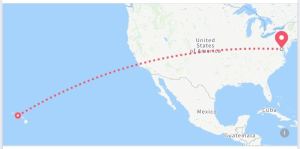
In early 2019, my spouse and I logged over 17,000 miles on Space A aircraft. We flew halfway around the globe (from Hawaii to Europe and back). We only paid for box lunches, a military passenger charter tax, and… one commercial flight on our last leg.

We’ve flown Space A for over 30 years, and that last paragraph has become our “normal” slow travel. The unusual part is that we did most of our trip on Navy aircraft and only had one flight with the Air Force’s AMC system.

You can read a quickstart guide to Space A from Poppin’ Smoke and other sites, and I’ve included the best resources at the end of this post.

Now you’re ready to learn the Navy’s secrets.

[Note: This post is written mainly for military retirees. If you’re an active-duty military family then you’re usually under time pressure to get back home before your leave ends. It’s almost impossible to put together the itinerary in this post unless you’re on terminal leave, or unless you’re a military spouse using a command-sponsor letter to fly without your servicemember.]

“Nords, why are you flying Space A anyway?”

I know I would’ve seen this question in the comments:  We’re financially independent.  We have enough money, we don’t need to fly for free.

We fly Space A for the thrill of the hunt and the in-flight amenities.

Image of the interior of an Air Force C-17 cargo jet with Space A passengers and lots of deck space for spreading out sleeping bags to take a nap | The-Military-Guide.com

Plenty of room to stretch out in a sleeping bag.

Here are some things you can do on a Space A itinerary:

  • Get through security screenings in a few minutes with no crowds.
  • Share an affinity with military passengers who (mostly) know how to fly.
  • Fly with fewer than 125 passengers, and frequently less than 50.  Once in a while, it’s just the crew and a passenger or two.
  • Lay your inflatable mat and sleeping bag on the deck of a cargo jet for a six-hour nap.
  • Enjoy seats on a military passenger jet which are actually bigger than commercial aircraft seats.
  • Find new camaraderie with fellow retirees (and a new audience for your old sea stories).
  • Watch a junior aircrew member give a personal safety brief that reminds you of starting your military career…
  • … and offer to sign off their loadmaster qualification card.
  • Enjoy the memories (and endure the flashbacks) of your military career.
  • Revisit old duty stations– only this time with liberty and money.
  • Discover adventure on the way to your destination instead of commercial-airline frustration.

After 17 years of military retirement (and FI), Space A just feels way cooler. (You’re warned from the very start to be flexible about when you’ll fly and where you’ll land.)  We enjoy it so much that we struggle to remind ourselves when it makes more sense to fly commercial.

Flying Space A as a Military Retiree

I’m going to assume that you already know the basics of the AMC Space A system, or you should read that quickstart post in the Poppin’ Smoke link. Many more details are in the “Related articles” section at the bottom of this post.

[Again, this post is written for military retirees. If you’re an active-duty family who typically flies with CAT III, IV, or V priority, then it’s difficult to put together an ambitious multi-flight itinerary. However, you could try this during terminal leave (at least 30 days) or if you’re a milspouse using a command-sponsor letter to fly without your servicemember.]

Military retirees have the lowest priority (CAT VI) for Space A flights. That’s the way it should be, because we have time and flexibility. Most retirees avoid traveling during the busy Space A weeks of the year (Dec-Jan and Jun-Aug) when active-duty families are traveling.

Retirees can also sign up far in advance of our travel date (usually 60 days) by e-mail. By the time you show up at the passenger terminal, you’ll be among the top names in the CAT VI category and ready to fly anything going your way in the next week. If Space A doesn’t work out then “total failure” is typically a longer stay at your location– or a last-minute commercial airline ticket.

Or you could just monitor the upcoming flight schedule, pack your go bag, and head out for “wherever”. During spring or fall you might sign up for a new Space A list every couple of weeks.

Our last itinerary (April-June 2019)

We live on Oahu, so we closed up the house and started our journey from the AMC passenger terminal at Joint Base Pearl Harbor-Hickam. We’d signed up 50 days before (for our 60-day limit) and had 10 days to get to “anywhere on the east coast”. We didn’t know whether we’d make a flight to Norfolk or Charleston so we had our eye on a mission to North Island in San Diego.

Our first travel leg was:

We stayed a week in Norfolk for a family reunion.

After the reunion, we’d originally planned to catch a Space A flight to Rota (Spain) or Ramstein (Germany). When we first deplaned at NAS Oceana, though, their mission board had a once-in-a-lifetime flight the following week to… Amsterdam and Denmark. We’ve never even heard about that before, let alone seen it on a schedule. We signed up on the spot.

Image of Amsterdam street corner with buildings leaning in different directions on 400-year-old unstable foundations. | The-Military-Guide.com

Amsterdam’s unstable foundations and leaning homes.

Our next set of flights:

We roamed around Amsterdam from late April through mid-May. We even had several meetups with friends who were passing through on their own slow travel. After you’ve read this post, you’re welcome to browse the public photo album (with captions) on my Facebook page.

We eventually left Amsterdam’s Centraal Station in an express train, and then switched to a local line for a station near the Ramstein Air Base in Germany.  That cost the two of us $293.08 to Frankfurt, and another $81.57 for the local train to Landstuhl. (Thanks to Dan of KeepInvesting$impleStupid.com for dinner and a ride to the base!) Ramstein was the base we were originally planning to fly into with Space A… until we were distracted by the once-in-a-lifetime mission to Amsterdam.

Image of military and cargo jets from the Ramstein Inn room looking onto the Ramstein Air Base ramp in Germany | The-Military-Guide.com

Ramstein Air Base view from our base lodging

(I’m afraid we didn’t do much around Ramstein. Despite our annual immunizations, I came down with an epic respiratory infection and my spouse picked up a nasty case of the flu.)

After a couple days in Ramstein we headed back to the U.S.:
4000 miles from Ramstein to BWI Passenger Terminal on the military’s chartered Boeing 777 Patriot Express. (BWI’s Passenger Terminal is part of the Baltimore-Washington International Airport.) Our $70.66 head tax for two people included the typical civilian in-flight food & beverage service.

After landing at BWI, we completed our Global Entry traveler interviews.  We had filled out the GE applications (and paid the fees) from Honolulu over six months earlier– and we were never contacted for a Honolulu interview. BWI is one of the sites that does GE interviews upon returning to the U.S. from overseas.

When we finished our customs inspection, we asked several staff and were finally directed to the GE office. They looked us up in their database, confirmed our IDs and passports, collected a full set of fingerprints, and asked us whether we’ve ever been arrested. (“Not quite.”) Our GE cards (including TSA Pre-check) were mailed to us a couple weeks later.

We drove from BWI to CampFI Mid-Atlantic (in Spring Grove, VA). After our weekend we carpooled with a friend to Norfolk. The Norfolk AMC Passenger Terminal didn’t have many flights on the schedule so we decided to try flying west from NAS Oceana again.

Image of Navy Blue Angels F/A-18 Hornet aircraft at Naval Air Station Pensacola, with the wing of our C-40 passenger jet in foreground. | The-Military-Guide.com

Blue Angels on the flight line.

Oceana’s next flight was four stops, all in one very long 12-hour day:

  • 1100 miles from NAS Oceana to NAS Key West.
  • 800 miles from NAS Key West to NAS Pensacola.
  • 800 miles from NAS Pensacola to Tinker AFB. (We flew the Blue Angels!)
  • 1300 miles from Tinker AFB to NAS NI.

We spent an enjoyable weekend in San Diego. We were stationed there in 1994-97 so we drove around our old neighborhood and brunched at a ChooseFI meetup before the premiere of the Playing With FIRE documentary.

We were waiting for a Navy C-40 mission:

  • 2600 miles NAS North Island – Hickam
  • … and the flight was canceled at the last minute.

By that point, we were ready to go home and there were no more scheduled Space A flights for at least three days. We cashed in some commercial airline miles, rode to San Diego’s commercial airport, and flew home on Hawaiian Airlines.

I’ll admit it: I was a tad hypercompetitive about making the entire trip by Space A, so that last-minute cancellation stung a bit. At least Oahu’s welcome-home surf was 8-10 feet on the south shore.

Our final tally was 17,400 miles by Space A, 2600 miles by commercial air, and 300 miles by train. During our two months of slow travel, we flew through 12 time zones. Among box lunches and the head tax, we spent a total of $81.86 on military airfare.

Next, we’ll describe the advantages of the Naval Air Stations.

But first, here’s a funny Space A story:

The Enterprise Rent-A-Car center at BWI uses a different computer system than the tiny little Enterprise franchise in Virginia Beach by NAS Oceana. When we rented the car at BWI, we told them that we’d return the car in Norfolk (and they noted that in their computer system). When we flew out of NAS Oceana and left the rental car’s keys with the Aviation Duty Officer, the VA Beach franchise agreed to pick up the car from the NAS Oceana long-term parking lot… but then they “forgot”.

Two weeks after we returned to Oahu, the BWI office asked me when I was planning to return their car. Enterprise BWI did not talk with Enterprise VA Beach, and vice versa. It took me three more phone calls (and three more weeks) for the VA Beach office to get around to picking up the car. (I had to coach an employee to the car over the phone as they walked the Oceana long-term parking lot.) It took another two weeks for the BWI office to retroactively clear all the credit-card charges and give me an accurate bill.

Well, in any case, it’s funny now.

Fly Navy! (Space A)

The Navy’s passenger terminals have their own procedures and tend to be much less formal. It’s similar to using a scrappy local airline rather than a monolithic bureaucratic MegaCorp. If you’re used to the Air Force AMC system, you may be surprised at the Navy’s lack of structure. (You might not even get a boarding pass for the flight.) If you’re in the Navy, then it feels like coming home.

First, while most AMC Space A passenger terminal schedules are on Facebook, only a few of the Navy Space A passenger terminals use social media. Some of them will give you the mission schedule over the phone.

Next, they may have their own rules for passenger lists. Some will only keep you on the list for 45 days. Another may require you to mark yourself present (in person) a day or two before the flight. One passenger terminal is notorious for listing its missions as go times– not the usual show times of 2-3 hours prior to the flight. Before you make any plans based on Facebook information, phone the terminal and try to talk to a human.

Third, Navy passenger terminals may not be busy. Some of them are “black holes” in remote locations with only a couple of missions per week. If the mission is canceled (or the plane breaks) then you may be stuck many miles from a commercial airport… and the local hotel is full on a Saturday afternoon… and the rental car companies close at noon Saturday until 9 AM Monday.

Image of the logo of the MilSpaceA Take-A-Hop app | The-Military-Guide.com

Best $6.99 app I’ve had.

Fourth, it’s absolutely essential to use an app for local base/community info. We greatly enjoy the Take-A-Hop MilSpaceA app, and at $6.99 it’s worth every penny. It’s saved us hours at finding transportation & lodging, and it greatly automates the Space A signup process. But again, call the Navy passenger terminal and try to speak with a human before you make the rest of your plans.

Fifth, some passenger terminals list arrivals as well as departures. You might also figure out that another passenger terminal’s departing mission is arriving at your local base. If you learn (from the other passenger terminals) that a mission is arriving at an airfield near you, then tell your local passenger terminal what you’ve learned and ask them to check into it. You may be the only one who knows about it.

Finally, and most importantly: not a lot of people know about the Navy passenger terminals. You might be the only Space A passengers to show up, and your fellow passengers might all be locals.

Major Navy Space A Passenger Terminals

Here are more details of the major Navy Space A passenger terminals. Most of this info is found on Facebook (if they’re on FB) or in the Take-A-Hop app.

Naval Air Station North Island (Coronado, San Diego):

  • This is the terminal that lists go times, not show times. You need to be at least two hours prior to the times on their page, especially in case the mission lands early and the crew is in a hurry to take off. (Ask me how we know.) Most of their aircraft are C-40 military passenger jets.  NAS North Island may still be using a 45-day limit on their Space A signup list. They get a lot of “feedback” on that, as well as their practice of listing wheels-up times instead of show times.
  • On weekends, phone or visit this terminal to check their schedule. (Cell phone service can be spotty on the island.) They might not update the FB page until Monday morning, and Murphy’s Law Of Space A means that’s when you’ll learn that you’ve waited all weekend for a canceled flight. Let’s not get into how we’ve learned that. More than once.
  • The Navy Gateway Inn & Suites is in the middle of the base (a short walk from the passenger terminal). The Navy Lodge is on the (very nice) beach but it’s a longer shuttle ride to the terminal.

NAS Whidbey Island (Washington):

  • It’s a three-hour shuttle/ferryboat ride from SeaTac airport, and the base is relatively small. Its remote location means that not many passengers will compete for flights out of here– but they fly to Japan, Hawaii, and the east coast.
    Be sure to check for rooms at the base before you head there. The Navy Gateway Inn & Suites is closer to the passenger terminal. The Navy Lodge (Seaplane Base) is on the opposite side of the base.

NAS Oceana (Virginia Beach, VA):

  • This terminal doesn’t do Facebook. “Signing up” usually means that you fill out the passenger manifest by hand just before the flight leaves. We’ve never had a boarding pass here. Stay close to the counter personnel because when the loadmaster (or even the pilot!) shows up for passengers, nobody will announce it on the PA system and they won’t spend much time looking for you.
  • Call 757-433-2903 for Oceana’s schedule. Listen carefully to the recording, because for weekend missions you may have to mark yourself present in person on Thursday. They may also list their schedule for seven days instead of three.

Naval Station Norfolk’s Passenger Terminal

  • Naval Station Norfolk’s passenger terminal is so big & busy that it’s actually part of the AMC system. It has more flights (because AMC) but it also has more passenger competition. It’s a 30-45 minute drive from NAS Oceana, so research your options carefully.

Japan

  • Japan has several Naval Air Facilities, but I haven’t spent enough time there to learn the details. (My spouse and I hope to remedy that deficiency after the 2020 Olympics.) You can find more info at Poppin’ Smoke– Stephanie has lived in Japan for many months and she’s a hardcore expert on all things there.

Other Naval Air Stations are listed on Wikipedia and Military.com. Again, you may be able to research their passenger terminals and policies on Facebook, but call them before you make plans to go there.

Would we fly Space A again?

You bet.

Our next itinerary starts on 1 September with FinCon19 and Military Influencer Conference in Washington DC, followed by FI Chautauqua in Porto, Portugal. After that we plan to wander the Iberian Peninsula for another 60 days or so. You can stalk my public Facebook page for updates and photos.

Your Call To Action: Before You Go

  • Download the Take-A-Hop MilSpaceA app.
  • Use the Take-A-Hop app to e-mail your signup for the list about 50 days before you want to fly (or 35 days for some Navy passenger terminals).
  • Research the Space A passenger terminals at your possible destinations and familiarize yourself with lodging & transportation at those bases.
  • Plan to wear close-toed shoes on the flight (mandatory) and multiple clothing layers (or you’ll freeze).
  • Be flexible!

[earnist ref=”the-military-guide-to-financial-independence” id=”70177″]

Related articles:
The Air Force AMC Space Available Travel Page (“the references”)
Space A Frequently Asked Questions
DoD Instruction 4515.13 “Air Transportation Eligibility” (the source reference)
Poppin’ Smoke quickstart
Poppin’ Smoke Facebook group
Poppin’ Smoke gear for a Space A flight
The Take-A-Hop MilSpaceA app
Poppin’ Smoke advice for the Hickam AMC passenger terminal (I helped edit the details)
Facebook pages for:
Joint Base Pearl Harbor-Hickam AMC Passenger Terminal
NAS North Island Air Terminal
NAS Whidbey Island Air Terminal
(NAS Oceana Passenger Terminal doesn’t have a FB page.)
Surprising Secrets Of Slow Travel
Fast Personal Growth Through Slow Travel
Travel While You Can
Lifestyles In Retirement: 90 Days In Spain
Lifestyles In Retirement: Long-Term Travel
The Frugal Effect
Our Amsterdam photo album, with captions (Facebook, public access)

Posted in Military and Veterans Benefits, Travel | 4 Comments

From The Mail Buoy: Staying For 20 And Hacking The High Cost Of Living in Hawaii


A reader writes:

“Nords,
I’m an avid reader of your website and love your Reddit replies. I’m active duty with 14 years of service.  I’m saving a considerable amount of my paycheck and investing in dividend growth stocks with a portfolio that yields about 3.5%.

I can retire at 20 years or try for one more promotion, but I’d do the High Three pension which would put me at about 22-23 years.  I would like to work in Hawaii and will be stationed there again soon.  I don’t want to buy a house because there is no guarantee I can stay there until retirement. I don’t want to be a landlord from 2,000 miles away.

If I got out at 20, I would probably need to get a job until I reach FI.  If I promoted and stayed past 20 then I probably wouldn’t have to work again.  I am kind of torn, but I have the time to figure it out.

My questions:
– How do you afford to live on Oahu on a military pension and investments?
– Do you regret not going further in your military career?

Just wanted to get your thoughts.  Thanks for all you do!  You have made a tremendous impact on so many people!”

My response:

You’re welcome, and I’m glad it’s helping!

“How do you afford to live on Oahu?”

The biggest expenses of life on Oahu are housing and commuting. Once you find a hack for those situations, the rest falls into place.

The easiest housing hack is roommates. Another answer is a small 2BR cottage on a lot next to a bigger home (that you rent to tenants).

You could also use geo arbitrage: pay your rent (in Hawaii) by owning high-performance investment rental properties (anywhere else in America) to provide the cash flow.

You could:

  • Buy a multi-family building here and have your mortgage paid by the other tenants.
  • Rehab ugly neglected properties on beautiful lots. (See the example at the end of this post.)
  • Offer incentives to neighborhood people (realtors, property managers, mail carriers, friends) to let you know when bargains are going up for sale.
Image of rainbow over Hawaii home | The-Military-Guide.com

“How can I afford this?”

Over the last 17 years, my O-4 military pension has grown 40% from cost-of-living adjustments. It started at $31,860/year when I retired in 2002 and in 2019 it’s $45K/year. Back in 2002 our investment portfolio was $1M (and >90% equities). Despite two recessions, that’s grown faster than inflation. We started withdrawing from it in 2002 at the 4% Safe Withdrawal Rate ($40K/year).

Over those same 17 years, our spending has grown a bit less than inflation. It’s been a little lumpy but in real (inflation-adjusted) dollars, it’s remained flat over the long term. Today my spouse and I spend about $80K/year— some years a little more, some years a little less. This post shows what our finances would look like if our spending came from only our investments and without my pension.

More interestingly, our non-discretionary spending has dropped (just like the research in that link) and our discretionary spending (travel!) has gone up. If we ever had to cut back on our spending then we could easily do so, but it wasn’t necessary during the Great Recession.

Our finances have survived the sequence-of-returns risk and our assets are growing faster than inflation while our spending has stayed flat. That’s sustainable. Our portfolio will last longer than we will.

After the military, I’d recommend renting everywhere (including Oahu) for at least a year. You’ll figure out the best neighborhoods for your needs, and then you’ll watch for a good property selling at a discount. Oahu currently has a severe housing shortage, but new construction will come on the market in the next five years (Koa Ridge, Ho’opili, Kakaako) to reduce the median prices again. The rapid-transit light rail corridor will also create another construction boom which will eventually reduce the prices of properties which are farther away from the rail line. That creates more real estate bargains for people who don’t have to commute to a job.

“Do you regret not going further in your military career?”

That’s a tough question to answer because humans (even submariners) tend to rationalize those situations. I was demoralized and confused for about a year after hitting my career limit, but then I realized it was a blessing in disguise.

I commissioned in 1982 (the Cold War’s 600-ship Navy) and I was drafted into the nuclear power program (as were many of my classmates) by my academic performance. I screened “XO in excess” in 1993 (the drawdown after the Cold War and DESERT STORM). I had the performance to be a 1980s Cold War XO and I might have screened for CO. (Back then the quantity was much more important than the quality, but those are sea stories for another day.) However, in the 1990s drawdown, I didn’t make the cut to be in the 40% of my year group who served an XO tour. They earned it with their performance. I did not.

Image of Doug Nordman at Navy awards ceremony a few years before retiring from active duty. | The-Military-Guide.com

This *was* my happy face back then.

By then my active-duty spouse and I had started our family. During 1993-94 I was miserable about falling off the career track but I also realized how much more family time we could gain. Then my spouse and I stumbled into instructor duty, which gave us much more work-life balance than sea duty.

Two years after not making the cut for XO, I was very grateful to have been forced off the submariner career track. I was left alone by my assignment officer, and I made my own submarine career at training commands until I retired.

In retrospect, I should have left active duty for the Reserves, but I was too ignorant & scared to attempt that. Our finances would’ve worked out about the same, but our quality of life would’ve soared.

I also realized that I didn’t want to work after Navy, and our research led to resources like “Your Money Or Your Life” and “Millionaire Next Door”. I had the time (and bandwidth) to focus on our family and our finances instead of devoting my waking hours to being XO or CO.

I found my answers to my “What if… ?”, but I agree that rationalizing (behavioral psychology) might have been a factor in my adjustment.

Don’t Gut It Out To 20

Today I tell servicemembers to take it one obligation at a time. Stay on active duty as long as it’s challenging & fulfilling. When the fun stops, though, then leave active duty for the Reserves or National Guard. Keep saving for financial independence so that you have the flexibility to design your bridge career to suit your quality of life.

Try to adopt an attitude of abundance instead of scarcity. This is difficult, yet very valuable. I stayed on active duty out of my scarcity mindset (“I’ll never find another job!”), and today I see financial opportunities everywhere. When I retired in 2002 I never even wrote my resume, yet my network delivered several job offers. I’ve had similar offers every few years since then, and I’ve blazed my own revenue path.

While you save and invest for FI in the military, the “worst-case” is failing to promote and being involuntarily separated before active-duty retirement. You’re more likely to be continued on active duty to 20 or you’ll affiliate with a Reserve/Guard unit. Either way, you’ll find more employment in your skills (with a corporation or as a consultant) and you’ll discover new interests and skills. (For me, it’s writing and coaching.) You’ll gradually build a sustainable lifestyle (with a few speed bumps) and you’ll reach FI along the way.

Our reader responded:

“Do you ever regret retiring in Hawaii, with it being so expensive? I would love to retire there but the taxes are unreal. Wouldn’t your money go further in another state?”

Hawaii no ka oi!

Image of White Plains Beach 2-4-foot surf swells in June 2019 with life guard shack in foreground. | The-Military-Guide.com

Every day… if I could recover quickly enough.

We have no regrets about living in Hawaii– in fact, we haven’t found anywhere else which creates the same feeling. By the time we got here in 1989 (seven years after college, 13 years before I retired) we’d lived in enough places to recognize our combination of climate, cultures, and lifestyle. Our extensive global travel since then has not changed our preferences.

One learning experience was leaving Hawaii in 1994 for a three-year tour in San Diego. My spouse and I were both stationed at training commands, and we returned to Oahu 2-3 times per year to teach at Hawaii commands. When our planes landed at Honolulu, it felt more like “coming home” than when we landed back in San Diego.

That was a hint. Our discussion changed from “Hawaii is too expensive!” to “How can we afford to live here?”

Our money would go further in many other locations yet we’d lose our quality of surfing, er, I mean, our quality of life. None of the dozen other places I’ve lived in the Navy (and the other dozen I’ve visited since then) have all three factors of climate, culture, and lifestyle.

I’ve lived at this address longer than anyplace else in my entire life. Our daughter was born & raised here. She and her spouse (from a very cold state!) are interested in living in Hawaii. They’ll find a way to align their spending with their values, and they’re willing to work & invest for it.

It’s not the taxes.

I would not let taxes drive your choice in locations.

First, figure out the lifestyle priorities which matter to you (instead of the cost of living). When those priorities are truly important to you then you’ll be willing to work and save for them.

The best resources to find your place in the world are websites & databases like TheEarthAwaits and asking questions of residents like me. But then you’d want to dig into the numbers that matter to your lifestyle and figure out how you’d optimize them. You’d visit a place for a few months. If you like what you’re living (and spending) then stay for a year, or else keep traveling.

Second, if taxes are your priority then dig into the rates to find out how they actually affect you. Run an income-tax calculator to see how much you’d have to pay in both federal and state taxes.  For example, Hawaii workers carry the tax burden because employee salaries are taxed more than many other states. However when you’re financially independent then you don’t need a salary.

The state excise tax (4.5% on Oahu) is a regressive form of sales tax, but it’s still a consumption tax. The less you consume, the less you pay. There’s no excise tax at the military exchanges or commissaries.

Hawaii also has low property taxes and does not tax military pensions. That more than makes up for the excise tax.

Our personal state income tax bill for 2018 was $2090, and in each of the two earlier years, it was $1046 & $1340. Much of that was incurred for Roth IRA conversions, and we’re finished with those.

Research your living expenses

Perhaps your research shows you Hawaii’s median expenses without describing the ways to reduce them.

Image of a garage with two Nissan Leaf electric vehicles and a used photovoltaic panel that will be installed on the house's roof with the solar array to recharge the Leaf batteries. | The-Military-Guide.com

Note the new (used) PV panel to add to the house’s roof array.

The climate is benign, our home is energy-efficient, and we don’t use heating or air conditioning. Our solar water heating system and our photovoltaic panels have cut our electric bill to $18/month. (We invested $16K on those in 2005, and 65% of that was recouped through federal/state tax credits.)

We spend less money per year on gasoline (on this 30×40-mile island) than anywhere else we’ve lived in the U.S. I bicycled a lot when I was working, and now we retirees don’t drive very much. We just bought a used Nissan Leaf electric vehicle that we’ll recharge from our PV array, and it requires almost zero maintenance (no fuel-burning engine).

We shop the commissary and Costco for local foods. We do our own chores & yard work (and for great exercise). We do our own maintenance and most of our own repairs. We only irrigate the yard during the summer months. Our biggest utility expense is $100/month to replace Oahu’s aging sewage system.

We’ve considered surfing meccas like Panama and Costa Rica. The surf is great, but my spouse and I see no reason to uproot ourselves for the sake of a cheaper cost of living. I’ve followed the stories of people who’ve lived in those places (like Arif Sealey from The Military Guide book). Jim White of Route To Retire is about to move his whole family to Panama.  If I couldn’t live in Hawaii then the areas near San Diego or Seattle might be all right. Andalucia (southern Spain) is very attractive. I wouldn’t enjoy the climates as much but the cultures are interesting, and I could hang up my longboard and substitute a stand-up paddleboard or a kayak. We appreciate the fun and benefits of living outside the U.S., but we also love Hawaii’s cultures and lifestyle.

The best advice: research the databases and make a list, then visit them for a few months. If the cost of living seems too high then figure out how to minimize the non-discretionary expenses.

You’ll find the right balance between lifestyle and budget! You’ll feel comfortable with the living expenses because you get so much enjoyment out of your chosen location.  You’re also not required to live there for the rest of your life, and you may shift from “Here’s my place!” to Let’s try it here for a few years and then think about whether we want to explore somewhere else.”

Postscript: An Example of a Hawaii House Hack

In 2018 a friend bought a single-family home in foreclosure. They report:

“When the previous owner was foreclosed there was a balance of $882K on their mortgage. A previous appraiser must have valued it for $900K to $950K back in 2006 when prices were inflated.

We put 20% down, so we needed $121K for the down payment. We also budgeted $7K in closing costs and $50K in repairs. It’s not a small amount of capital. However, if you can come up with the capital, the monthly payments are low when you have small rental units attached which are offsetting your mortgage payment.

I did about 25% of the work myself (demo, flooring, painting). My handyman did 65% of the work (framing and finishing) with me working as his assistant. I hired out 10% of the work (plumbing, electrical, and texturing the drywall).

The 650 sq ft basement unit was a total gut job. It took about six months. It functions as a legal mother-in-law suite. No full kitchen. We have had great tenants downstairs since January. We get $1600/month rent and our total expense (mortgage principle & interest, taxes, and insurance) is $2686/month.

Now I’m thinking about building a detached accessory dwelling unit on the property next year. My lot size is .39 acres and set up fairly well to accommodate a second detached 800 sq ft ADU.

The upstairs was livable from day 1 and just needed some cosmetic upgrades. We are 75% done upstairs. I am doing new flooring in the bedrooms (vinyl plank) which will take me about one week. After that, it’s a moderate list of very small repairs.

Overall, I was very happy with the renovations and stayed within budget.”


October 2020 update:  my friend just checked in again.

“I think now is the time with interest rates being so low. I was thinking you could use my actual numbers from 2018 with a purchase price of 603K or you could re-frame as if I sold it to another person in 2020 for 800K.

My actual PITI is $2680 with a loan of 482,400 at 4.5%.

PI: 2445
Taxes: 130
Insurance: 105

The total payment would be almost identical if my house re-sold for 800K and the new owner got a 640,000 loan at 2.75%.

Purchase Price: 800K
Down Payment: 160K
Closing Costs: 10K
Loan: 640K

PI: 2613
Taxes: 168
Insurance: 105

Total Payment: 2,886

The rent for the basement unit is $1600 for a 650 sq. ft. one-bedroom. However, I have to pay 4% GE tax on the gross, which is $64/month and my utilities are probably $50/month more. As a result, the net off-set of the rental unit is $1486/month.

The $2886 mortgage would be off-set by $1486 of rent and the new owner would be left paying $1400/month. And that’s not all… The first mortgage payment would have $1146 going toward principle. I also included my utilities below.

Electricity: $180
Internet: $75
Propane: $45
Water: $45
Trash: free (property taxes).”


For more resources, see the BiggerPockets link in the “Related articles” section below.

[earnist ref=”the-military-guide-to-financial-independence” id=”70177″]

Related articles:

Yes, the mail buoy is a Navy thing. Don’t get fooled!
Reddit’s Military Finance forum
Good reasons NOT to live in Hawaii (with links to many more resources)
Stay For 30 Or Retire At 27?
Don’t Buy A Home When You Leave Active Duty
How Much Is The COLA On My Military Pension?!?
VA Loan Guide – What You Need to Know About Buying a Home with a VA Loan
“Hey, Nords: How’s Your Net Worth?!?”
Frugal living is not deprivation
The BiggerPockets real estate investing website (for many more house-hacking resources)

Posted in Financial Independence, Military Retirement, Money Management & Personal Finance, Travel | 4 Comments

“I Inherited Money And Now I Can’t Blog About Financial Independence Anymore”


I’m finally ready to write about distributing my father’s estate. As many of you may remember, Dad passed away in November 2017 after more than nine years with Alzheimer’s Disease. For over six of those years, Dad was in a full-care facility while I handled his finances.

It only took a few six months to handle his estate and finish his income-tax returns, but it’s taken me another 13 months (and a lot of keyboard therapy) to internalize everything.

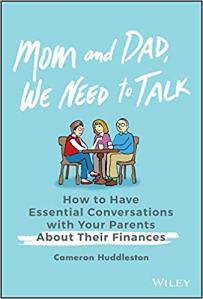
Image of Cameron Huddleston's book cover "Mom and Dad, We Need to Talk: How to Have Essential Conversations With Your Parents About Their Finances" | The-Military-Guide.com

Wish I’d had this a decade ago.

I’ll discuss the mechanics of distributing an estate, as well as the lessons learned. In a future post, I’ll talk about how Dad’s death improved our own Ohana Nords estate planning.

We don’t talk enough about financial literacy in polite society gatherings– let alone aging and estate planning– yet almost everyone in the room is dealing with the caregiver burdens and the concerns of losing a loved one.

This was a painfully tough post to write, but I feel that it’s an important challenge. Financial independence gives you a lot more control over your time (and energy), but the unicorns & rainbows are always interrupted by real life. If we’re going to talk about awesome FI lifestyles then we also have to address the hard topics.

I’d particularly like to thank Dew-Anne Langcaon and Bonnie Castonguay at Ho’okele Health Innovations for helping me navigate Dad’s dementia symptoms all the way back in 2009. They were always standing by over the years. I’d also like to thank Cameron Huddleston (again!) for just letting me talk. I’m no expert but I can pass on a lot of good advice.


My blinding epiphany of the blatantly obvious

Image of Dean Nordman and Doug Nordman in early 2002, after funeral of Dean's father. | The-Military-Guide.com

Dad and me, early 2002

You’re never ready for the death of a loved one. Even though I had years to prepare Dad’s finances for his death, my brother and I still weren’t emotionally ready. Dad and my brother were in Denver and I was in Hawaii, but thousands of miles of separation made no difference in the pain and the other feelings.

We also weren’t ready because Dad had survived so many medical scares. The month before he died he had just begun showing some of the symptoms of end-stage Alzheimer’s, yet it’s quite common for late-stage Alzheimer’s to continue for several years of progressively worse issues. When Dad first started having trouble with very low blood pressure and a sudden loss of physical coordination, we expected that he’d pull through this “health crisis” just like several times before.

Two days later, on the doctor’s advice, Dad was in hospice care and (at additional expense) a 24/7 care nurse.

While my brother and I were girding ourselves for weeks of medical assistance, on Friday evening Dad was given a small dose of morphine to calm his restlessness. He slept soundly through the night, and on Saturday he never woke up.


Immediate actions

Hospice and the nurse service were exactly the support we needed. They knew what to do next, and they helped my brother through the first day after Dad died.
When the doctor suggests it, I strongly recommend hospice. (Medicare may cover it.) Even if you know what you’re doing as a caregiver, you’re in no emotional shape to do it.

We already knew that Dad wanted to be cremated after he died– but now the question was which cremation facility and when it would happen. Hospice and the care facility referred my brother to several mortuaries (with prices), he let me know the one he chose, and then hospice took care of Dad’s body.

Dad’s 1950s military training didn’t qualify him for veteran’s status, so he was not eligible for military funeral honors or other benefits.

We could have selected a mortuary years ago, but we never thought that far ahead. I’m not sure we ever would have been able to have that conversation.

The memory-care facility tactfully offered to help pack up Dad’s belongings and store them. The subcontext: they wanted the room for another patient, and Dad’s death helped relieve the caregiver stress of yet another Alzheimer’s family.

Personally, my first emotional reaction was a huge release of caregiver stress. After more than six years I was no longer dreading a ringtone with “the call”. Of course, I immediately felt guilty about feeling relieved.

The mortuary asked my brother about death certificates, and I’d read that families usually wished they’d had more certified originals. I recommended buying 20 of them. That was our most expensive mistake of the whole estate process because it turned out that we really only needed a handful.


Follow-up actions

My very first lesson was that you can’t make death notifications on weekends or holidays. People will answer the phone, sure, but they’re just taking messages for the next business day.

My reflex reaction (as a submariner) was starting a death log. (This is in addition to the death checklists.) It’s essential to help you remember who said what and when about where, how, and why. (You also think you’re handling yourself just fine during a conversation, but then your emotions sneak up on you again.) I used the log several times to remind supervisors of exactly what their employee said they were going to do and when it would be done.

A few days later I realized that the log’s keyboard therapy was also helping me through the grieving process. Much of this post comes from that 19-page chronology.

My next reaction was to empty Dad’s checking account at ANB Bank. (Yeah, I’m naming names. ANB Bank worked very hard to earn a zero-star review.) I’d dealt with their uncooperative and excessive bureaucracy since the day I received my conservator’s appointment, but even then I was very reluctant to switch his pension deposit and Social Security deposit to any other bank or credit union. Dealing with the bank was frustrating, but it still seemed less frustrating than the unknown of changing deposits to another account.

For over six years, I’d kept that ANB checking account balance at $100 and only used their online system. When any of Dad’s deposits arrived then I’d transfer them out the next day. On the morning that Dad died, I transferred out another $99 and left a dollar in the account. I figured that would avoid any trouble flags or minimum-balance fees.

I was wrong, but we’ll come back to this problem.

[UPDATE:  A few days after this post was published, ANB Bank contacted me. See the details below.]

I also left a voicemail with Dad’s lawyer about filing Dad’s will with the probate court.


Who does what?

Decades ago when Dad updated his will, I was still on Navy active duty. We all agreed that my brother would be the executor of Dad’s will.

When Dad entered his Denver full-care facility in 2011, my brother was appointed as Dad’s guardian and I became his conservator. My brother (a Colorado resident) continued as Dad’s executor. We didn’t even consider other options.

When Dad died, our appointments ended. However, that just replaced our annual piles of probate-court forms with seven more of their forms. We even had to petition the probate court to terminate our appointments… despite the fact that they’d already ended upon Dad’s death.

Fortunately, Dad’s estate did not require probate. Years before he began losing his cognition, he set up his investment accounts as “Payable On Death” or “Transfer On Death”. This distributed the accounts through beneficiary designations and put them outside of the probate process. The remainder of Dad’s estate was less than the probate threshold, so Colorado law (and the Denver probate court) did not need to probate his estate. Even though my brother was the executor (excuse me, the “personal representative”), there was no need to execute anything. Dad’s lawyer simply filed his will with the probate court.

Although I was legally no longer allowed to mess with Dad’s finances, I still had a separate pile of conservator paperwork to send to the probate court. My brother had the same list of Dad’s assets (and account numbers, and balances, and phone numbers), yet I knew exactly how to make the notifications and handle the disbursement.

In addition, my brother had his hands full with the logistics of handling Dad’s remains.

Each of us was still struggling with grief, recovering from caregiver stress, and second-guessing what we could have done differently during Dad’s final days.

We agreed that when it came to the probate court, contrition was easier than permission. Even though my brother was the one with the authority, I continued to handle all of the finances and I kept him informed. That turned out to be a good thing because he might have been tempted to passively resist even more of the financial bureaucracy. We’ll come back to those issues too.


The first (business) day after death

On Monday morning I spent over three hours making 16 notification phone calls. I was talking to special teams at some of these corporations, with names like “Survivor Relations” or “Inheritor Services”. I quickly grew tired of hearing strangers recite their scripts with sentiments like “We’re sorry for your loss.”

Here’s the call summary from my death log:

  • Dad’s lawyer (to file his will with the probate court),
  • Social Security (who also notified Medicare and Medicaid),
  • Equifax, Experian, and TransUnion (TransUnion was easiest),
  • Dad’s pension management corporation,
  • Dad’s Medicare supplemental insurance company,
  • Dad’s prescription insurance company,
  • Dad’s doctor, pharmacy, and dentist,
  • ANB Bank (who immediately locked me out of the last dollar in Dad’s checking account),
  • USAA, Navy Federal Credit Union, and Fidelity Investments, and
  • Two life-insurance policies.

The next three weeks

It took that long for the state and the mortuary to give my brother the death certificates and for his priority-mail envelope to get to me.

I’d already prepared the forms and cover letters, and I sent them out with certified originals (or copies) of the death certificates. Only two companies insisted on certified originals and several companies didn’t want any paper. (They said that they used the Social Security Death Index.) I used priority mail so that I could track arrival dates and follow up on anything that got “lost in the mail”.

Image of Dean Nordman at Colorado Monument National Park in December 2009 | The-Military-Guide.com

Dad hiked here for 25 years.

I started reading about income tax returns:

No estate tax returns were due because Dad’s assets were well below the threshold for paying estate taxes.

My brother finished scattering Dad’s ashes at his favorite hiking spots. (Scattering ashes in national parks is regulated and might be illegal in some state parks. Don’t get caught.) He donated Dad’s clothing, books, and puzzles to the care facility and a thrift store.

After that my brother seemed to step back from the rest of the estate process. His business was struggling with employee turnover (and training the new hires) so he was working overtime. He was slow to answer e-mails and texts. Nobody wants to deal with the unpleasant parts of the process, especially when we have to make financial decisions while we’re grieving.

I completed seven different forms for the probate court. My conservator’s appointment was formally terminated in January (two months after Dad’s death). Once my brother and I reported (on yet another form) that we’d received our inheritances, the probate court issued its “decree of final discharge” in May.


The inheritance paperwork details

Executors are supposed to notify potential creditors of the death so that they can file claims against the estate. A newspaper notice is usually all that’s required, and the probate court’s pro se (self-help) staff can cite the local laws for creditor announcements.

Every company has its own form for disbursing POD/TOD inheritances.

Some companies insist that you open an account with them so that they can transfer the funds “in house”. (You can always move the money later.) Other firms will wire the money anywhere you want (for a fee).

The Prudential insurance company was particularly slimy in their payout. They heavily marketed their “special checking account” for beneficiaries, which strongly encouraged leaving the money with Prudential and only writing checks when you needed the funds. Their multi-page form (in a tiny font) made it very difficult to find the check block for “Pay out all the insurance money now.”

I knew to watch for this issue because Prudential took advantage of Gold Star survivor families. They settled the class-action lawsuit in 2014 but in 2017 their forms seemed just as confusing and intimidating.

My brother and I were struggling to keep our minds on the financial part of the estate process. (My death log includes entries like “Had enough for today” and “I’ll deal with this later.”) I’d already told him that no probate was required, but twice (when the probate court mailed him notifications) he called with concerns about having to hire a lawyer and petitioning for the estate’s personal representative. We talked through it, and then we’d go over our “To Do” list again… until next time.

Paperwork became a challenge. My brother was not completing the POD/TOD affidavit forms I’d sent him, or he was “losing” them. Our progress deteriorated to the point where I finally changed my attitude and decided to be a good staff action officer again. From then on I filled out all of the forms and sent them to him, tabbed by “Sign here” stickers and with addressed/stamped envelopes. I’d follow up with phone calls about signing and mailing the forms to the financial companies or back to me.

For the next several months, I was perpetually about one phone call (or missing letter) away from flying to Denver to walk us both through the paperwork.

My brother and I get along, and we agreed on what needed to be done. I can only imagine what settling an estate must be like if one of the heirs completely withdraws from the process or even argues about the decisions.

I learned about policies I’d never encountered before. NFCU’s photo-deposit software wouldn’t accept a $21K check. We had to drive to a local branch and use their ATM. It turns out that many banks and credit unions limit their photo deposits to $10K to minimize fraud. Considering the hassle of dealing with paper checks, I greatly preferred electronic fund transfers and even wire transfers.

[2 August 2019 update:  reader Brian Henry was able to phone NFCU’s customer-service number to arrange a temporarily larger deposit limit.  Thanks for the tip, Brian!  If you know that a large check is coming, or if your only alternative is a long drive, then consider contacting your bank or credit union to see if they can accommodate your higher limit for a photo deposit.  I personally wish that financial institutions would stop sending five-figure checks to my mailbox for any passerby to pilfer (or for the U.S. mail system to lose).  Electronic transfers or even properly-authorized wire transfers would avoid this additional stress.]

I searched the national and state websites one more time for any lost or unclaimed accounts. They work– when I was searching for my Dad (and for his Dad), I found a $125 utility deposit refund that was owed to my brother.

I used TurboTax to file Dad’s final federal and state income tax returns. I’d already done that for seven previous tax years, so these returns were straightforward.

We didn’t have to file an estate tax return, and I used TurboTax for the estate’s income tax return. (The specific forms were part of TurboTax Business, but that may have changed by now.  Check TurboTax’s website before you buy.) I should have hired a CPA or tax-prep firm, but it was the height of tax season and I knew I’d have trouble with the filing deadlines. I also knew enough about the process and the forms to muddle my way through the software.

In retrospect, I had no need to shoulder this burden and should have just asked for an extension.

I updated my death log almost every day: who I’d called, who owed me what, when something was supposed to happen. If the process went horribly wrong, this would be my evidence for legal proceedings.


ANB Bank

Image of letter from ANB Bank apologizing for handling Dad's estate. | The-Military-Guide.com

ANB Bank’s letter

Here’s an example of how the estate-distribution process can go horribly wrong when corporate policy triumphs over common sense. Luckily it only cost us a dollar.

[A few days after this post was published, ANB Bank contacted me to discuss a solution. The exec didn’t have the details, so I gave them a summary from my log.  I suggested that it would be easier for the bank to send the money to my brother (the estate’s personal representative). The exec asked my permission to mail me any necessary disclaimers or final agreements for my signature.  That weekend I went on travel and put our postal mail on hold for a couple of weeks.  The next week my brother e-mailed that the bank had sent him a check for 53 cents and enclosed a $25 gift card.  When I picked up my mail after travel, I’d also received a 53-cent check and a $25 gift card.  My thanks to Ms. Nicole Millican for re-assessing ANB Bank’s policy.]

ANB Bank simply refused to disburse the $1 in Dad’s checking account because Dad had never designated that account as POD/TOD. I’m sure it never occurred to him when he opened it, even if POD/TOD had existed in the 1990s (25 years before his death). I couldn’t change it to POD/TOD as a conservator, and my brother couldn’t do it as a personal representative.

The proper procedure would have had my brother petition the probate court for a letter of appointment as the estate’s personal representative. He’d forward that letter to ANB Bank (along with a copy of Dad’s will). We would have then completed our individual forms to receive our shares of the account.

In other words, ANB Bank would have sent 50 cents to each of us… on paper checks in a snail-mail letter with 50-cent stamps. ANB would’ve paid for the stamps, yay.

I was admonished lectured informed many times that this was company policy to prevent inheritor fraud. In retrospect, I should have just emptied the account instead of leaving the dollar in it.

My brother and I refused to jump through ANB’s hoops, and we simply stopped talking with them. I’d already been locked out of Dad’s checking account and couldn’t do anything else with it. ANB still sends me monthly e-mails from their online banking server notifying me that my account statement is ready. I can’t log into the online account to stop those e-mails. and nobody from ANB Bank has responded to my letter request to shut them off. It’s policy.

In another five years or so, ANB will turn over the “abandoned” checking account to the state of Colorado. (By then it’ll have bloated up to a balance of $1.08.) I’ll let my brother deal with that.


Lessons Learned

Image of USAA insurance company logo with a link to their Survivor's Checklist | The-Military-Guide.com

Click for the Survivor’s Checklist

If you learn that a loved one is approaching death (dementia, a terminal cancer diagnosis, cardiac disease) then join a support group. You might not need the support now, but you’ll need it later. (You’re not admitting defeat, either– you’re gathering allies and collecting valuable intelligence.) I’d favor an in-person community group over an Internet forum, although both can help. Attending a support group not only helps prepare you to handle the logistics, but it helps you understand your emotional reactions.

Use a death checklist like this one from USAA. It feels macabre, but it helps you know what you have to do when the worst case happens.

If you have time then pre-plan the death services (cremation or burial, funerals or memorial services) and consider paying in full. This removes one more decision from your checklist after a loved one dies. It can also help avoid an expensive debate among the surviving family members. Nobody wants to discuss this before death, so it helps to have written guidance that lets everyone know their loved one’s wishes.

You might only need five original death certificates, and everyone else will be willing to take a copy.

Social Security’s death database takes care of many notifications. When you’re making phone calls, ask the financial institutions if they use this service.

The executives at financial institutions care about their policies, not the amount of money in the account. (Even if it’s just one dollar.) They care about following the procedures dictated by the corporate compliance lawyers (and avoiding liability exposure). They’ll exert thousands of dollars of effort to protect those policies, even if only $1 is at stake. You’ll never  It’s very hard to reach anyone with the authority to make an exception to the corporate policy.

The probate and POD/TOD process is designed to protect the deceased’s estate and distribute it (without probate) according to their wishes. Those designations are not designed to assist the heirs with actually receiving any assets. If a bank wants you to do paperwork before they’ll cut a check, then you have to do the paperwork… or be ready to spend hundreds of hours (and thousands of dollars in lawyer’s bills) attempting to negotiate a compromise.

Many financial institutions insist on having all of the affidavits from all of the heirs before they’ll turn over any money. Keep track of the actions required by other heirs: filling out applications, setting up accounts, signing and mailing in the forms. Don’t be surprised (let alone upset) if family members aren’t doing their part. They may be struggling with grief or trying to understand what the deceased would have wanted to do and how to honor their legacy. It’s all too easy to put aside the forms for “later”. Skip over the arguments and do as much of the paperwork as you can for the other heirs.

If you intend to pass on your estate with POD/TOD designations, then make sure you do it with all checking and savings accounts as well as other assets. This has to be done while the account owner is mentally competent, and it can’t be done with a power of attorney or a conservator’s appointment.

After your loved one’s death, their estate might receive reimbursements and refunds of premiums and other payments. The only person who can open a financial account for an estate is… the estate’s personal representative. After the will is filed with a probate court, personal representatives might require an additional petition for an appointment letter. These are legal protections and procedures for the benefit of the estate (and the deceased’s wishes), not for the heirs.

If you don’t want to go through the personal-representative process, then you have to persuade financial institutions to make out their checks directly to the heirs instead of “The Estate Of…”. Good luck.

Even if the estate is small, open a Tax ID Number for it. You’ll have to do it for the estate’s final tax return anyway, and the TIN comes in handy if a financial institution insists on making a check payable to the estate.

You have to file several income-tax returns, both for your loved one’s final personal returns and for the estate. I did it with tax software, but it’s hard to know when you’re making the right choices. It’s worth hiring a tax-prep professional to make sure that you file correctly and on time (or with extensions).


Disclosure

Dad’s inheritance added 15% to our family’s net worth.

I’m still going to blog about financial independence.

My spouse and I reached financial independence in 1999, a decade before Dad even started showing dementia symptoms. He never talked about his assets (“I’m fine!”) and in 2011 I was shocked to learn how much he’d accumulated. Once I started paying the care facility’s bills, I was again shocked at how fast his assets diminished.

The inheritance hasn’t changed my life, and I wish our frugal hermit Dad had spent more of his money on himself. I’ve invested my share of my inheritance in a total stock market index fund. Over the (very?) long term, it ensures that my spouse and I are doubly self-insured for long-term care… or for our hypothetical great-great-grandchildren’s college educations.

As I’ve mentioned in another post, our daughter has a durable power of attorney over my inheritance account. It even shows up in her accounts list, so she can log in and tap it as soon as she needs to care for us parents. Our estate plan will ensure that she doesn’t have to seek a conservator’s appointment. I’ll write more about durable powers of attorney and estate planning in a future post.

I’m not sure how Dad’s inheritance affected my brother’s finances, but shortly afterward he sold his business and began enjoying life. His attitude: he’s leanFI, and if he runs low on money then he’ll get another job.


Your call to action

Image of Nolo Press book "The Executor's Guide: Settling a Loved One's Estate or Trust" | The-Military-Guide.com

Click the image to learn more.

3700 words of advice. Now what?

If you’ve been designated in anyone’s will as their personal representative, then figure out how you’re going to deal with it. Read a (library) book like Nolo’s “The Executor’s Guide”. Browse your state’s probate court website for their pro se (self-help) division to help you understand their process. You should ask your loved one to put their wishes in writing so that you don’t have to argue with family members (or other heirs) about your decisions.

Next, pretend that you’ve just died– and imagine how much work your estate creates for your personal representative. If you don’t want them to have to clean up your mess after you’re gone, then take the time to make things as easy as possible for them.

Start thinking about your estate plan. If you do it right, preparing it will be cheaper than having your will probated. We’re doing a lot of estate planning in my family. We just signed a revocable living trust (among other actions) and I’ll write another post about its setup.

[earnist ref=”the-military-guide-to-financial-independence” id=”70177″]

Related articles:
In Memoriam: My Father
Military Burial Benefits: How To Apply For Military Funeral Honors
Geriatric Financial Lessons Learned (Conservator’s Appointments)

Posted in Financial Independence, Insurance | 13 Comments

The 1980s-2000s: How I Wish I’d Invested Back Then


My spouse and I were not brilliant investors. We made the typical dumb mistakes of our 20s and 30s and we paid ridiculously large fees along the way to financial independence, but a high savings rate overcame all of those errors.

Your FI journey will be better (and cheaper!) than ours, but the math is the same. Focus on the factors within your control: your savings rate, your investment asset allocation, and your expense ratios.

I’ve given this presentation at several Camp Mustache and CampFI gatherings, and now our entire audience can enjoy it. This post expands on the original two-page bullet handout (with these same images) for groups of about 50 people. Our seminar reviewed the context of world events and sentiments during the years when my spouse and I saved for our financial independence.

[Note: For over half of my military career, I was either a student or an instructor. I gave this talk with handouts because my military audiences have been overwhelmed by decades of PowerPoint presentations. I wanted people to focus on the printed words and think of questions, not just passively watch the screen. It was very casual. I typically spoke for 25 minutes followed by 20 minutes of Q&A. Our Camp audiences enjoyed snacks & drinks in the meeting rooms, and there may have been adult beverages.]


1982:

Image of the 1979 cover of Business Week magazine's "Death Of Equities" issue. | The-Military-Guide.com

Click on the image to read the actual article.

I graduated from college and commissioned into the U.S. Navy’s submarine force. My spouse (then girlfriend) graduated a year later and started her Navy career in meteorology and oceanography.

While I was learning my new job, I had no spare time in my life to appreciate the following events:

  • The stock market hit a new low.
  • Gold & diamonds were rediscovered as “inflation-proof assets”.
  • Checking accounts paid 10% APY. (Inflation had recently peaked at 21%/year.)
  • Index funds went on sale in 1976. Nobody knew about Vanguard, let alone John Bogle.
  • Exchange-traded funds did not exist.
  • Recency bias had taken over investing. By now, we all knew that stock markets went down forever (since 1966). A bull market was just a cruel head-fake before more losses. Inflation was returning any day.
  • Back then my Navy base pay was $1100/month. ($2860/month in 2018 dollars.) Including tax-free allowances, my annual income was $52K in 2018 dollars. Military active-duty health insurance was free. Traditional IRAs had been around since the 1970s but the military did not offer the Thrift Savings Plan or any other type of 401(k).

In town at my first military command, a one-bedroom high-rise apartment rented for $355/month. I debated long & hard whether to add $10/month for a 14th-floor balcony. The view wasn’t very good and I was only saving $50/month to begin with, so I decided to save the extra $10 too.

1986-87:

Image of the front page of The New York Times on 20 October 1987 for the 22.6% one-day plunge of Black Monday. | The-Military-Guide.com

You can click on this image too.

During the “Evil Empire” phase of the Cold War, I went to sea on a submarine carrying ballistic missiles aimed at the Soviet Union. I spent half of three years underwater for 90 days at a time.
I started learning about investing through personal experience:

  • Many mutual funds had 5% front loads.
  • “No-load” mutual funds were starting to appear.
  • Hot funds still had sales charges of 3%.
  • Some fund managers were closing funds to new investments, but it seemed to be a sales gimmick instead of a growth problem.
  • Almost all funds had expense ratios of 0.5%-2.0%.

Black Monday (the one on 19 October 1987) was caused by program trading and “asset protection insurance”. In the 21st century, we’d call it a “flash crash” caused by “high-frequency trading”.

After two promotions my O-3 base pay was $2076/month. ($4754 in 2018 dollars.) By now I also had skills, too. My annual income (including tax-free allowances, submarine pay, sea pay, and nuclear bonus pay) rose to $85K (in 2018 dollars).

During those years in training and at sea I’d saved $22K but I had no idea where to invest it. (I was skeptical of a smooth-talking shipmate who bought stocks on margin.) I saw a newspaper(!) ad for an “investment advisor” who put all of my $22K into a Paine-Webber(!!) bond fund. I have no idea what I paid for their commission or the fund’s expenses, but if I could compare that data to current investing expenses then I’d be horrified.

My spouse and I married in 1986. I brought my bond fund and zero debt to the marriage. She also had zero debt plus CDs, foreign bonds, and an actively-managed equity mutual fund. We both enjoyed being frugal and we started developing do-it-yourself home-improvement skills.

We consistently saved 40% of our income during the 1980s and 1990s but we struggled with investing it. We’d never heard of asset allocation. We chased hot mutual funds by looking in the pages of Business Week magazine’s annual “Where To Invest” issue. (No, I’m not going to link to that series.) The “good” funds had two or even three(!) up arrows.

We wondered about staying in the Navy. Would we need a military pension? Could we save and invest enough money on our own? Spoiler alert: our high savings rate overcame our mistakes, and we didn’t even need the pension.

In 1987 I filled out retirement workbooks. (Back then they were “free in the U.S. mail” from financial companies, stockbrokers, and advisors.) All of their data tables assumed that we’d work until age 65 and Medicare. As a nuclear submariner, I thought it was routine to reverse-engineer the compound growth formulas to figure out how to retire in our 40s.

We’d never heard of the term “financial independence”. We just didn’t want to have to work full-time for four decades.

1992:

Image of a smiling baby being held upside-down by her parent, showing that the parents suddenly placed more priority on their family than on their military careers. | The-Military-Guide.com

Future Navy lieutenant…

Our lives changed forever: we started a family, and our daughter overwhelmed our career priorities. Suddenly we weren’t so sure that we were going to gut it out to 20.

I turned out to be a slow learner about my career options because I was living in ignorance and fear of life outside the military. (Pro tip: learn about the Reserves while you’re on active duty.) Despite our suddenly explosive spending on diapers, we kept saving.

Another epiphany hit us shortly after we invested in diapers: the book “Your Money Or Your Life” by Joe Dominguez & Vicki Robin. (That’s not an affiliate link, it’s a blog post. Click it for more analysis.) Today people think “Oh, yeah, sure, the book which totally started the FIRE movement”, but back then Joe and Vicki were simply two niche speakers with a bunch of audio cassettes and very frugal lifestyles.

Meanwhile, the Cold War and DESERT STORM had ended, and the drawdown was in full force. America was spending the “peace dividend” and the military couldn’t downsize quickly enough. A year later I realized that I’d fallen off the submarine career track and reached my terminal rank. Never mind “gutting it out”– the next question was whether I’d be retained to 20.

My O-4 base pay was $3156/month. ($5649 in 2018.) My annual income had risen to $118K in 2018 dollars, but I’d seen my last nuke bonus. (Surprisingly I’d also seen my last sea pay.) However, we continued to save most of every promotion and annual pay raises.

By now our retirement workbooks had been replaced by software. Unfortunately, it was sent via U.S. mail (on newfangled 3.5″ diskettes), because the World Wide Web was still being beta-tested by Tim Berners-Lee. I knew how to FTP kilobytes of data over a 9600 bits/sec modem on our landline, but that just wasn’t going to happen with Fidelity or T. Rowe Price.

Even though I was a hardcore computer nerd, my spouse and I still hadn’t figured out that expense ratios of 0.90%-1.40% were too high. We were still chasing hot funds and active managers, while Vanguard was widely known for its poor customer service and excessive penalty fees on frequent trades. (Back then “everyone knew” that you needed frequent trades “to respond to dynamic market conditions”.) A few months later the first exchange-traded fund was invented: the S&P500 SPDR ETF would go on to kill those expense ratios.

The good news was that we’d started our daughter’s college fund. The other news was that 529 accounts had not yet been invented, but we bought EE bonds from our military payroll deductions for education savings. Those of you “of a certain age” may recall that EE bonds were a good deal up until 1996, when their rates started to float.

1999:

The World Wide Web took over the Internet, and stock-market experts insisted that double-digit annual returns were “the new normal”. Everyone was getting gigantic profits from tech startups and buying hot sports cars… well, everyone but us. This led to some 20th-century FOMO, but fortunately, we were too busy with parenting (and work) to start picking small-cap tech stocks.

However, we were even more motivated for financial independence. “The Millionaire Next Door” was published by Stanley & Danko in 1996. This book made an immediate impact across the nation, and we were pleasantly surprised to learn that we were Prodigious Accumulators of Wealth.

Two other studies made their own impacts, although only us hardcore personal-finance nerds noticed. William Bengen wrote about SAFEMAX withdrawal rates in 1994. (Yes, that’s the original article.) In 1998 three professors at Trinity University published a similar study on withdrawal rates. These laid the foundation for the 4% Safe Withdrawal Rate.

In 1999 my O-4 base pay had grown to $4444/month. ($6666 in 2018 dollars.) My annual income was now $111K, but we could see the finish line. The ‘90s had a few years when our 100%-equity investment portfolio gained more than our paychecks, and the exponential growth curve was starting its sharp turn upward.

The ‘90s weren’t all rainbows and IPO unicorns, though. Our local military drawdown closed a major base and downsized thousands of servicemembers. Among other economic shocks, the real estate market shed nearly 50% of its value from the crazy 1989 levels. Meanwhile, we lost over $100K on home equity during the decade. Our home’s value bottomed out at about 65% of the money we’d put into it.

The good news was that those withdrawal-rate studies showed we were financially independent. By this point I was in a tolerable job with less than three years to my pension, so we decided that I’d finish my career in June 2002.

Image of the chart of the stock market's Dow Jones Industrial Average between 2000-2011, showing both the Internet Recession and the Great Recession. | The-Military-Guide.com

It still hurts to look.

When we tried to check our FI analysis with a fee-only CFP, we learned that we’d taught ourselves more personal-finance skills than most CFPs.  (Today you can do this even more easily.)  Advisors were still skeptical of safe withdrawal rates, and many of them couldn’t even spell ‘SWR’. However, the new FinancialEngines startup used Monte Carlo analysis to verify that were indeed FI. Even if we had a rare failure in its estimate of our success rate, a military pension would cover our bare-bones expenses.

2002:

It might be a surprise for today’s military families to read this, but 2002 was the first year that servicemembers could contribute to the Thrift Savings Plan. All of our savings and investments in the 1980s-1990s were in IRAs and taxable accounts.

In retrospect, the Internet Recession turned out to be a great time to start a military 401(k) of index funds with low expense ratios. However, the economy made investing a painful experience with the worst recession in 20 years. The stock market lost 1700 points after 9/11, and our investment portfolio seemed to be melting down. Amazingly, we still had enough for the 4% Safe Withdrawal Rate to work. Our assets were barely worth 25x our annual expenses, but we knew that we could cut our spending or even find part-time work.

I retired in June with a military pension of $2655/month. That rose to $3647/month in 2018 from its cost-of-living adjustments.

Even better, we finally discovered ETFs & expense ratios. During the market turbulence, we sold our last actively-managed mutual fund (with its 1.4% expense ratio!) and bought ETFs with ERs of 0.25% to 0.39%.

Best of all, we learned about our financial emotional triggers. Our two decades of education and experience helped us sleep better at night and boosted our confidence to stay the course.

2019:

Today, financial independence seems pretty straightforward. The resources are all over the Internet, the tools are more robust than ever, and expense ratios have collapsed even lower. FI is no longer a question of “if” or even “when” but rather “how soon”, and the movement’s focus is shifting to “life after FI”.

After 17 years with our asset allocation from 2002, we’re simplifying even further. We’re moving to a total stock market index ETF with an expense ratio of 0.04%, and we’re still holding on to some B shares of Berkshire Hathaway stock.

We’re minimizing both our dividend income and our capital gains distributions in order to reduce our income taxes. Our assets have grown to more than we ever expect to need, and now we’re tweaking our estate plan to make them even easier to manage.

Life is good, and we’ll enjoy it for as long as we can.

We saved for retirement as aggressively as we could, and our high savings rate overcame a lot of dumb mistakes.  We did the best we knew how with what we had, and we got the important part right.  Even though our mistakes delayed our financial independence by a year or two, we did it on our terms for our FI lifestyle.

There are many paths to FI, and you certainly want to choose a path which avoids our mistakes.  It’s your life energy.  Find your lifestyle comfort level (the one you’re willing to work for) and optimize your tactics to get there.  

If that last paragraph doesn’t work for you, then it’s worth consulting a fee-only financial advisor.  I’m happy to answer questions and help you find whatever type of advisor you want. Take the advice you want, and then manage your own assets as simply as possible.

Your call to action:

You saw it at the top of this post, and we’ll write it again. Focus on the factors within your control:

  • your savings rate,
  • your investment asset allocation, and
  • your expense ratios.

Believe it or not, your savings rate is the most important factor. Sure, you can delay your financial independence with an overly-conservative asset allocation or with high investment expenses. But once you’ve optimized your portfolio, a high savings rate is your accelerator pedal to FI.

Do the best you can with what you have. Work both sides of the savings rate:

  • cut out the wasted spending and
  • boost your income.

Like any other worthy goal, financial independence is simple… but not easy. If you have more questions then you can start here.

Related articles:
CampFI And Camp Mustache Are Worth Your Time (And Money)
Frugal Living Is Not Deprivation
How Many Years Does It Take To Become Financially Independent?
Where To Put Your Savings While You’re In The Military
Saving Base Pay And Promotion Raises
REVEALED: Our Asset Allocation During Financial Independence
Our Retirement Spending Smile Of Financial Independence
Good News! How Our Nords Family Financial Independence Life Will Change In 2019
“Hey, Nords: How’s Your Net Worth?!?”
Don’t Gut It Out To 20: Leave Active Duty For The Reserves Or National Guard
Frugal Living Is Not Deprivation
A Retired Sailor Recommends 50 of the Best Personal Finance Books Ever Written
Questions on the 4% “safe” withdrawal rate
The Frugal Effect After Financial Independence

Posted in Financial Independence, Investing & TSP | 12 Comments

The Best Books I’ve Read This Year (So Far)


I’ve read a number of outstanding educational and fun books this year about financial independence, and if I saved this post for December then it’d be four times as long. I’ll write this one now and follow up with another post later this year.

This list has been updated in May 2021.

As many of you know, I read a lot. No, seriously, A. Lot. I go through over a hundred books a year (print and eBooks) and maybe another 500 hours a year online. (Blogs and other research.) About a third of my reading is fiction, but the rest is non-fiction or self-improvement.

You know how Amazon enables you to compile tons of reports on your spending habits? Yeah, all except for how much you’ve spent on eBooks. That’s the most-requested customer report, but there must be some reason Amazon hasn’t quite gotten around to it yet.

Meanwhile, if hackers really wanted to exploit my credit card, they’d just charge me small random amounts about six times a month for cryptic descriptions like:

AMZN Digital*MW20Q98240 888-802-3080 WA $4.99.

Well, last month racked up 11 charges, but some of those eBooks were pre-orders. I’m almost positive they were all charged by me.

No worries: I used to have a book addiction problem, but now I have enough money to afford it. Besides, I’m still one of our public library’s best customers and a long-time Netgalley member.  I can quit anytime I want.

Fortunately for me, when you’re an author and a blogger, people occasionally send you free books and ask you to write about them.

Fortunately for you, I’m only going to tell you about the best of my reading pile.

You can scan the title headers below and read the paragraphs if one piques your interest. Before you buy, ask your library to order the hardcopy or the eBook for you… and then you can decide whether you want a personal copy for frequent reference.

We’ll start with the books which have the most impact for military families, and then expand our view to other topics.


“We’re Talking Millions!” by Paul Merriman

Image of book cover "We're Talking Millions!" by Paul Merriman | The-Military-Guide.com

Click on the link to browse.

Mr. Merriman will cheerfully tell you that he’s 77 years old, and “We’re Talking Millions!” is his eighth book currently in print.

He’s worked in the industry for over five decades, and he’s spent the last few decades helping spread financial literacy to new generations. Apparently he’s not aging out of the financial independence genre, and his example inspires me to keep writing.

He’s marketing the heck out of this book, too. I actually received a couple of personal e-mails from him, and then I joined him in an epic phone call. He did an hour-long group call with David Baughier (Fiology), Rich Carey (RichOnMoney), and me in our White Plains Beach cabin in between our surf sessions. I doubt that I’ll ever repeat that conversation with a titan of financial authors.

You… older… readers may remember Merriman’s “Ultimate Buy and Hold” portfolio built from 10 different funds. It’s a challenge to expect investors of any age (let alone new ones) to tackle the construction and maintenance of that asset allocation, no matter how well it performs.

This time he’s replicated the strategy with just two funds: a target-date fund (similar to the TSP’s L fund) and a small-company value fund (like the TSP’s S fund).

That’s the Big Idea. I’ve given away the entire book. If you want the details and the documentation then look for it at your local library. Mr. Merriman says he has enough money and he’s more interested in spreading the word. It’s a fast read at just over 100 pages, and it even has a section for grandparents who want to jumpstart their third generation.


“First-Time Home Buyer: The Complete Playbook to Avoiding Rookie Mistakes” by Scott Trench and Mindy Jensen

Scott & Mindy co-host the BiggerPockets Money podcast and have both written other BP books.Image of the book "First Time Home Buyer" from BiggerPockets by Scott Trench and Mindy Jensen | The-Military-Guide.com

This time they relax a little and have fun with the challenge of buying that legendary first home.

For years, I’ve advised military families to rent or live on base while they’re on active dutyWe’re constantly preyed on by realtors and lenders who delude us to spend our housing allowance for “building equity” or “earning passive income.”

Professional real estate investors know it’s more complicated than simply getting pre-approved for a zero-down VA loan and rolling in the closing costs to suck up all of the housing allowance… and even more of your cash flow.

Scott & Mindy teach you the right way to buy a home. It’s not just a home but also a property that can make sense for your finances, even if you have to become long-distance landlords.

The first chapter explores whether it’s even worth buying a house in the first place, and the next chapter immediately addresses the exit strategies. It includes the worst-case example of a family who makes all the classic real-estate mistakes and ends up trapped in a home they can’t enjoy– for decades.

The rest of the chapters guide new buyers through the vocabulary and the process. You’ll also learn all of the marketing ploys and logical fallacies waiting to sucker you into paying more than you should for way more than you need.

I particularly appreciated the last chapter on “First Steps As A Homeowner”, “Your Stupid Questions, Answered”, and “Upkeep & Repair.” The authors even circle back to the family who made all the classic mistakes in the first chapter and show how to do it the right way.

I received a review copy of this book– and now I’m buying copies for my daughter and son-in-law. Mindy & Scott probably knew I’d be that impressed.

And if you’re already a BiggerPockets member who smirks at recognizing the names of newlyweds “Alex” and “Shelby”… this book is for you.


“TRICARE Around the World: Getting the Most From Your Military Medical Benefits” by John Letaw

I’ve known John on Facebook for a couple years, including his group “Tricare Around The World” and another group for Personal Capital Power Users.  Now his book explains Tricare for everyone.Image of book cover "Tricare Around The World" by John Letaw | The-Military-Guide.com

He’s living the expatriate military retiree family life in Asia, which has been greatly complicated by the pandemic. It’s also made him an expert on using Tricare overseas, and the good news is that the lockdown gave him plenty of time to devote to the book. His Tricare group gave the draft a good scrub on the Q&A, too.

He simplifies Tricare for everyone (all military families, not just expat ones) by explaining the basic eligibility and enrollment options. Then he dives into the details of choosing among your plans, finding a provider, and figuring out your share of the costs. He follows that up with an entire chapter on Tricare in the Philippines and another on prescription refills during travel. You’ll also become a claims expert from the final chapters.

This is the Tricare book that I wish I’d had the patience (and clarity) to write. It’s well worth the retail price just to search the eBook edition for keywords.


“A Veteran’s Guide to Transition: Active Duty to Government Service” by Thomas Braden

What a niche topic, eh? Yet the transition from active duty to government service generates lengthy discussion (and debunking scuttlebutt) at least weekly in military Facebook groups.Image of the book cover "A Veteran's Guide To Transition: Active Duty To Government Service" by Thomas Braden | The-Military-Guide.com

Two of my most frequent reader questions are the military service credit deposit (“buying back your military time”) in the civil service, and whether servicemembers can still receive a federal civil-service pension if they retire from the Reserves or National Guard.  (Spoiler: Yes.) From there the confusion runs rampant on submitting an application & resume on USAJobs.gov, or figuring out the ethics rules for the DoD 180-day waiting period after active duty.

Thomas Braden has written a short & sweet guide that you can read in about an hour— and you’ll spend the rest of the week digging into its references as you write your keyword-filled resume for USAJobs. He covers the specific hiring timelines (both in the U.S. and overseas), what resources to use in applying, how to handle the Tentative Job Offer, requesting a higher salary or more benefits, and security clearances. He wraps up the guide with the details of specific retirement plans and perqs as well as possible pitfalls.

By the time you reach the final chapter (page 56) you’re completing the steps of your action checklist.

Military families have needed this guide for a long time. $2.99 is well worth skipping a latte.


“The F.I.R.E. Planner: A Step-by-Step Workbook to Reach Your Full Financial Potential” by Michael Quan

Michael’s blogged at FinanciallyAlert.com for nearly six years, which is over a century of Internet years. He reached financial independence in his 30s, and he’s consolidated over 200 blog posts into his workbook.

Yes, a workbook! After he struggled for a few years to write a self-help guide, a British publisher said they had a lot of demand for a financial workbook. They offered the traditional publishing experience, the graphic artists, and the copy editors– all they needed was his content and presentation. The project was picked up by an imprint of Simon & Schuster, despite the pandemic delays and supply-chain challenges.

Michael’s planner is just under 200 pages with plenty of graphics, worksheets, and journal space. You’re doing most of the work to figure out your goals, your limiting beliefs, and your detailed plan. You’ll want to fill in the print version of the workbook or create your own worksheets & journal.

If you’re a visual learner who’s struggled to read walls of text filled with financial jargon and charts and graphs… you’ll be happy to use this format. The layout, text boxes, and even the colors are inviting. It’s designed to entertain as well as educate, and you’ll pick up the information you need as you figure out your motivation and design your financial-independence lifestyle.

You’ll work through the exercises to find your Why Of FI, and you’ll browse over two dozen case studies of others who’ve carved their path to FI. (Yes, there’s a retired submariner.) Once you find a method that appeals to you, even the net-worth and cashflow worksheets are easy to fill out.


“From Paychecks to Pension: Step-by-Step Financial Guidance for Public-Sector Employees” by Kyle Steele

As Monty Python used to say, “And now for something completely different!”Image of the book cover From Paychecks To Pensions by Kyle Steele | The-Military-Guide.com

This one goes way back, and it’s great to see the good guys win.

I first met Kyle Steele at FinCon17 in Dallas, and we both check in occasionally on Dave Jacobson’s calls with the Millionaire Roundtable.

In 2019 Kyle asked me to read his first draft of his book. (It wasn’t pretty, but it looked better than my first draft of The Military Guide.) I was fascinated that Kyle wrote a novel about firefighters who learned financial literacy in between their alarm bells.

The fire chief had a handle on his finances, and he taught the rookie how to start saving for his own financial independence. Their conversations were frequently overheard by an older firefighter whose personal finances were, ironically, a toxic-waste dumpster fire.

It reminds me of the military. There are different uniforms and a different pension, but the leader is still building a team and putting out fires. Along the way he trains and mentors, and you enjoy the ride.

Two years later, Kyle’s just published through Iguana Books.  I’ve thoroughly enjoyed watching the manuscript evolve into a polished story. You know how it ends but you’re still cheering for the characters, rooting for the rookie, and hoping that the older guy gets his act together.

Why are you reading about a firefighter book on a military personal-finance blog?

Well, first you’ll enjoy Kyle’s unique personal-finance discussions presented in an entertaining fiction format. Your next career (or your spouse’s) could be in the public sector. You’d have to learn a whole new financial vocabulary (401(k)s and 457 plans) but veterans tend to gravitate toward occupations with teambuilding and taking care of people. As I write this, I know a very senior vet who’s going through a firefighter academy… in their 40s. Hardcore, and they’ve planned their transition through years of preparation during military training and deployments.

Second, you’ll appreciate the book’s advice on running a side hustle when you’re not on duty. (In this case, it’s investment rental properties.) By the time the fire chief retires from the station house, he’s nearly replaced his paychecks with the cash flow of net rental income. It didn’t happen overnight, but the compounding was relentless.

Kyle even describes the military transition into the public sector, where you can buy back your active duty for retirement credit in the public sector. In a public safety occupation like firefighting, you can also tap a retirement account as early as age 50 (instead of the TSP’s typical age 59.5).

Finally, I appreciate the book’s metaphor of financial persistence and patience while I’m reflecting on all the challenges that Kyle’s overcome in the last few years of writing & editing.


“Leading Remote Teams: Embrace the Future of Remote Work Culture” by Alexis Gerst

You’ve probably already noticed that this book doesn’t talk about military personal finance.

However Ms. Gerst is an Air Force officer, a logistics specialist, and a program manager. Like the rest of us, she’s survived the pandemic adjustment to remote work. Unlike most of us, she also made the time in her pandemic life to write the book about it.

Everyone leaves the military someday, and if you start a bridge career then you might want to rewrite your rulebook. I love an independent lifestyle without a commute, and the military transition gives you the opportunity to figure out how you’d adapt to this change.

Ideally you’ll save and invest enough in the military for the freedom to choose your bridge career. (If you even want a bridge career!) Instead of a traditional cubicle in a corporate uniform with boss facetime and rush hours, why not seek remote work? It’s not a fad– Automattic has done it for nearly two decades with their WordPress teams.  (Several years ago they sold their office building because nobody wanted to use it.) Startups like InstantTeams are building entire business models on connecting remote workers with corporations for part-time or full-time projects.

If you’re working remotely while your military command deals with the pandemic, then this book will show you how to boost your leadership skills through video, e-mail, and other channels. It might even make you a better team member when you have to get together in person for the mission.

If you’re considering a bridge career after the military, this book explains how to build your remote-work leadership skills now. It discusses teambuilding, trust, and transparency. It shows you how to set the priorities (without endless meetings) and keep the projects moving (without endless meetings).


I’ll end this post with three bonus additions that will be published any day now.


“The Military Money Manual: A Practical Guide to Financial Freedom” by Spencer Reese

Coming soon! I’ve read a review copy, and he crams a lot of advice into less than 70 pages.

The best part of the book is page 3, titled: “If You Don’t Have Time to Read Anything Else.” Spencer lists 10 things to do right now to stop the financial leaks and get your life back on track. The rest of the book helps you figure out your course & speed to financial independence.

As Spencer writes, “This is the book I wish someone had handed me on my first day in the military. As a college graduate and second lieutenant, I had no idea what to do with the money the US government sent my way on the 1st and 15th of every month.”

He has a great blog at MilitaryMoneyManual, and you’ll enjoy the book.


“The No B.S. Guide to Military Life: How to build wealth, get promoted, and achieve greatness” by David Pere

Coming 1 June!Image of the cover of "The No B.S. Guide To Military Life" by David Pere | The-Military-Guide.com

If you enjoy David’s “From Military To Millionaire” podcasts and videos then you know what you’ll find in this book. He’s an active-duty Marine who’s figured out his own path to financial independence, and it involves more real estate along with surfing. He’s not gutting it out to 20, either, and the Marine Corps Reserves will give him plenty of flexibility to reach his FI goals.


“Personal Finance and Investing” by Kyle Landis-Marinello

Coming soon! I’ve read a review copy and it’s full of great tips.

Kyle offers dozens of specific actions to make more money and cut your wasted spending. (You decide what’s wasted.) Once you’re saving more, he explains the easiest ways to invest and grow your wealth. While you’re boosting your financial independence, you’ll appreciate Kyle’s epic stories of his Dad’s amazing financial mishaps.

Kyle’s working on the book’s website, and I’ll add a link here when it’s ready for browsing.


Previously mentioned in earlier editions of this post:

“Playing With FIRE”

You’ll love the book “Playing With Fire”, the companion to the documentary.

“Buy, Rehab, Rent, Refinance, Repeat” by David Greene

BRRRR is still selling briskly.

Chad Carson’s “Retire Early With Real Estate”

Chad’s subtitle is How Smart Investing Can Help You Escape the 9-5 Grind and Do More of What Matters.

The Next Millionaire Next Door

Sarah Stanley Fallaw’s update to her father’s timeless classic.

Cameron Huddleston’s “Mom And Dad, We Need To Talk”

Here’s your guide through the minefield of eldercare.

“Everyday Bucket List” by Karen Cordaway

“10 Steps to Bring More Exciting Experiences to Everyday Life”.


[earnist ref=”the-military-guide-to-financial-independence” id=”70177″]

[earnist ref=”book-raising-your-money-savvy-family-for-next-generation-financial-independence” id=”82363″]


Related articles:
The 5 Best Personal Finance Books I’ve Read All Year (2016 edition)
A Retired Sailor Recommends 50 of the Best Personal Finance Books Ever Written
Over two dozen other book reviews from the blog archives.

Posted in Financial Independence, Reviews | 5 Comments