Raising Your Money-Savvy Family For Next Generation Financial Independence


It’s coming in spring on 8 September 2020: the book you’ve asked for about teaching your kids how to manage their money.

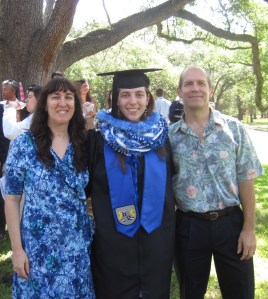
Image of Carol Pittner and Doug Nordman (her father) at Carol's graduation from Rice University in 2014. Carol and Doug have written "Raising Your Money-Savvy Family For Next-Generation Financial Independence." | The-Military-Guide.com

Life-long collaboration.

My daughter Carol and I recently signed a book contract with ChooseFI Media to publish “Raising Your Money-Savvy Family For Next Generation Financial Independence.”

It’s written from your questions asked at financial conferences, at meetups, and over many cups of coffee. Carol and I use a back & forth narrative describing our family’s financial parenting tactics versus her memories of how they really turned out.

We cover everything from allowances, chores, and jobs, to financial incentives, Roth IRAs, and college funds. We even describe a surprisingly effective way to help your teen save up for their first car.

You’ll learn how children think about managing their money. (Pro tip: they don’t share your goals.) You’ll learn how to avoid our mistakes, and how to recover from yours. We invented a technique or two that you might have never heard of.

Best of all, your kids will learn to manage their money by making their mistakes at home with you— instead of at college or in their first job. They’ll learn from their experiences, not just from your advice.

Frankly, you should find a copy of this book just to read the foreword. You won’t believe who wrote it– I can hardly believe it myself. Every time I write about this I get a goofy smile on my face just remembering how Carol and I made a very big request, and it all came together.

Let me share more about the writing & publishing process.

How did you get the idea?

I didn’t plan to write this book. In 2018 I was working on a completely different book, and I was also spending an occasional weekend at Camp Mustache or CampFI.

One afternoon I gave a talk about the mistakes we’d made with our investments while we pursued financial independence.  A parent asked: “How did you teach FI to your daughter so that she can avoid your mistakes?”

Image of Doug Nordman giving a presentation at CampFI Southeast in Hawthorne FL in January 2018. | The-Military-Guide.com

CampFI: presenting right after breakfast.

I wasn’t expecting that question! By 2018 Carol had been out of college for several years and was well into her own Navy career. We parents are tremendously proud to watch her and her spouse make their way in the world, but we’d never thought that a bunch of other parents would want to hear about how we helped her launch from the nest.

As the parent sat there with an expectant look on their face, I babbled something about Marge and I giving Carol a lot of opportunities to manage her allowance and make mistakes before she left home.

A few months later I met that parent again and asked them if my answer had helped.

They said “Well, I tried giving them both an allowance, but they just kept wasting it. I gave up.”

Whoops. I was zero negative help. We talked a little more, and someday that parent may try again, but they clearly felt that my advice wasn’t working. (Yet.) Even worse, they’d lost confidence in exactly the same tactic that Marge and I had used with Carol.

Then Marge and I went to a CampFI in Little Rock. I highly recommend that location and the outstanding local attendees. At the camp, I gave my same talk about how we wish we’d invested in the 1980s and 1990s.  The very first question was from a parent, and I already knew that they were raising a family big enough to form its own basketball team.

“How did you raise your daughter so that she can pursue financial independence?”

Oboy. No pressure.

I talked about all the classic mistakes that kids will make with money, and how parents can help them talk through their feelings. I made the point that wasting money as a kid is a lot cheaper than making the same mistakes in high school or at their first adult job, but some money would definitely be wasted.

Let’s face it: I was babbling at a slightly higher level, but I wasn’t much more help than before. That parent had a lot more practical experience than I do, and I don’t think they went home with new ideas to teach their kids how to manage their money.

After the talk, Marge looked at me and uttered those fateful words: “Nords, you need to stop whatever book you’re writing now and work on that money-savvy kid book.”

How did you and Carol start writing together?

When Marge and I visited Carol and her spouse in Norfolk, we told her about the CampFI talk and asked her the same question. “What did we do that really helped you learn to manage your money?”

Wow. She lit up! She had a dozen memories of what she liked, what had worked, and what didn’t. K.J. had noticed a few things about her money behavior in their marriage, and now he had the origin stories. Our dinner-table conversation took off and lasted for nearly an hour.

Image of Carol Pittner and Doug Nordman (her father) surfing at Dam Neck Beach in Virginia Beach VA in 2018. | The-Military-Guide.com

Writing a book together is hard work!

As we talked, I took notes. Later those bullet points went into an outline, and I asked Carol if she wanted to add her stories in her voice.

By the end of the week, we had most of a chapter. I realized that Carol was writing more than just her stories– she was a co-author. By the end of the following week, her insights made it clear that she’s the lead author and I’m strapped in for the ride.

Carol was a challenging kid to raise, but we write very well together. I might have more experience (I’ve had a three-decade head start) but she has a very strong voice. She’s a much better writer in her 20s than I was, and I’ve tremendously enjoyed our collaboration.

What’s different about publishing your second book?

The good news is that this time we had over eight years of blog posts before we started writing the book.  Some of the blog’s stories and tactics went right into the book.

In 2005 (when Carol was a teen), I drafted The Military Guide over a leisurely four years. Sometimes I’d write a chapter in a few days, while other times I’d put the manuscript away for a few months. We’d occasionally talk about the book but it was just one of my projects tucked away among family time, surfing, and chores. Carol had a fantastic high-school English teacher, and his advice came home with her when she offered a few suggestions on the draft. That’s why The Military Guide has chapter checklists.

On this second book, Carol and I were averaging a chapter every two weeks. It was clear that this draft was going to dash to the finish line in about six months. (And it did!) Carol and I weren’t competitive about our collaboration (Marge is already rolling her eyes as she reads this) but we each had things to say and we were enjoying the conversation. This time Marge was editing the drafts of two authors, but let’s just say that Carol needed a lot less editing than her co-author.

In 2009 when I searched for a publisher of my first book, I spent nine months writing query letters in series instead of sending them out in a single blast. The good news was that I wrote a better query letter with every new attempt. The other news was that those letters were a lot of work. I knew that I could always self-publish, and I kept working on the next query letter. When Impact Publishing bought the manuscript the owner said: “I bought your manuscript because your query letter has a great marketing plan!”

In 2018 we already knew the personal-finance publishers. We didn’t even write a query letter. This time it really helped to be a published author– and that can really go to your head.

Image of Doug Nordman and seven other FinCon18 attendees sitting in a pink flamingo pool float at the Rosen Shingle Creek Resort in Orlando FL. | The-Military-Guide.com

Creatives working hard all day long at FinCon18 in Orlando.

It started at FinCon18 in Orlando. I was catching up with friends, and one of them is an executive at a very successful company with an indie publishing branch.

Exec: “What have you been up to, Nords?”
Me (smiling and sipping coffee): “It’s a funny story. My daughter and I are writing a book.”
Exec: “Really? We’d like to publish it!”
Me (nearly blowing coffee out my nose): “Um, wait, what? Would you like to know what the book is about?”
Exec: “Personal finance, right?”
Me: “Well, yeah, and this time–”
Exec: “That’s why we’d like to publish your book. Let me know when you’re ready.”

Image of Doug Nordmanand four other people on stand-up paddleboards at CampFI Mid-Atlantic in May 2019 on Virginia's James River. | The-Military-Guide.com

A typical CampFI reader focus group.

In May 2019, Marge and I attended CampFI Mid-Atlantic.  (I highly recommend this conference too, because stand-up paddleboarding on the James River! Oh, and it’s also a great weekend with a fun crowd of people pursuing FI.) This time my talk was about raising a money-savvy family, and I mentioned that Carol and I were writing the book.

Brad Barrett and Jonathan Mendonsa were in the crowd.  I knew all about their ChooseFI podcast, of course, but I didn’t realize they were growing the company in all media directions.

Jonathan tracked me down after my seminar.

Jonathan: “Nords, we’d like to publish your book!”
Me: “You guys are publishing books?!”
Jonathan: “We are now!”

Carol and I had a lot to talk about.

In September I spent most of FinCon19 (Washington DC!) networking in real life with my fellow money nerds, as usual. I also spent hours with those two publishers talking through all of the book questions. Every day Carol and I chatted back & forth across the time zones to figure out our priorities. Deciding between these publishers is like trying to choose among Olympic athletes.

Ironically for a group of personal-finance experts, we did not talk about the money. Nobody was competing on royalty rates or marketing services or even the size of the stretch limo for the book tour. Instead, we were comparing our audiences and trying to decide how to reach them.

We all agreed that ChooseFI has the family audience who is most likely to buy the book by the container-load. (And the eBook. And the audiobook.) Military families will enjoy it, of course (because our daughter grew up in one), but our ideas and stories appeal to all families.

Better yet, ChooseFI Media has MK Williams. She’s just self-published her fourth novel, and her third book is a thrilling suspense novel about… of all things… financial independence.  (No, seriously, read the book.  When you’re pursuing FI, the allegory is hilarious.)  Best of all, she’s published the FIology Workbook with David Baughier.  David and his family visited us last summer, and we chatted for hours about what it’s like to work with MK.

It’s all good. And I’m not just saying that because MK has a gigantic marketing spreadsheet of all the tasks which Carol and I (among several others) need to wrap up before this book gets printed.

I highly recommend MK and ChooseFI Media. If you have a manuscript to submit to her… then please wait until after our Money-Savvy Family book is out. (Just kidding. Maybe.) Carol and I are well on our way and MK’s building a publishing powerhouse.

What’s next?

Image of the Google Doc editing window for the book by Carol Pittner and Doug Nordman "Raising Your Money-Savvy Family For Next Generation Financial Independence". | The-Military-Guide.com

Screenshot of the editing in progress… all right, back to work.

We’re wrapping up our second round of editing and heading into the line edits. (We’re still anticipating the copyediting, yay!) If everything goes well then the print and eBook editions will be in press by spring 2020.

The audiobook comes after that. Please let me know if you have James Earl Jones’ contact info, because otherwise, you’re going to have to put up with my voice in between Carol’s sections. I’m sure the audio engineers are looking forward to stitching together those voice files.

In a few weeks, we’ll be ready for your feedback on the cover designs. Speaking as a nuclear-trained submariner, you do not want me making those decisions. Carol and MK might be looking forward to your help even more than I am.

We’d especially like to thank the beta readers of the CampFI Alumni Facebook group. Your feedback and polling votes helped guide the book through the usual rocks & shoals of editing. It’s one thing to exclaim to a publisher: “But you’ve never seen a book like this before, and we’re special snowflakes!” It’s quite different to respond: “Here’s what the reader poll data and other feedback is telling us. And by the way, these people are already trying to pre-order the book.”

Finally, in January 2020 Carol and K.J. are launching one of the world’s most innovative book-marketing tactics. Follow this blog’s social media channels– and prepare to be amazed!

[earnist ref=”the-military-guide-to-financial-independence” id=”70177″]

Related articles:
Start a Roth IRA For Your Kid
Early retirement and the kid’s college fund
Raising a money-smart kid
Raising an ER-smart kid
Retiring Early — with Kids?
Family Estate Planning For Your Disability
“I Inherited Money And Now I Can’t Blog About Financial Independence Anymore”
Enemies of Peace (by MK Williams)
The FIology Workbook (by David Baughier and MK Williams)

Posted in Financial Independence, Military Life & Family, Money Management & Personal Finance, Reviews | 2 Comments

Should You Attend FinCon, Military Influencer Conference, Camp Mustache, CampFI, and FI Chautauqua?


Your journey to financial independence can be a little lonely if you’re doing it all by yourself. Even social media, podcasts, and videos are poor substitutes for hanging out with people who share your goals.

This post will cover different ways to get a little boost of FI endorphins to last for months… or at least until the next boost. Better yet, you’ll build a network of new friends who can help you stay motivated– and accountable.

It’s even more fun to do these conferences and meetups after you’ve reached FI. In 2019 my spouse and I put together a monster travel year around them, with four of them in the last six months. We were off-island for a total of four months over two trips.

If you’ve wondered what you’ll do all day in financial independence then sit down, strap in, and follow along with us.

Which conference is the best?

Image of a pass for FinCon in 2020 for the 10th year of the conference. | The-Military-Guide.com

I’ve already bought my FinCon20 pass.

This is like asking which of your kids you love the most, so we’ll avoid this perpetual debate and review them chronologically.

The big conferences make it easier to meet more people (and more sponsors, if that’s your goal) while the small conferences make it easier to hang out with friends and have deeper conversations about FI.

How big are they?

Here are the numbers.

FinCon19 was over 2500 people. The four-day conference has grown more than an order of magnitude since the first one in 2011 (225 people), and I’ve attended every one since 2012. FinCon20 might approach 3000 people. This time it’s held 30 September – 3 October at the Long Beach conference center with room blocks at six adjacent hotels.

Military Influencer Conference started in 2017 with “only” 250 people. In 2019, MIC sold nearly 1000 tickets. MIC20 will be inMilitary City USA” San Antonio on 23-26 September. That could help it grow to 1500 military servicemembers, spouses, and veterans who are entrepreneurs, non-profit executives, and other creators.

Camp Mustache and CampFI are typically 50-70 people over a weekend. They’re held in rural locations like retreat centers and church camps, and they have great opportunities for in-depth conversations with new friends. The popular spots sell out within a few weeks after ticket sales begin, but you can also add your name to a waitlist.

FI Chautauqua is even smaller at about 30 attendees. It’s billed as “interesting conversations with interesting people in interesting places”. It has a one-week itinerary in various locations on other continents. It seems to sell out in just a few days, and sometimes in only a few hours. Again, sign up on the waitlist and stay flexible.

During 2019 I attended my fourth CampFI, my eighth FinCon, my third MIC, and our first FI Chautauqua. I didn’t make it to a Camp Mustache.

CampFI

Image of the CampFI logo for a weekend financial independence conference. | The-Military-Guide.com

Choose the location nearest you?

These weekends are for everyone from all walks of life, whether you’re just learning about personal finance or you’re already financially independent. They’re family-friendly, although there’s no childcare.

CampFIs are held around the U.S. mainland in a half-dozen locations. (I’ve attended four of them over the last two years.) Church camps and retreat centers offer inexpensive lodging with meal service for roughly 50 people from a Friday evening to Monday lunch. All of the camps offer some hotel-style rooms, cabins with bunkrooms, RV hookups, or a few spots to pitch your tent.

Friday evenings are spent meeting everyone and group socializing. You’re probably already following the speakers from their blogs, podcasts, and videos. You might have met the other attendees virtually in a Facebook group for the event. If you’re at a local CampFI then you may already know some of the attendees from social media, or other personal-finance meetups, or just from carpooling to the site.

The weekend’s presentations are a couple of hours each morning with another session or two each afternoon. There’s plenty of free time to enjoy the camp facilities. Early mornings may include nature walks and workouts. After dinner you’ll stay up way past your bedtime talking around the fire circle, playing a new board game, or embarrassing yourself with a karaoke group.

You’ll enjoy the facilities and the entertainment, but you’ll also have plenty of opportunities to discuss in-depth questions about personal finance, financial independence, and lifestyle. Maybe you’re trying to pay off your student loans more quickly, or growing a portfolio of investment rental properties, or choosing a better asset allocation. Most of the camp weekends include a chance to record a podcast episode as part of a panel or by asking questions from the audience.

My spouse and I typically anchor our globetrotting itineraries with family and financial events, and then we fill in the remaining weeks with slow travel. In early April we caught a military Space A flight from Oahu to Norfolk for the third wedding anniversary of our daughter and son-in-law. We capped off that trip at CampFI Mid-Atlantic over Memorial Day weekend.

If you’re military then we can sit down for a full financial & career discussion. Over that Memorial Day, my spouse and I had several discussions about retirement with another military couple. First, they reassured themselves that their financial plan would work, but then we talked about lifestyle and what they could do all day. They already had a great plan, and they were able to check all of their details against our knowledge & experience.

At an earlier CampFI we did an entire financial review with another military camper over several talks: comparing the Blended Retirement System to the legacy High Three pension, analyzing the cash flow on one of their rental properties, discussing the transition process and their VA disability claim, and reviewing all of the next steps for affiliating with a Reserve unit. They literally changed their life that weekend because they put together the right environment with plenty of time to discuss all of the right questions with each of the right people.

Image of five stand-up paddleboarders on the James River at CampFI Mid-Atlantic in May 2019. | The-Military-Guide.com

I’m in the middle.

It’s not just nerding out about personal finance. At CampFI Mid-Atlantic we spent Sunday afternoon on the James River. The surf sucked (flat to two inches from passing boats) but I enjoyed coaching a half-dozen new standup paddleboard surfers. I also finally met Justin McCurry of RootOfGood in person after knowing him online for over a decade.

By the way, CampFI is a non-profit affair. There are no corporate sponsors, although you might spend the weekend with people from ChooseFI. The organizers are not enriching themselves from the ticket sales, and they’re doing the work for free. They’re at CampFI for the same reasons as the rest of us: sharing our journey to financial independence and boosting each other along the way.

Camp Mustache

Image of the schedule of activities for Camp Mustache 2017 in North Bend WA. | The-Military-Guide.com

The agenda for Camp Mustache 2017.

The three volunteers who put together Camp Mustache have created the model for CampFI. The big difference is that the original Camp Mustache is the same Memorial Day weekend every year in the same location outside of Seattle.  (You may also find other versions on the east coast or in Canada.)

Another gigantic difference at Camp Mustache is the butt-kicking four-mile hike up the 4000 feet of Mount Si. (It’s another four miles back down to the lodge.) It’s not just an incredible view of the countryside but also a rite of passage in determination and persistence.

I enjoy Camp Mustaches at least as much as CampFIs. Speaking as a Hawaii guy, though, it’s still kinda chilly up there in late May. It’s also very popular among Mustachians, and I feel as if I’m hogging a ticket if I go there every year.

I didn’t go to Camp Mustache in 2019. My spouse and I were already on the east coast for Memorial Day, so we planned the weekend around CampFI Mid-Atlantic.

FinCon

Image of the FinCon19 logo and slogan "Where Money And Media Meet". | The-Military-Guide.com

The day before the crowds arrived…

Officially, FinCon is where money and media meet. We’re all discussing personal finance while leveling up our skills at blogging, podcasting, video, writing books, building audiences, and growing revenue.

After eight FinCons I’ve met a lot of people and made many friends. It’s unofficially billed as the nation’s largest gathering of money nerds, where it’s our chance to discuss everything in person instead of online.

And when I write “discuss”, I mean “talk ourselves hoarse”.

The FinCon exhibition hall is one of my favorite parts of the conference. Dozens of sponsors have gathered there to inform and educate. (Many of them want to pay you an affiliate fee or a commission, too.) I learn a tremendous amount about the financial industry, from corporate fintech all the way down to the startup entrepreneurs with their great ideas and innovations.

The FinCon presentations have expanded to over a hundred different sessions in the areas mentioned above as well as niches like publishing, advisors, journalism, freelancing, and coaching. It’s impossible to choose among all of the simultaneous events and still have energy left over for the lunches & evening socials. (Let alone the early-morning group workouts or the 2 AM Pizza Club.) Best of all, though, everything is professionally recorded. Your FinCon ticket can include a virtual pass to the video archive, and after FinCon you can view everything multiple times from anywhere at your own pace.

We’re also busy recording our own content. FinCon19 included at least two podcast stations and two video booths staffed by other FinCon volunteers. All we had to do was gear up, sit down, and start talking. In three days at FinCon, I personally recorded two videos and four podcast sessions. (One of my podcast sessions was filling in for an absent guest… with 90 seconds to get ready. I had a great time.) I got to record with rockstar podcasters and other panelists who I’d never spoken with before. If I’d done this during any other time of the year it would’ve taken weeks to arrange.

As a result, a surprising number of us FinCon attendees never actually attend a presentation. We’re too busy talking to people at the booths, or sitting in the hallways or the lounges, doing peer tutoring, or just catching up on life. We’ll catch the presentations later with our virtual passes.

I’m apparently FinCon’s only middle-aged balding ponytailed surfer from Hawaii, so I’ve also helped a lot of people plan their next trip to the islands. A few visitors at a time, we end up having FinCon Hawaii meetups just about every month during the year.

The best part of FinCon19 was finding a publisher for the book that my daughter wrote with me. Our project started from a question during a CampFI (Little Rock in 2018), and we tested it on the crowd during CampFI Mid-Atlantic in 2019. I’ll write more about that in another post.

FinCon20 will be held in Long Beach, and a few of us surfers are trying to put together an afternoon surf session for 20-30 people on the days before & after FinCon. Please contact me if you know a great surf school near Seal Beach.

While we were still buzzing with the endorphins from FinCon19 and a USAA meetup, we rolled right into…

Military Influencer Conference

Image of the Military Influencer Conference 2019 archway set up in front of the exhibit hall. | The-Military-Guide.com

Also the calm before the storm… on the final day of FinCon.

I’d like to think that I helped with the genesis of MIC, although that happened because I was too late for the old MilBlogging conference. The last one was in 2012 and MilBlogging13 was canceled with only a few months’ notice.

You can read more about Curtez Riggs rebooting MilBlogging into MIC. When he called me with questions in 2016, I suggested (along with others) that he contact Philip Taylor about pairing up with FinCon. Curtez was already a USAA influencer, and they came into MIC as a headline sponsor. MIC17 got off to a roaring start in Dallas right before FinCon.

In 2019, MIC hosted over 900 people during the three days after FinCon. That’s nearly 300% growth in only three years. It’s startup-worthy progress for a conference that encourages entrepreneurialism and public service among servicemembers, military spouses, and veterans.

I enjoyed my third MIC, but again I only went to one keynote presentation. I spent the rest of the conference with the sponsors & exhibitors in the exhibition hall, at the roundtable discussions, and in the lounges. It was another three days of discussions with servicemembers and spouses about their military careers and their transitions, and how to reach financial independence along the way.

During the conference, Curtez announced that MIC is splitting off from the FinCon schedule. (A new conference will probably join the FinCon contract and grow like MIC.) In 2020 MIC heads to San Antonio on 23-26 September. USAA’s headquarters campus is there, and Curtez lives in the area. He’s developed many local contacts over the years and can bring much more value to MIC with lower prices for food & lodging.

Image of a military C-5 cargo jet on the runway at Dover Air Force Base, getting ready to fly to Spangdahlem Air Base in Germany. | The-Military-Guide.com

On the bus, waiting to board the C-5.

On the last day of MIC, my spouse and I drove a rental car to Dover Air Force Base in Delaware and caught a military C-5 Space A flight to Spangdahlem Air Base in Germany. We worked our way through Trier and Luxembourg to Lisbon. After a leisurely recovery week in Lisbon’s Alfama and Baixa quarters, we took a train up the coast to Porto for our first FI Chautauqua.

FI Chautauqua

I’ve looked forward to this conference for over five years, but we could never line up the dates… or get tickets.Logo of FI Chautauqua: an image of an upside-down globe with the word "Chautauqua" next to it. | The-Military-Guide.com

JL Collins visited the site of his first Chautauqua in 2012 and started the conference in 2013. It grew in popularity among FI bloggers, and in 2017 Chautauqua expanded to Europe.

Image of a queen-size bed in a hotel room covered with fake dollar bills. | The-Military-Guide.com

An actual room at the Zero Box Lodge.

We spent the first night of Chautauqua in Porto at the Zero Box Lodge. It’s one of the best executions of “frugal urban hotel” that I’ve ever seen. It’s built into a high-rise which used to house a bank, and they preserved the original vault space. The “rooms” remind me of submarine berthing, but in a good way.  (There’s a reason it’s called a box lodge.)  It’s worth touring the hotel just to experience its combination of hyper-efficient design, hipster common spaces, and sardonic financial commentary.

Our first night also included the usual socializing and group dinner. I already knew our hosts and presenters, and I’d met a couple of the other attendees at a CampFI. Almost all of us had joined our Facebook group a few months earlier, so we already knew a little about each other before our first meeting in person.

The next afternoon we headed to the main location of Chautauqua: the Douro41 resort in the valley a couple hours up the Douro River. That resort is laid out to offer a quiet, luxurious, unplugged concierge experience. I’m pretty sure the other guests were not very happy to have 30 FI nerds running around at all hours of the day (and night) discussing their finances and lifestyles.

The presentations were outstanding:

Image of the Douro41 Resort on the Douro River in the Douro Valley of Portugal, the site of FI Chautauqua Portugal. | The-Military-Guide.com

The river view of the Douro41 Resort.

Those events took up 2-3 hours per day. We spent the rest of our time in small roundtable seminars, or having 1-to-1 “Ask Me Anything” conversations with our presenters. Of course, there was plenty of unstructured time for us to enjoy the resort, talk story, and sample all of their farm-to-table (and ocean-to-table) cuisine. The Douro River did not have surf, and the resort didn’t even have stand-up paddleboards, but there were kayaks. My spouse and I had a great paddle on the river and a good time exploring the resort’s hillsides.

Along with interesting people and interesting conversations, Chautauqua delivered on “interesting places”. One morning we toured a Porto port cellar (with free samples) and another afternoon was spent in the small yet ancient town of Guimaraes. We dined at several very nice restaurants as well as the resort’s dinner pool party.

A personal theme of FI Chautauqua was a flurry of e-mails with my daughter. We had been ready to self-publish our book, but when we read over the publisher’s royalty contract we realized that we could do much better with their existing audience and their marketing experience. By the fifth night of the Chautauqua week, all of our publisher questions had been answered and we were ready to sign.

Fortunately, my daughter and I had already finished the manuscript, so “all that’s left” is editing. I knew that wouldn’t start for another week, which meant I was entitled to kick back and bask in a warm glow of accomplishment. I’d spent over six years writing my first book, but the one with my daughter took us only a year!

That warm glow lasted about 12 hours. The next morning, as we gathered for our group presentation and discussion, my spouse looked around the room and suddenly asked me “Does anyone here have more FI experience than you & me?

About a third of the group was already FI. There were a few people older than us, and there were lots of people who we predict will accumulate a higher net worth than us. But our 17 years of FI turned out to be nearly a decade ahead of the runner-up. My spouse uttered those fateful words again: “Nords, there’s another book in you about staying FI for life.

Then she started loading me up with bullet points from everything she’d learned that week. She’s very good at making the decisions and then delegating the assignments. Now that I think back on 2018, it’s how my daughter and I ended up writing our second book too.

Image of Alan Donegan giving a presentation at FI Chautauqua Portugal, using an image from the movie "Back To The Future". | The-Military-Guide.com

Alan Donegan is really good at this!

That afternoon, Alan Donegan guided us through an exercise in creative thinking (while suspending criticism). We sat down with five other Chautauquans and spent a few minutes helping each of us come up with ideas for our big life questions. Mine was:

“What advice should I give people to thrive during 50 years of FI?”

In the next few minutes, I got 31 post-its with free-form written answers.

We authors call that a “chapter outline”. Now I’ll be working on the third book when I’m not working on marketing for the second book… or making the edits for the second book.

I’m pretty sure my spouse is smiling as she reads this! One day I will too… after I finally finish the copy edits.

Chautauqua turned out to be even more exhausting than FinCon. By the fifth day, I was catching afternoon cat naps, collapsing in bed early, and sleeping hard on those luxurious resort mattresses. As the bus took us back to Porto and the Zero Box Lodge, I was secretly relieved to catch a break from the intense mental & emotional pace. I thoroughly enjoyed hanging out at the ZBL’s cafe with the next group of Chautauquans arriving for their week, but I was also very happy to spend the next five nights in Porto recovering in our AirBnB.

Was Chautauqua worth the time, effort, and expense? Absolutely.

Would we do it again? I’d love to, but I’m not sure that my older body has the stamina. (And no, I don’t know how JL Collins does it!)  The shorter conferences are much easier to handle on my limited energy budget. Anyway, with only 30 people at each week, I’d feel as if I was hogging another ticket.

I’m glad I made the Chautauqua effort, yet a four-day FinCon or a three-night CampFI is much more my speed.

Your Call To Action: What conference would you like to try?

CampFI: at every stage of your FI journey, but especially if you’re just starting it!

FinCon: personal finance, blogging, podcasting, video, freelancing, and building your business.

MIC San Antonio: military servicemembers, families, and veterans who are building their businesses and non-profits.

FI Chautauqua: approaching FI, travel-hacking to resort destinations, and diving deep on the transition to your next life.

For my spouse and me, 2019 has been one of the busiest retirement “slow” travel years of our lives. In 2020, our Ohana Nords plans include FinCon20 at Long Beach (possibly with group surfing lessons) in September, and hopefully CampFI Southwest at Joshua Tree in October.

Otherwise, our only other confirmed plan for 2020 is to get better acquainted with our first grandchild. And to regain our diaper-changing proficiency.

As I said, 2019 has been one of the busiest years of our family’s lives!

[earnist ref=”the-military-guide-to-financial-independence” id=”70177″]

Related articles:
My public Facebook album “Europe 2019 #2” with more photos (and captions) of our conferences.
FinCon – The Financial Media Conference – How a Small Investment Can Return Dividends
Military Influencer Conference 2018 – A Gathering of Like-Minded Veteran Entrepreneurs
Military Space Available Travel: Tips for Flying Space-A The Navy Way
CampFI And Camp Mustache Are Worth Your Time (And Money)

Posted in Career, Financial Independence, Travel | 2 Comments

Family Estate Planning For Your Disability


Here’s our capstone post for the year: our family’s estate plan.

I’ve spent the last 11 months writing about the ways that our Nords family financial independence is changing. Now we’re reaching far into the future to simplify not just our lives, but our legacy for the next few generations.

Image of the Nordman family holiday portrait for an explanation of our estate plan. | The-Military-Guide.com

Christmas 1995, holding our estate plan.

My spouse and I have had wills since college. We’ve been married for over 33 years and raised a family, yet this latest round of estate planning took us months of research (and some intense discussions) to craft our update.

Nobody enjoys planning for our elder years and our deaths. Our talks caused a few tears, and there were times when she wasn’t very happy either.

It turns out that we need more than an estate plan for our deaths. Death is surprisingly straightforward.

What we really wanted was a financial plan for our disability— not just for mobility & medical issues but for dementia.

In the 1980s my grandfather’s failing health (and his failure to plan) caused a over a decade of financial problems for my father. It cost thousands of dollars in legal bills, too.

In 2008 my father’s failing health (and his failure to plan) caused a decade of financial problems for my brother and me. It also cost him tens of thousands of dollars in legal & insurance bills.

Now my spouse and I want to avoid doing to our daughter what my father did to me (through Alzheimer’s), and what his father did to him (through dementia). The multi-generational bag jobs will stop with my generation.

First I’ll discuss our concerns (to help you decide your concerns), and then I’ll describe the typical solutions. I’ll conclude with what we’re doing.

I’ll disclose up front that the lawyer was not very happy about our plan, but they agreed with our reasoning. Lawyers want to protect us (and our assets), while we also wanted to make life simpler for our family.

I’m not a lawyer, but I’ve spent a lot of time with them. We discussed a bunch of good ideas with them. Please discuss yours with your lawyer before you craft your plans.

Follow along with your own assets as we discuss what we’re doing with ours.

“Nords, what assets are we talking about?”

Here’s the “To Do” list for our estate plan:

  • Our home. (Mortgaged for another 28 years.)
  • A rental property. (Poor financial performance, yet optimized for aging in place.)
  • A joint taxable Fidelity investment account. (My spouse and me.)
  • My individual taxable Fidelity investment account. (Our self-insured long-term care fund.)
  • Small angel investments in seven startups. (Exits or shutdowns within 10 years. *)
  • Two Fidelity Roth IRA accounts. (My spouse and me.)
  • Four savings accounts, four checking accounts. (Yeah. Convenience.)
  • Personal property: two used cars, our second-hand furniture, and old surfboards.

(The total value of our personal property is roughly $50K about $30K maybe $15K.)

I’m receiving a military active-duty pension and a little VA disability compensation. My spouse starts her Reserve pension in 2022. We tentatively plan to start our Social Security disbursements at age 70.

[* Within the next decade, all of those angel investments should cash out or die out. I’m trying to live long enough to deal with that, but if not then my heirs can hold the shares or give them away.]

Your first question: who’s going to run your family finances?

If you’re the typical American family, the husband does most of the investing while the wife pays the bills.

If you’re the typical American military family, then you know that the spouse (not the servicemember) does most of the financial management. They’re the one who has some time, some mental bandwidth, the Internet bandwidth, and most of the family responsibilities.

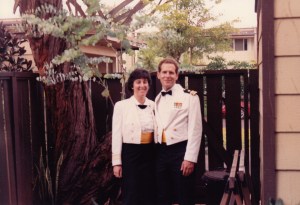
Image of Marge & Doug Nordman in full dress uniform for a Navy ball. | The-Military-Guide.com

“I thought you paid the bills this time?!?”

What about dual-military families like me and my spouse?  Welp, those finances are run by whoever’s home at the time (or at least on shore duty). Sometimes it’s nobody.

Being a dual-military couple meant that my spouse and I have managed our money as a team. I tend to focus on the details (writing the checks and doing the income-tax returns) while she supervises the big picture. When I bring in a multi-tab spreadsheet of our financial plan, she’s the one who asks a couple of perceptive questions which send us back to the drawing board keyboard for another week of number-crunching.

Our system works great. It helped us maintain a high savings rate and reach financial independence while we were still on active duty. I’ve been retired for over 17 years, and our life is very good.

Demographically and personally, though, our dream-team partnership will end someday. Women tend to live longer than men, and my spouse has exceptionally long-lived ancestors. (My ancestors… not so much.) I’m attempting to overcome my genome with my lifestyle, yet the smart bet would be on her longevity.

I’ve dedicated 30 years to paying the bills and handling the investments. As we say in the Navy, “I am ready to be relieved.” Fortunately, those financial chores are nearly totally automated. Only our rental’s property taxes are paid manually, and otherwise we just make sure our checking account has enough money for everyone to pull out what we owe them.

During the last year, my spouse has taken over nearly all of the automatic payments. Transferring them was harder than it should be (our water company actually stopped billing us for four months) but it’s finally done. When she starts her Reserve pension then she’ll take over all of the Ohana Nords payments (including our mortgage and home/liability insurance). I’ll just be responsible for my credit cards.

She’s also managing our rental property. We’re about to turn it over to considering a property manager, so hopefully she’ll minimize that hassle. That rental property is age-in-place friendly, and after I live out my years in our current home then she might decide to move back into the rental.

Between her pension and the rental-property income, her checking account balance should more than handle the bills. I think she’s going to take a hands-off approach for a year or two and see what happens. If she has to intervene for a glitch then we’ll figure out a way to automate everything, whether we’re watching it or not.

I’m still managing our investments, but there’s very little to do. We’re moving our asset allocation to a total stock-market index fund, and I’m winding down my angel investments. My spouse will soon take over our investment chores, too, which means she’ll only have to sweep out a semi-annual dividend.

Your next question: who’s going to run your family finances later?

My spouse has an even better plan for her relief: our daughter. When my spouse has had enough of the financial chores (probably by her 83rd birthday!) then she’s going to ask our daughter to take over. (Our daughter will be in her 50s… a bit younger than we parents are now.) At that point my spouse and I will blissfully continue our spending habits while our daughter will watch our accounts for indications of elder fraud… or dementia.

Notice that this part of our plan doesn’t require a trust or even a complicated will. Our daughter just needs our account logins & passwords. When we die then she’ll check a LastPass account and the ICE folder in my desk drawer.

Your third question: what happens after we die?

“Dead” is the easy part. We’ve already learned what to do for that.

My father set up nearly all of his beneficiary designations as “Payable On Death” or “Transfer On Death”. We filed Dad’s will with the state probate court, but no probate was required. All I had to do was contact the financial institutions and insurance companies, forward copies of death certificates, and sign affidavits.

My spouse and I have set up POD/TOD beneficiaries on all of our accounts. (Even our checking and savings accounts.) When we’re dead, our financial accounts will pass by POD/TOD under Hawaii state law. The laws are different in every state, so check the rules and work with a lawyer when you draft your will and beneficiary designations.

Our personal property will pass via pour-over will without probate. Its value is too small to require probate, and we’ll keep its value as low as we can.

I’ve stopped making new angel investments specifically so that we can wind them down during my 60s. (Before 2030.) There’s no market for our shares (yet), so those will pass under the will without probate. If their value rises and there’s a market for them, then I’ll cash them out. If my body washes up in the surfing shorebreak the week after one of the startups is acquired for $750M, then my spouse & daughter will happily deal with the gigantic step-up on cost basis and the new cost of probate

A few states offer “Transfer On Death Deeds” for real estate. (My father didn’t own any real estate at his death, so we haven’t dealt with this.) The TODD laws are different in every state, so again— check the rules and work with a lawyer when you draft your will & beneficiary designations.

We have a better solution for our real estate, and we’ll describe that after the next section.

Your final question: what happens when we’re disabled?

“Disabled” is the tough part. We learned that the hard way with my father. And his father.

Image of Olan Mills portrait of Carl & June Nordman, Doug Nordman's paternal grandparents, 1970s. | The-Military-Guide.com

Grandma & Grandpa, late 1970s.

My paternal grandparents rented for years in an independent-living apartment in a large 1980s continuing-care retirement community. In retrospect Grandpa developed dementia in his early 80s, but Grandma covered for him for a couple years… until she suddenly died of a stroke.

After Grandma’s funeral, Grandpa gradually stopped taking care of his personal business. He didn’t pay any bills, file any income-tax returns, or even go shopping. As near as we could tell he ate three meals per day at the local Friendly’s restaurant, occasionally drove his car, and watched a lot of TV.

Grandpa hadn’t done any estate planning since long before Grandma died. There was no power of attorney or trust. There wasn’t a recent will, let alone a medical directive.

During the next four years Grandpa hoarded all mail, magazines, and newspapers in a 10’x12’ guest bedroom until it was filled with head-high piles. This included uncashed dividend checks, late notices on all utilities, warning letters from the IRS and the state income-tax agency… you get the idea.

At each Friendly’s visit he ate the exact same $5.99 meal (three times per day!), and each time he paid with a $20 bill. The wait staff was never going to ask questions. They probably took turns serving him.

One day Grandpa emptied out his bank safe-deposit box, filled his briefcase, and left it in the trunk of his Olds 88. The briefcase contained over $30K of bonds, valuable stamps, gold coins, and jewelry. It stayed in the trunk of that car for over a year.

After four years my father finally got “the call” from Grandpa’s landlord. The handyman noticed the hoarding during a repair visit for a problem at the adjacent apartment.

Grandpa lived happily in the facility’s full-care wing for another 14 years. (His short-term memory was gone but I never learned his diagnosis.) He was physically mobile and mostly verbal until he passed away at age 97 from elder influenza.

Dad had to figure out all of Grandpa’s finances with the help of the state courts and a legal team.

Dad spent five of those 14 years filing petitions for a conservatorship, paying lawyers to negotiate with the IRS and state tax agencies, and… sorting the mail. (He solved the mystery of the safe-deposit box when he sold the car.  He only remembered to check the trunk as he handed the keys to the new owner.  The briefcase still held everything that was missing from the bank box.) It took more years to straighten out the uncashed dividend checks, the paper stock certificates, and various forgotten financial accounts. Dad must’ve spent hundreds of hours bringing order out of Grandpa’s chaos. It cost thousands of dollars in interest, penalties, and legal bills.

Image of Doug and Carl Nordman for their 36th and 92nd birthdays. | The-Military-Guide.com

1996: His 92nd birthday, my 36th.

I visited Grandpa a few times between 1988 and 2002, but I was also busy with sea duty and family. I offered my help but Dad always politely declined. I eventually stopped offering.

At Grandpa’s funeral, Dad swore (yet again) that he’d never put “his boys” through that experience

until mid-2008 when his Alzheimer’s symptoms began taking over. (We figured that out from his medical records.) My brother and I started offering our help in late 2009, but when Alzheimer’s takes over then the easiest vocabulary word for impaired cognition is “No”.

At least Dad had a will and a medical directive and beneficiary designations on his financial accounts, but nothing else. No powers of attorney, no trusts, nothing else to allow my brother and me to help manage his finances.  It cost us over $10K in legal fees just to be appointed his guardian and conservator.

You can read about the rest of our experiences at those links, and in the related articles at the bottom of this post.

Summary: disabled is far harder to plan for than dead, yet far more important.

“Right, Nords, got it. What’s the plan?”

Our first estate-planning tool is the durable power of attorney. This is signed on the financial institution’s form, not a generic legal form. Financial institutions prefer their form, which has already been blessed by their legal battalion.

Remember that individual taxable Fidelity investment account up there, for our self-insured long-term care fund? After extensively discussing the options with our daughter, we set up a DPOA over that.

It was a colossal pain. Fidelity wanted our notarized signatures, our daughter’s notarized signature, a witness, and a separate liability release form. We were staying with our daughter and son-in-law at the time, which was very convenient for the 10 business days it took to finish everything according to Fidelity’s “just one more form” policy.

I naively thought that a Fidelity DPOA would sit in a vault (or on a secure server) for decades until our daughter contacted them for an account login and password. It turned out to be even easier than that!

One day after our final round of DPOA paperwork had been mailed in, she logged into her Fidelity account to check a recent deposit. Then she blurted: “Holy sh— shnikes, who put all this money in my account?!?”

That’s when we realized that the DPOA was in place. She had total control of that account for our long-term care bills… or for her awesome Las Vegas vacation.

You have to know your adult children, and then you have to trust them.

It was a valuable teachable moment for all of us.

She suddenly internalized what I’d meant by saying “The financial bag job ends here.” She saw that we’d trusted her with a life-changing sum of money right then, in her 20s, in case Mom and I were disabled. She doesn’t need doctor’s notes or lawyer’s permissions or insurance company claim forms. She could simply sign us into a care facility and start paying the bills with our money.

Image of Marge, Carol, and Doug Nordman at Carol's college graduation. | The-Military-Guide.com

Future co-trustees.

Or she could join a cult and give it all to charity.

This DPOA works for us because I’d still have my military pension and (eventually) Social Security income. (A long-term care facility will accept that along with Medicaid.) I’m confident that our daughter will handle her fiduciary duties with professional pride… but if she doesn’t then we’ll still have enough income to be cared for by the courts. Either way we achieved our goal to make it as easy for her as we wish it had been for us.

Our second estate-planning tool is a revocable living trust. This time we’re paying for the lawyer battalion. Not only do we need the RLT for our goals of our estate plan, but it’s probably cheaper than probate.

RLTs have a reputation for being oversold when people don’t need them, and they’re routinely neglected by their grantors. If you decide to create one then seek professional help and pay for quality. Drafting one is straightforward, but funding it and maintaining it can be complicated. See the video in the “Related articles” section at the bottom of this post.

In our case, our RLT holds our home and our rental property. My spouse and I are the grantors, and if one of the trustees needs to sell the real estate then the title company (and the title insurance company) won’t have to worry about a clear title. In fact, when we set up the RLT we also asked our lawyer to retitle our real estate and add it to the trust. This cost more in legal fees, but they found (and fixed) a minor flaw with one of the old deeds.

RLTs offer protection to the grantors, who are typically the only co-trustees. The trust documents can appoint successor trustees and set up contingency trustees. More importantly, they can add gatekeepers and other experts. They can require doctor’s exams to declare a trustee mentally incompetent, or appoint committees for choosing new trustees, or hire professional lawyers & trust companies.

My spouse and I don’t want gatekeepers. Instead we set up the RLT with us parents and our daughter as co-trustees. Our daughter has a fiduciary duty to the trust (for the benefit of us grantors) but again, she could abscond with the titles and sell the properties out from under us. This is another example of trusting your adult children while giving them the tools that they’ll need to take care of you when you’re disabled.

My spouse and I are RLT rookies, and we’ve already encountered our first glitch. Our property manager’s lawyer wants all three of us to sign the manager’s contract, although we’re pretty sure we’ve verified that the trust only requires one trustee’s signature. The manager lawyer also wants to send the rent to a checking account titled with the name of the trust, and we’re pretty sure that’s not required by the trust either.  It’s still a good idea if the contingency trustees need convenient access to the checking account which handles the rent checks.

To avoid this problem, we’re going to huddle with our lawyer to add reminded us of the right words in our RLT. Or maybe we won’t want a property manager.

The trust (including legal services for retitling its assets) cost just under $6000. That’s cheaper than filing for conservancy, and it might be cheaper than your estate probate.

Our third estate-planning tool is adding durable powers of attorney to our other financial accounts. We’ll do this directly with Fidelity (as we did with my individual taxable account) to allow our daughter to handle all of our assets.

Fourth, we’ve added our daughter to our checking & savings accounts. Our banks and credit unions do that as either “signature authority” on the accounts, or with joint ownership. This could hypothetically risk our account assets if she’s sued, but again we want her to be able to use those assets for our benefit. We move money through those accounts into our Fidelity investments, so we don’t risk large sums in the accounts.

By now you can guess who’s the personal representative (executrix) and beneficiary of our pour-over will. And in charge our medical directive. And handling the rest of our personal affairs.

“What’s next?”

I sure hope we’re done with building estate plans, but we’ll still have to do the maintenance.

Our plan includes successor trustees, contingency trustees, and all the usual legal boilerplate.  The law office also offers lifetime advice on the trust.

We’ll also have to keep the trust in mind if we acquire more assets or dispose of our existing ones.  We have no plans to complicate (or further simplify) our lives in the foreseeable future, but now we’re ready for the unexpected future.

We can’t predict what’s going to happen during our next decade (let alone the rest of our lives) but we have the best succession plan we could find.

What will your estate plan look like?

[earnist ref=”the-military-guide-to-financial-independence” id=”70177″]

Related articles:
“I Inherited Money And Now I Can’t Blog About Financial Independence Anymore”
Our Retirement: The Spending Smile Of Financial Independence
Will Your Retirement Plan Handle Long-Term Care Needs?
The 1980s-2000s: How I Wish I’d Invested Back Then
Good News! How Our Nords Family Financial Independence Life Will Change In 2019
Sample Hawaii revocable living trust form (For your info only.  Use a lawyer.)
Sample Hawaii real estate power of attorney (Our family didn’t use this)
Hawaii law for the Transfer On Death Deed (We almost used this.)
CFP Michael Kitces’ blog: Options For Allowing Family Members To Help Manage Accounts In The Event Of Diminished (or In)Capacity
Lee Phillips lawyer videos about flaws of revocable living trusts
(Thanks to my shipmate Ricky McCrite for recommending them!)

Posted in Insurance | 6 Comments

Military Space Available Travel: Tips for Flying Space-A The Navy Way


Space A travel is one of our favorite retiree benefits! It’s the military version of ultimate travel hacking.

Although most of the system is run by the Air Force’s Air Mobility Command, the Navy has a few of its own Space A passenger terminals. When you know how to use the AMC Space A system, you can level up your destinations (and your travel opportunities) on both coasts with Navy passenger terminals.

Image of an approach to Naval Air Station North Island out of the window of a Navy C-40 aircraft with the wingtip in view. | The-Military-Guide.com

San Diego view on a Navy C-40

I’m getting a lot of reader questions about how we used the Navy’s version of Space A on our last trip, so here are the details.

In early 2019, my spouse and I logged over 17,000 miles on Space A aircraft. We flew halfway around the globe (from Hawaii to Europe and back). We only paid for box lunches, a military passenger charter tax, and… one commercial flight on our last leg.

We’ve flown Space A for over 30 years, and that last paragraph has become our “normal” slow travel. The unusual part is that we did most of our trip on Navy aircraft and only had one flight with the Air Force’s AMC system.

You can read a quickstart guide to Space A from Poppin’ Smoke and other sites, and I’ve included the best resources at the end of this post.

Now you’re ready to learn the Navy’s secrets.

[Note: This post is written mainly for military retirees. If you’re an active-duty military family then you’re usually under time pressure to get back home before your leave ends. It’s almost impossible to put together the itinerary in this post unless you’re on terminal leave, or unless you’re a military spouse using a command-sponsor letter to fly without your servicemember.]

“Nords, why are you flying Space A anyway?”

I know I would’ve seen this question in the comments:  We’re financially independent.  We have enough money, we don’t need to fly for free.

We fly Space A for the thrill of the hunt and the in-flight amenities.

Image of the interior of an Air Force C-17 cargo jet with Space A passengers and lots of deck space for spreading out sleeping bags to take a nap | The-Military-Guide.com

Plenty of room to stretch out in a sleeping bag.

Here are some things you can do on a Space A itinerary:

  • Get through security screenings in a few minutes with no crowds.
  • Share an affinity with military passengers who (mostly) know how to fly.
  • Fly with fewer than 125 passengers, and frequently less than 50.  Once in a while, it’s just the crew and a passenger or two.
  • Lay your inflatable mat and sleeping bag on the deck of a cargo jet for a six-hour nap.
  • Enjoy seats on a military passenger jet which are actually bigger than commercial aircraft seats.
  • Find new camaraderie with fellow retirees (and a new audience for your old sea stories).
  • Watch a junior aircrew member give a personal safety brief that reminds you of starting your military career…
  • … and offer to sign off their loadmaster qualification card.
  • Enjoy the memories (and endure the flashbacks) of your military career.
  • Revisit old duty stations– only this time with liberty and money.
  • Discover adventure on the way to your destination instead of commercial-airline frustration.

After 17 years of military retirement (and FI), Space A just feels way cooler. (You’re warned from the very start to be flexible about when you’ll fly and where you’ll land.)  We enjoy it so much that we struggle to remind ourselves when it makes more sense to fly commercial.

Flying Space A as a Military Retiree

I’m going to assume that you already know the basics of the AMC Space A system, or you should read that quickstart post in the Poppin’ Smoke link. Many more details are in the “Related articles” section at the bottom of this post.

[Again, this post is written for military retirees. If you’re an active-duty family who typically flies with CAT III, IV, or V priority, then it’s difficult to put together an ambitious multi-flight itinerary. However, you could try this during terminal leave (at least 30 days) or if you’re a milspouse using a command-sponsor letter to fly without your servicemember.]

Military retirees have the lowest priority (CAT VI) for Space A flights. That’s the way it should be, because we have time and flexibility. Most retirees avoid traveling during the busy Space A weeks of the year (Dec-Jan and Jun-Aug) when active-duty families are traveling.

Retirees can also sign up far in advance of our travel date (usually 60 days) by e-mail. By the time you show up at the passenger terminal, you’ll be among the top names in the CAT VI category and ready to fly anything going your way in the next week. If Space A doesn’t work out then “total failure” is typically a longer stay at your location– or a last-minute commercial airline ticket.

Or you could just monitor the upcoming flight schedule, pack your go bag, and head out for “wherever”. During spring or fall you might sign up for a new Space A list every couple of weeks.

Our last itinerary (April-June 2019)

We live on Oahu, so we closed up the house and started our journey from the AMC passenger terminal at Joint Base Pearl Harbor-Hickam. We’d signed up 50 days before (for our 60-day limit) and had 10 days to get to “anywhere on the east coast”. We didn’t know whether we’d make a flight to Norfolk or Charleston so we had our eye on a mission to North Island in San Diego.

Our first travel leg was:

We stayed a week in Norfolk for a family reunion.

After the reunion, we’d originally planned to catch a Space A flight to Rota (Spain) or Ramstein (Germany). When we first deplaned at NAS Oceana, though, their mission board had a once-in-a-lifetime flight the following week to… Amsterdam and Denmark. We’ve never even heard about that before, let alone seen it on a schedule. We signed up on the spot.

Image of Amsterdam street corner with buildings leaning in different directions on 400-year-old unstable foundations. | The-Military-Guide.com

Amsterdam’s unstable foundations and leaning homes.

Our next set of flights:

We roamed around Amsterdam from late April through mid-May. We even had several meetups with friends who were passing through on their own slow travel. After you’ve read this post, you’re welcome to browse the public photo album (with captions) on my Facebook page.

We eventually left Amsterdam’s Centraal Station in an express train, and then switched to a local line for a station near the Ramstein Air Base in Germany.  That cost the two of us $293.08 to Frankfurt, and another $81.57 for the local train to Landstuhl. (Thanks to Dan of KeepInvesting$impleStupid.com for dinner and a ride to the base!) Ramstein was the base we were originally planning to fly into with Space A… until we were distracted by the once-in-a-lifetime mission to Amsterdam.

Image of military and cargo jets from the Ramstein Inn room looking onto the Ramstein Air Base ramp in Germany | The-Military-Guide.com

Ramstein Air Base view from our base lodging

(I’m afraid we didn’t do much around Ramstein. Despite our annual immunizations, I came down with an epic respiratory infection and my spouse picked up a nasty case of the flu.)

After a couple days in Ramstein we headed back to the U.S.:
4000 miles from Ramstein to BWI Passenger Terminal on the military’s chartered Boeing 777 Patriot Express. (BWI’s Passenger Terminal is part of the Baltimore-Washington International Airport.) Our $70.66 head tax for two people included the typical civilian in-flight food & beverage service.

After landing at BWI, we completed our Global Entry traveler interviews.  We had filled out the GE applications (and paid the fees) from Honolulu over six months earlier– and we were never contacted for a Honolulu interview. BWI is one of the sites that does GE interviews upon returning to the U.S. from overseas.

When we finished our customs inspection, we asked several staff and were finally directed to the GE office. They looked us up in their database, confirmed our IDs and passports, collected a full set of fingerprints, and asked us whether we’ve ever been arrested. (“Not quite.”) Our GE cards (including TSA Pre-check) were mailed to us a couple weeks later.

We drove from BWI to CampFI Mid-Atlantic (in Spring Grove, VA). After our weekend we carpooled with a friend to Norfolk. The Norfolk AMC Passenger Terminal didn’t have many flights on the schedule so we decided to try flying west from NAS Oceana again.

Image of Navy Blue Angels F/A-18 Hornet aircraft at Naval Air Station Pensacola, with the wing of our C-40 passenger jet in foreground. | The-Military-Guide.com

Blue Angels on the flight line.

Oceana’s next flight was four stops, all in one very long 12-hour day:

  • 1100 miles from NAS Oceana to NAS Key West.
  • 800 miles from NAS Key West to NAS Pensacola.
  • 800 miles from NAS Pensacola to Tinker AFB. (We flew the Blue Angels!)
  • 1300 miles from Tinker AFB to NAS NI.

We spent an enjoyable weekend in San Diego. We were stationed there in 1994-97 so we drove around our old neighborhood and brunched at a ChooseFI meetup before the premiere of the Playing With FIRE documentary.

We were waiting for a Navy C-40 mission:

  • 2600 miles NAS North Island – Hickam
  • … and the flight was canceled at the last minute.

By that point, we were ready to go home and there were no more scheduled Space A flights for at least three days. We cashed in some commercial airline miles, rode to San Diego’s commercial airport, and flew home on Hawaiian Airlines.

I’ll admit it: I was a tad hypercompetitive about making the entire trip by Space A, so that last-minute cancellation stung a bit. At least Oahu’s welcome-home surf was 8-10 feet on the south shore.

Our final tally was 17,400 miles by Space A, 2600 miles by commercial air, and 300 miles by train. During our two months of slow travel, we flew through 12 time zones. Among box lunches and the head tax, we spent a total of $81.86 on military airfare.

Next, we’ll describe the advantages of the Naval Air Stations.

But first, here’s a funny Space A story:

The Enterprise Rent-A-Car center at BWI uses a different computer system than the tiny little Enterprise franchise in Virginia Beach by NAS Oceana. When we rented the car at BWI, we told them that we’d return the car in Norfolk (and they noted that in their computer system). When we flew out of NAS Oceana and left the rental car’s keys with the Aviation Duty Officer, the VA Beach franchise agreed to pick up the car from the NAS Oceana long-term parking lot… but then they “forgot”.

Two weeks after we returned to Oahu, the BWI office asked me when I was planning to return their car. Enterprise BWI did not talk with Enterprise VA Beach, and vice versa. It took me three more phone calls (and three more weeks) for the VA Beach office to get around to picking up the car. (I had to coach an employee to the car over the phone as they walked the Oceana long-term parking lot.) It took another two weeks for the BWI office to retroactively clear all the credit-card charges and give me an accurate bill.

Well, in any case, it’s funny now.

Fly Navy! (Space A)

The Navy’s passenger terminals have their own procedures and tend to be much less formal. It’s similar to using a scrappy local airline rather than a monolithic bureaucratic MegaCorp. If you’re used to the Air Force AMC system, you may be surprised at the Navy’s lack of structure. (You might not even get a boarding pass for the flight.) If you’re in the Navy, then it feels like coming home.

First, while most AMC Space A passenger terminal schedules are on Facebook, only a few of the Navy Space A passenger terminals use social media. Some of them will give you the mission schedule over the phone.

Next, they may have their own rules for passenger lists. Some will only keep you on the list for 45 days. Another may require you to mark yourself present (in person) a day or two before the flight. One passenger terminal is notorious for listing its missions as go times– not the usual show times of 2-3 hours prior to the flight. Before you make any plans based on Facebook information, phone the terminal and try to talk to a human.

Third, Navy passenger terminals may not be busy. Some of them are “black holes” in remote locations with only a couple of missions per week. If the mission is canceled (or the plane breaks) then you may be stuck many miles from a commercial airport… and the local hotel is full on a Saturday afternoon… and the rental car companies close at noon Saturday until 9 AM Monday.

Image of the logo of the MilSpaceA Take-A-Hop app | The-Military-Guide.com

Best $6.99 app I’ve had.

Fourth, it’s absolutely essential to use an app for local base/community info. We greatly enjoy the Take-A-Hop MilSpaceA app, and at $6.99 it’s worth every penny. It’s saved us hours at finding transportation & lodging, and it greatly automates the Space A signup process. But again, call the Navy passenger terminal and try to speak with a human before you make the rest of your plans.

Fifth, some passenger terminals list arrivals as well as departures. You might also figure out that another passenger terminal’s departing mission is arriving at your local base. If you learn (from the other passenger terminals) that a mission is arriving at an airfield near you, then tell your local passenger terminal what you’ve learned and ask them to check into it. You may be the only one who knows about it.

Finally, and most importantly: not a lot of people know about the Navy passenger terminals. You might be the only Space A passengers to show up, and your fellow passengers might all be locals.

Major Navy Space A Passenger Terminals

Here are more details of the major Navy Space A passenger terminals. Most of this info is found on Facebook (if they’re on FB) or in the Take-A-Hop app.

Naval Air Station North Island (Coronado, San Diego):

  • This is the terminal that lists go times, not show times. You need to be at least two hours prior to the times on their page, especially in case the mission lands early and the crew is in a hurry to take off. (Ask me how we know.) Most of their aircraft are C-40 military passenger jets.  NAS North Island may still be using a 45-day limit on their Space A signup list. They get a lot of “feedback” on that, as well as their practice of listing wheels-up times instead of show times.
  • On weekends, phone or visit this terminal to check their schedule. (Cell phone service can be spotty on the island.) They might not update the FB page until Monday morning, and Murphy’s Law Of Space A means that’s when you’ll learn that you’ve waited all weekend for a canceled flight. Let’s not get into how we’ve learned that. More than once.
  • The Navy Gateway Inn & Suites is in the middle of the base (a short walk from the passenger terminal). The Navy Lodge is on the (very nice) beach but it’s a longer shuttle ride to the terminal.

NAS Whidbey Island (Washington):

  • It’s a three-hour shuttle/ferryboat ride from SeaTac airport, and the base is relatively small. Its remote location means that not many passengers will compete for flights out of here– but they fly to Japan, Hawaii, and the east coast.
    Be sure to check for rooms at the base before you head there. The Navy Gateway Inn & Suites is closer to the passenger terminal. The Navy Lodge (Seaplane Base) is on the opposite side of the base.

NAS Oceana (Virginia Beach, VA):

  • This terminal doesn’t do Facebook. “Signing up” usually means that you fill out the passenger manifest by hand just before the flight leaves. We’ve never had a boarding pass here. Stay close to the counter personnel because when the loadmaster (or even the pilot!) shows up for passengers, nobody will announce it on the PA system and they won’t spend much time looking for you.
  • Call 757-433-2903 for Oceana’s schedule. Listen carefully to the recording, because for weekend missions you may have to mark yourself present in person on Thursday. They may also list their schedule for seven days instead of three.

Naval Station Norfolk’s Passenger Terminal

  • Naval Station Norfolk’s passenger terminal is so big & busy that it’s actually part of the AMC system. It has more flights (because AMC) but it also has more passenger competition. It’s a 30-45 minute drive from NAS Oceana, so research your options carefully.

Japan

  • Japan has several Naval Air Facilities, but I haven’t spent enough time there to learn the details. (My spouse and I hope to remedy that deficiency after the 2020 Olympics.) You can find more info at Poppin’ Smoke– Stephanie has lived in Japan for many months and she’s a hardcore expert on all things there.

Other Naval Air Stations are listed on Wikipedia and Military.com. Again, you may be able to research their passenger terminals and policies on Facebook, but call them before you make plans to go there.

Would we fly Space A again?

You bet.

Our next itinerary starts on 1 September with FinCon19 and Military Influencer Conference in Washington DC, followed by FI Chautauqua in Porto, Portugal. After that we plan to wander the Iberian Peninsula for another 60 days or so. You can stalk my public Facebook page for updates and photos.

Your Call To Action: Before You Go

  • Download the Take-A-Hop MilSpaceA app.
  • Use the Take-A-Hop app to e-mail your signup for the list about 50 days before you want to fly (or 35 days for some Navy passenger terminals).
  • Research the Space A passenger terminals at your possible destinations and familiarize yourself with lodging & transportation at those bases.
  • Plan to wear close-toed shoes on the flight (mandatory) and multiple clothing layers (or you’ll freeze).
  • Be flexible!

[earnist ref=”the-military-guide-to-financial-independence” id=”70177″]

Related articles:
The Air Force AMC Space Available Travel Page (“the references”)
Space A Frequently Asked Questions
DoD Instruction 4515.13 “Air Transportation Eligibility” (the source reference)
Poppin’ Smoke quickstart
Poppin’ Smoke Facebook group
Poppin’ Smoke gear for a Space A flight
The Take-A-Hop MilSpaceA app
Poppin’ Smoke advice for the Hickam AMC passenger terminal (I helped edit the details)
Facebook pages for:
Joint Base Pearl Harbor-Hickam AMC Passenger Terminal
NAS North Island Air Terminal
NAS Whidbey Island Air Terminal
(NAS Oceana Passenger Terminal doesn’t have a FB page.)
Surprising Secrets Of Slow Travel
Fast Personal Growth Through Slow Travel
Travel While You Can
Lifestyles In Retirement: 90 Days In Spain
Lifestyles In Retirement: Long-Term Travel
The Frugal Effect
Our Amsterdam photo album, with captions (Facebook, public access)

Posted in Military and Veterans Benefits, Travel | 4 Comments

From The Mail Buoy: Staying For 20 And Hacking The High Cost Of Living in Hawaii


A reader writes:

“Nords,
I’m an avid reader of your website and love your Reddit replies. I’m active duty with 14 years of service.  I’m saving a considerable amount of my paycheck and investing in dividend growth stocks with a portfolio that yields about 3.5%.

I can retire at 20 years or try for one more promotion, but I’d do the High Three pension which would put me at about 22-23 years.  I would like to work in Hawaii and will be stationed there again soon.  I don’t want to buy a house because there is no guarantee I can stay there until retirement. I don’t want to be a landlord from 2,000 miles away.

If I got out at 20, I would probably need to get a job until I reach FI.  If I promoted and stayed past 20 then I probably wouldn’t have to work again.  I am kind of torn, but I have the time to figure it out.

My questions:
– How do you afford to live on Oahu on a military pension and investments?
– Do you regret not going further in your military career?

Just wanted to get your thoughts.  Thanks for all you do!  You have made a tremendous impact on so many people!”

My response:

You’re welcome, and I’m glad it’s helping!

“How do you afford to live on Oahu?”

The biggest expenses of life on Oahu are housing and commuting. Once you find a hack for those situations, the rest falls into place.

The easiest housing hack is roommates. Another answer is a small 2BR cottage on a lot next to a bigger home (that you rent to tenants).

You could also use geo arbitrage: pay your rent (in Hawaii) by owning high-performance investment rental properties (anywhere else in America) to provide the cash flow.

You could:

  • Buy a multi-family building here and have your mortgage paid by the other tenants.
  • Rehab ugly neglected properties on beautiful lots. (See the example at the end of this post.)
  • Offer incentives to neighborhood people (realtors, property managers, mail carriers, friends) to let you know when bargains are going up for sale.
Image of rainbow over Hawaii home | The-Military-Guide.com

“How can I afford this?”

Over the last 17 years, my O-4 military pension has grown 40% from cost-of-living adjustments. It started at $31,860/year when I retired in 2002 and in 2019 it’s $45K/year. Back in 2002 our investment portfolio was $1M (and >90% equities). Despite two recessions, that’s grown faster than inflation. We started withdrawing from it in 2002 at the 4% Safe Withdrawal Rate ($40K/year).

Over those same 17 years, our spending has grown a bit less than inflation. It’s been a little lumpy but in real (inflation-adjusted) dollars, it’s remained flat over the long term. Today my spouse and I spend about $80K/year— some years a little more, some years a little less. This post shows what our finances would look like if our spending came from only our investments and without my pension.

More interestingly, our non-discretionary spending has dropped (just like the research in that link) and our discretionary spending (travel!) has gone up. If we ever had to cut back on our spending then we could easily do so, but it wasn’t necessary during the Great Recession.

Our finances have survived the sequence-of-returns risk and our assets are growing faster than inflation while our spending has stayed flat. That’s sustainable. Our portfolio will last longer than we will.

After the military, I’d recommend renting everywhere (including Oahu) for at least a year. You’ll figure out the best neighborhoods for your needs, and then you’ll watch for a good property selling at a discount. Oahu currently has a severe housing shortage, but new construction will come on the market in the next five years (Koa Ridge, Ho’opili, Kakaako) to reduce the median prices again. The rapid-transit light rail corridor will also create another construction boom which will eventually reduce the prices of properties which are farther away from the rail line. That creates more real estate bargains for people who don’t have to commute to a job.

“Do you regret not going further in your military career?”

That’s a tough question to answer because humans (even submariners) tend to rationalize those situations. I was demoralized and confused for about a year after hitting my career limit, but then I realized it was a blessing in disguise.

I commissioned in 1982 (the Cold War’s 600-ship Navy) and I was drafted into the nuclear power program (as were many of my classmates) by my academic performance. I screened “XO in excess” in 1993 (the drawdown after the Cold War and DESERT STORM). I had the performance to be a 1980s Cold War XO and I might have screened for CO. (Back then the quantity was much more important than the quality, but those are sea stories for another day.) However, in the 1990s drawdown, I didn’t make the cut to be in the 40% of my year group who served an XO tour. They earned it with their performance. I did not.

Image of Doug Nordman at Navy awards ceremony a few years before retiring from active duty. | The-Military-Guide.com

This *was* my happy face back then.

By then my active-duty spouse and I had started our family. During 1993-94 I was miserable about falling off the career track but I also realized how much more family time we could gain. Then my spouse and I stumbled into instructor duty, which gave us much more work-life balance than sea duty.

Two years after not making the cut for XO, I was very grateful to have been forced off the submariner career track. I was left alone by my assignment officer, and I made my own submarine career at training commands until I retired.

In retrospect, I should have left active duty for the Reserves, but I was too ignorant & scared to attempt that. Our finances would’ve worked out about the same, but our quality of life would’ve soared.

I also realized that I didn’t want to work after Navy, and our research led to resources like “Your Money Or Your Life” and “Millionaire Next Door”. I had the time (and bandwidth) to focus on our family and our finances instead of devoting my waking hours to being XO or CO.

I found my answers to my “What if… ?”, but I agree that rationalizing (behavioral psychology) might have been a factor in my adjustment.

Don’t Gut It Out To 20

Today I tell servicemembers to take it one obligation at a time. Stay on active duty as long as it’s challenging & fulfilling. When the fun stops, though, then leave active duty for the Reserves or National Guard. Keep saving for financial independence so that you have the flexibility to design your bridge career to suit your quality of life.

Try to adopt an attitude of abundance instead of scarcity. This is difficult, yet very valuable. I stayed on active duty out of my scarcity mindset (“I’ll never find another job!”), and today I see financial opportunities everywhere. When I retired in 2002 I never even wrote my resume, yet my network delivered several job offers. I’ve had similar offers every few years since then, and I’ve blazed my own revenue path.

While you save and invest for FI in the military, the “worst-case” is failing to promote and being involuntarily separated before active-duty retirement. You’re more likely to be continued on active duty to 20 or you’ll affiliate with a Reserve/Guard unit. Either way, you’ll find more employment in your skills (with a corporation or as a consultant) and you’ll discover new interests and skills. (For me, it’s writing and coaching.) You’ll gradually build a sustainable lifestyle (with a few speed bumps) and you’ll reach FI along the way.

Our reader responded:

“Do you ever regret retiring in Hawaii, with it being so expensive? I would love to retire there but the taxes are unreal. Wouldn’t your money go further in another state?”

Hawaii no ka oi!

Image of White Plains Beach 2-4-foot surf swells in June 2019 with life guard shack in foreground. | The-Military-Guide.com

Every day… if I could recover quickly enough.

We have no regrets about living in Hawaii– in fact, we haven’t found anywhere else which creates the same feeling. By the time we got here in 1989 (seven years after college, 13 years before I retired) we’d lived in enough places to recognize our combination of climate, cultures, and lifestyle. Our extensive global travel since then has not changed our preferences.

One learning experience was leaving Hawaii in 1994 for a three-year tour in San Diego. My spouse and I were both stationed at training commands, and we returned to Oahu 2-3 times per year to teach at Hawaii commands. When our planes landed at Honolulu, it felt more like “coming home” than when we landed back in San Diego.

That was a hint. Our discussion changed from “Hawaii is too expensive!” to “How can we afford to live here?”

Our money would go further in many other locations yet we’d lose our quality of surfing, er, I mean, our quality of life. None of the dozen other places I’ve lived in the Navy (and the other dozen I’ve visited since then) have all three factors of climate, culture, and lifestyle.

I’ve lived at this address longer than anyplace else in my entire life. Our daughter was born & raised here. She and her spouse (from a very cold state!) are interested in living in Hawaii. They’ll find a way to align their spending with their values, and they’re willing to work & invest for it.

It’s not the taxes.

I would not let taxes drive your choice in locations.

First, figure out the lifestyle priorities which matter to you (instead of the cost of living). When those priorities are truly important to you then you’ll be willing to work and save for them.

The best resources to find your place in the world are websites & databases like TheEarthAwaits and asking questions of residents like me. But then you’d want to dig into the numbers that matter to your lifestyle and figure out how you’d optimize them. You’d visit a place for a few months. If you like what you’re living (and spending) then stay for a year, or else keep traveling.

Second, if taxes are your priority then dig into the rates to find out how they actually affect you. Run an income-tax calculator to see how much you’d have to pay in both federal and state taxes.  For example, Hawaii workers carry the tax burden because employee salaries are taxed more than many other states. However when you’re financially independent then you don’t need a salary.

The state excise tax (4.5% on Oahu) is a regressive form of sales tax, but it’s still a consumption tax. The less you consume, the less you pay. There’s no excise tax at the military exchanges or commissaries.

Hawaii also has low property taxes and does not tax military pensions. That more than makes up for the excise tax.

Our personal state income tax bill for 2018 was $2090, and in each of the two earlier years, it was $1046 & $1340. Much of that was incurred for Roth IRA conversions, and we’re finished with those.

Research your living expenses

Perhaps your research shows you Hawaii’s median expenses without describing the ways to reduce them.

Image of a garage with two Nissan Leaf electric vehicles and a used photovoltaic panel that will be installed on the house's roof with the solar array to recharge the Leaf batteries. | The-Military-Guide.com

Note the new (used) PV panel to add to the house’s roof array.

The climate is benign, our home is energy-efficient, and we don’t use heating or air conditioning. Our solar water heating system and our photovoltaic panels have cut our electric bill to $18/month. (We invested $16K on those in 2005, and 65% of that was recouped through federal/state tax credits.)

We spend less money per year on gasoline (on this 30×40-mile island) than anywhere else we’ve lived in the U.S. I bicycled a lot when I was working, and now we retirees don’t drive very much. We just bought a used Nissan Leaf electric vehicle that we’ll recharge from our PV array, and it requires almost zero maintenance (no fuel-burning engine).

We shop the commissary and Costco for local foods. We do our own chores & yard work (and for great exercise). We do our own maintenance and most of our own repairs. We only irrigate the yard during the summer months. Our biggest utility expense is $100/month to replace Oahu’s aging sewage system.

We’ve considered surfing meccas like Panama and Costa Rica. The surf is great, but my spouse and I see no reason to uproot ourselves for the sake of a cheaper cost of living. I’ve followed the stories of people who’ve lived in those places (like Arif Sealey from The Military Guide book). Jim White of Route To Retire is about to move his whole family to Panama.  If I couldn’t live in Hawaii then the areas near San Diego or Seattle might be all right. Andalucia (southern Spain) is very attractive. I wouldn’t enjoy the climates as much but the cultures are interesting, and I could hang up my longboard and substitute a stand-up paddleboard or a kayak. We appreciate the fun and benefits of living outside the U.S., but we also love Hawaii’s cultures and lifestyle.

The best advice: research the databases and make a list, then visit them for a few months. If the cost of living seems too high then figure out how to minimize the non-discretionary expenses.

You’ll find the right balance between lifestyle and budget! You’ll feel comfortable with the living expenses because you get so much enjoyment out of your chosen location.  You’re also not required to live there for the rest of your life, and you may shift from “Here’s my place!” to Let’s try it here for a few years and then think about whether we want to explore somewhere else.”

Postscript: An Example of a Hawaii House Hack

In 2018 a friend bought a single-family home in foreclosure. They report:

“When the previous owner was foreclosed there was a balance of $882K on their mortgage. A previous appraiser must have valued it for $900K to $950K back in 2006 when prices were inflated.

We put 20% down, so we needed $121K for the down payment. We also budgeted $7K in closing costs and $50K in repairs. It’s not a small amount of capital. However, if you can come up with the capital, the monthly payments are low when you have small rental units attached which are offsetting your mortgage payment.

I did about 25% of the work myself (demo, flooring, painting). My handyman did 65% of the work (framing and finishing) with me working as his assistant. I hired out 10% of the work (plumbing, electrical, and texturing the drywall).

The 650 sq ft basement unit was a total gut job. It took about six months. It functions as a legal mother-in-law suite. No full kitchen. We have had great tenants downstairs since January. We get $1600/month rent and our total expense (mortgage principle & interest, taxes, and insurance) is $2686/month.

Now I’m thinking about building a detached accessory dwelling unit on the property next year. My lot size is .39 acres and set up fairly well to accommodate a second detached 800 sq ft ADU.

The upstairs was livable from day 1 and just needed some cosmetic upgrades. We are 75% done upstairs. I am doing new flooring in the bedrooms (vinyl plank) which will take me about one week. After that, it’s a moderate list of very small repairs.

Overall, I was very happy with the renovations and stayed within budget.”


October 2020 update:  my friend just checked in again.

“I think now is the time with interest rates being so low. I was thinking you could use my actual numbers from 2018 with a purchase price of 603K or you could re-frame as if I sold it to another person in 2020 for 800K.

My actual PITI is $2680 with a loan of 482,400 at 4.5%.

PI: 2445
Taxes: 130
Insurance: 105

The total payment would be almost identical if my house re-sold for 800K and the new owner got a 640,000 loan at 2.75%.

Purchase Price: 800K
Down Payment: 160K
Closing Costs: 10K
Loan: 640K

PI: 2613
Taxes: 168
Insurance: 105

Total Payment: 2,886

The rent for the basement unit is $1600 for a 650 sq. ft. one-bedroom. However, I have to pay 4% GE tax on the gross, which is $64/month and my utilities are probably $50/month more. As a result, the net off-set of the rental unit is $1486/month.

The $2886 mortgage would be off-set by $1486 of rent and the new owner would be left paying $1400/month. And that’s not all… The first mortgage payment would have $1146 going toward principle. I also included my utilities below.

Electricity: $180
Internet: $75
Propane: $45
Water: $45
Trash: free (property taxes).”


For more resources, see the BiggerPockets link in the “Related articles” section below.

[earnist ref=”the-military-guide-to-financial-independence” id=”70177″]

Related articles:

Yes, the mail buoy is a Navy thing. Don’t get fooled!
Reddit’s Military Finance forum
Good reasons NOT to live in Hawaii (with links to many more resources)
Stay For 30 Or Retire At 27?
Don’t Buy A Home When You Leave Active Duty
How Much Is The COLA On My Military Pension?!?
VA Loan Guide – What You Need to Know About Buying a Home with a VA Loan
“Hey, Nords: How’s Your Net Worth?!?”
Frugal living is not deprivation
The BiggerPockets real estate investing website (for many more house-hacking resources)

Posted in Financial Independence, Military Retirement, Money Management & Personal Finance, Travel | 4 Comments