From The Mail Buoy: Hawaii Investment Rental Properties


A reader writes:

Hello Doug. I really enjoyed your interviews and what you have to say about how you got to where you are now. I am looking into financial independence as well. I had a late start, so I feel it’s going to take a while for me to get there, and it may not even be early retirement by then.

The reason I am contacting you is because I heard your interviews both on the Millionaires Unveiled and the Bigger Pockets Money podcast and I have a few questions and I would love to hear your answers to them.

In the Millionaires Unveiled podcast interview you stated that it’s not a good idea to buy investment real state in Hawaii. I would like to hear from you on why is that? Is there any circumstance where buying real state to rent would actually work here?

I am pretty convinced that buying and renting or flipping real estate would be the fastest way for me to get to financial independence. It does not necessarily have to be in Hawaii, although there’s a few properties for sale right now near me that are very tempting. I am not even close to being financially independent as I stated, but with the options that we have right now, and the economy being hit with COVID-19, I feel like this is the time to act on certain opportunities that we may not see in a while, and I want to make sure I don’t miss out this time.  Thank you!


My response:

Thanks for listening to those podcasts!  Mindy and Scott do great interviews and I’ve enjoyed the other Millionaires Unveiled episodes.

Let me take you through Hawaii real-estate investing logic and its conclusions.


“Why not invest in Hawaii real estate?”

Image of an investment rental real estate single-family home on Oahu. | The-Military-Guide.com

It looks pretty good now!

Investment real estate offers an entrepreneurial career without the stock market’s volatility. You have more control over your real-estate investments, although it’s more work to analyze and buy the properties than to buy a stock index fund. Some people invest only in real estate and others stay with the stock market, or you could diversify with a combination of the strengths of each.

Over many decades, the stock market’s long-term return (after inflation & taxes) has been about 7% per year.  (Although it’s very volatile from one year to the next, that’s the compounded annual average.) Those returns can come from a passively-managed total stock market index fund with very low expense ratios. (The popular examples are the Thrift Savings Plan, Vanguard’s mutual fund VTSAX, or the exchange-traded fund version VTI.) The funds offer about 99.97% of the market’s return for almost no personal effort at analysis or management.

Once you’ve started the process, you can use your numbers to calculate roughly how long it’ll take you to reach financial independence.  All you have to do is save and invest as much as you can, and you’ll even automate that process. When you’re doing it consistently in autopilot, it’s actually pretty boring.

Image of dirt and debris under refrigerator from tenant not cleaning under it. | The-Military-Guide.com

“Uh, sure, we cleaned under the fridge…”

If you’re investing in real estate for a lower return, then you’re working way too hard for less money. You might have more control over the real estate, but it’s more work than the stock market– and real estate work can happen at inconvenient times. I’m not referring to the mythical 2 AM phone calls about plugged toilets but rather broken appliances or storm damage or tenants who simply move out at the end of their lease and leave some messes.

When you search for investment properties with the BiggerPockets thumbrules of 1% and 50%, it implies that you’re earning 12%/year in gross rents and spending half of it on operating costs.  Just investing with those two thumbrules results in an after-inflation after-tax long-term capitalization rate (your rate of return) of about 6%/year.  Yes, there’s appreciation too, but the long-term average appreciation of real estate is only about the rate of inflation.

Rental cash flow (net rental income) and the stock market are the only assets which routinely (over the long term) grow faster than inflation.

You very rarely see a Hawaii property with monthly rents of 1% of the property value.  You almost never see it on Oahu, although it’s possible to bottom-fish through the foreclosures and abused/neglected properties. When you make an offer on those properties, you’re competing with professional real estate investors who’ve spent years building up their teams and networks to search for them and negotiate a good price for them.

When you receive a military housing allowance, there’s even more temptation to invest in real estate. You’re earning tax-free money to buy a home instead of renting or living on base, so why not leverage it with a 0% down VA loan that even includes the closing costs? Psychologically you’d hesitate to use excessive leverage with the savings from your own paycheck, but for most military families the housing allowance is the biggest income stream they’ve ever experienced. A housing allowance doesn’t seem as hard-earned as real pay, and you could invest it instead of collecting rent receipts! Taken to extremes, you could buy a home at every duty station around the country— and when you left the service you’d have a very diversified portfolio of investment rental properties!!

That starts the urban legends of real estate profits: leveraging your equity with a mortgage and hoping that nothing bad happens while the property appreciates at least as fast than inflation. Over the very long term (30 years) that probably happens. Over the shorter term (10 years) it’s affected by local conditions. Over the very short term (a military tour of 2-3 years) it’s gambling.


Very few bargains on Oahu

My spouse and I have lived on Oahu for over 30 years.  There may be coronavirus real-estate bargains here if a landlord or homeowner loses their income and can’t pay their mortgage. The island’s collapse of the visitor industry has created double-digit unemployment, and people are struggling even more to pay their rent. However those bargains can be found all over America, and there will be better deals on the Mainland.

There might not be any appreciation in Oahu real estate for the next five years because of new construction.

During the Great Recession, the number of Oahu’s real estate sales dropped by 25%. However single-family homes & condos only lost about 10% of their value and quickly recovered.  Since then, the construction industry has been very slow to rebuild, and our current values have been forced over the last decade up by a lack of new homes.  That’s starting to change with Ho’opili, Koa Ridge, and the light rail’s Kakaako corridor– which should add at least another 5000 homes to the Oahu market in the next few years.  In addition, COVID-19 self-isolation is accelerating the growth of remote work and could reduce rush-hour traffic. That could even reduce property values.

From 1990-2000, Oahu real estate lost 30% of its value.  Japan’s 1980s real estate bubble drove real estate to ridiculously high starting values just before the 1990 Gulf War. The decade-long drop was exacerbated by the U.S. military’s drawdown (and base closures) of 1993-2000.  Coronavirus will not change Hawaii real estate value that much for that long.

You might occasionally win with appreciation, perhaps by owning a cheap property that suddenly turns out to be a block away from the new light rail station.  However you’re competing on those unicorns with full-time professionals who have better research tools, better networks, and more access to loans than us.


Better places to buy

Investing in real estate is best done with a team, or else it’s simply a second job where your time & efforts do not scale.  (Especially if you already have a different full-time career.)  You’d want to form your team of a property manager, a realtor, a contractor, and eventually a lawyer & accountant.  The Pro memberships on BiggerPockets are an example of people networking across the nation.  When you can form a good team then you can work with them anywhere.  It doesn’t matter whether they’re in Honolulu, in Hilo, or… in Houston.  You have the entire Internet to research America’s best investment real estate by ZIP codes, and you can build a team of professionals to help you manage those properties even when you’re thousands of miles away.

It’s a lot easier to find Mainland properties that return a capitalization rate of at least 6%/year.  (It’s possible to find them returning >10%.) If you have an experienced team of real estate professionals then you might even outperform the stock market.


Two conclusions.

The first conclusion is that it’s better (in the long term) to form a real estate team.  It seems hard to form that team (let alone at a distance), which is why people try to invest by themselves in their own neighborhoods.  Once you find the team, though, you’re well on your way to finding good properties across a much bigger area.  It’s also easier to grow that business.

The second conclusion is that your team will find better investment real estate on the Mainland.  Land and construction are cheaper than Hawaii, and if the rents are a little higher in a popular area then the math quickly jumps up into bigger returns.


What works for investing in Oahu real estate

There are professionals making good money from Oahu real estate.  I’ve met some of them and talked with a few of them.  They tend to do the following:

  • Commercial real estate, which is a specialized career built through experience.
  • Foreclosures, which have significant individual risks and take a lot of patience over months of effort.

    Image of Hawaii investment rental property with gutted kitchen and diningroom rehab in progress. | The-Military-Guide.com

    Kitchen rehab after 39 years.

  • “Gut and rebuild” rehabs, frequently on neglected or toxic properties.  You’ll need contractor skills in this area, along with nerves of steel to efficiently borrow money and execute quickly.
  • Neglected multifamily.  This is a specialized area where you buy from a landlord who’s mismanaging the property, or you fix a backlog of repairs/maintenance, or you squeeze out new efficiencies by billing separately for utilities.  Again it takes time & experience.

If you decide to pursue any of these areas then I can put you in touch with local military families to learn more.  If they don’t invest in that niche then they’ll know who does.  They’ve also attended a lot of real estate investor meetups and can help you find the right gatherings.

There are a couple options you can do on your own in Hawaii… but again they’re specialized skills and might not work for military families.

Image of Scott Trench's "Set For Life" book from BiggerPockets | The-Military-Guide.com

Click the image for more info.

Live-in flips.  You buy a crappy place and live in it while you do a gigantic rehab.  Mindy & Carl Jensen accelerated their FI this way in Colorado.  It can be a stressful lifestyle if you’re in the middle of a huge plumbing or electrical overhaul.  (On the other hand, your whole family could learn to lay flooring along with other valuable contractor skills.)  You’d want to live in the property for at least two years (to defer the capital-gains taxes on the sale), and then you end up moving every 3-4 years when you search for the next property.
Multifamily as your primary residence.  You buy a duplex (or bigger), live in one of the units, and have the tenants pay your mortgage.  For higher returns you can move into each of your units for a few months (as tenants move out) and rehab them to eventually upgrade the entire property (and charge higher rent).  There are also standard ways to bill each tenant for their individual utilities, even if there’s only one set of meters for the entire property.
House hacking.  (See Scott Trench’s “Set For Life” book.)  You buy a single-family home (perhaps with an accessory dwelling unit on the property) and rent out bedrooms (and the ADU) to multiple tenants. It’s shared living, and there may be more drama.  This can be problematic if you have kids/pets.

Personally, I prefer stock index funds.  (We also do live-in home improvement.)  Our biggest driver of our financial independence has been a high savings rate with an aggressive stock-market asset allocation. It’s very volatile, and I don’t have as much control over the stock market as I might have with a rental property. However it’s a lot less effort and I can absolutely reach financial independence with a combination of a high savings rate and regular investments in passively-managed stock indexes with cheap expense ratios.


Do your research:

Read about and plan your real estate investments at BiggerPockets.

Learn more about investing from the Bogleheads Wiki, or JL Collins’ book “The Simple Path To Wealth”, or his “Stock Series” of blog posts.


[earnist ref=”the-military-guide-to-financial-independence” id=”70177″]


Related articles:
From The Mail Buoy: Staying For 20 And Hacking The High Cost Of Living in Hawaii
Don’t Buy A Home On Active Duty
Don’t Buy A Home When You Leave Active Duty
Go Ahead: Buy A Home When You Leave Active Duty (Rebuttal from a smart military vet.)
What You Didn’t Know About Appreciation in Real Estate (I contributed to Rich’s post with more personal Oahu data.)
The 1980s-2000s: How I Wish I’d Invested Back Then
From The Mail Buoy: Staying For 20 And Hacking The High Cost Of Living in Hawaii  (The end of this post details a house hack on Kauai.)
Yes, the mail buoy is a Navy thing. Don’t get fooled!

Posted in Money Management & Personal Finance, Mortgage & Real Estate | 2 Comments

Fear And Despair In The Time Of Bear Markets


Let’s discuss your plan for getting through a bear market and reaching financial independence. If you don’t have a plan, then by the end of this post you’ll know how to craft one. You’ll feel good about taking action and you’ll sleep better at night.

You’ll cope with these situations every 5-10 years during all phases of your very long life. We’ll review how to assess bear markets and recessions when you’re approaching financial independence. We’ll cover what happens if you reached FI last week and quit your paid employment just before the market tanked. (Been there. Done that.) We’ll explain how to handle the economy when you’re FI at a young age and still have decades of life expectancy.
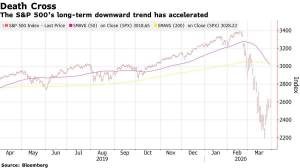
Image of Bloomberg chart of the S&P500 on 31 March 2020 showing a "death cross" technical analysis event warning of a possible selloff. | The-Military-Guide.com

Is it safe yet?

I can’t change your emotions but I can help you change your reactions and your behavior. My family is in this for the rest of our FI lives, and we no longer twitch every time a short-term event causes uncertainty and volatility. I’ll show you how to build that long-term perspective too.

Every financial crisis is filled with fear, uncertainty, despair, panic, and paranoia. And I’m not even talking about the stock markets yet!

[By the way, this post is evergreen. There’s a persistent rumor that search engines will punish sites for using keywords like “coronavirus”, “COVID-19”, or “SARS-CoV-2.” We experienced personal-finance bloggers don’t fret about the SEO– we use the keywords that our audience wants to see.

I wrote this blog post in late March 2020, during Hawaii’s 14 days of self-isolation for residents returning from travel. I feel fine and I hope that continues for another five or six decades.]

You’ll find more apocalyptic keywords all over the Internet, and I’m not going to obsess over them. Instead let’s talk about the psychology of behavioral finance. We’ll learn practical ways to cope with our emotions and our concerns. I’ll share the skills that we’ve acquired through experience… we certainly didn’t gain them through brilliance.

We’re going to switch our perspective to optimism.

“Optimism”? Seriously?!?

Yep. I’m 59 years old, and I’m hitting the “older male” demographic for a susceptible immune system. I’ve had bronchitis and pneumonia several times and my pulmonary function tests claim I’m down to a 70% capacity. During my military career I lived with chronic fatigue and acute stress for decades, and I’ve wreaked havoc on my body’s defenses. Looking back on my life, I’m perpetually amazed that I’ve survived to reach financial independence.

And yet I’m still optimistic– especially when I read blog posts written by my fellow Baby Boomers.

Image of Doug Nordman surfing at White Plains Beach Oahu, giving a shaka sign from the water. | The-Military-Guide.com

“What, me worry?”

As submariners learn very early in their careers, when you’re operating underwater then the casualties tend to have binary results. You’ll either take all the emergency actions and fix the problem, or… you won’t get the boat back to the surface and the rest won’t matter. That “escape” suit? Don’t count on it. Rely on your training and your teamwork. Practice until it becomes a reflex. Build your optimism on your skills and your shipmates.

It sounds a lot like every service’s military training, doesn’t it?

This binary result is the same way to endure the financial markets during global catastrophes.

The markets will either recover and go on to new growth, or… the catastrophe destroys the economy and life as we know it. The only question is how long the bear market persists, because the markets can remain irrational for far longer than we’re solvent.

Apocalypses are way beyond my locus of control. The only thing I can do during bear markets is to take care of my health and my finances. That helps develop the right attitude.

Focus on the things that you can control. Address your feelings, take the appropriate actions, and fix the root cause of the problems with your investments and your emotions. You’ll get plenty of practice as you save and invest for financial independence. Your reactions will improve, and you’ll be more optimistic too.

Yet another bear market.

My first thought on seeing the market’s steep drop was “Well, here we go again.” My spouse and I have invested for over 40 years, and we’ve seen this volatility before.

Graph of typical bull and bear market volatility with emotional reactions. | The-Military-Guide.com

Credit: Jonathan Ping of MyMoneyBlog

The consistent result among all of these bear markets: they’ve all recovered.

Remember: if the markets don’t recover then it’s because the global apocalypse has rendered the markets irrelevant.

Every time the bear market starts, it’s because investors are surprised by an unexpected event that’s grown out of control. If it was an expected event, then a bunch of us would have seen it coming and prepared for it. If we could control surprises then we would have handled it before it took over the markets.

One of the consistencies among bear markets is that we immediately insist: “It’s different this time!” That pessimism is pervasive: whatever we did during yesterday’s bear markets could never help with this amazingly new snowflake situation, and we’re all doomed.

Of course this time it’s different. If it was the same as last time then we would’ve seen it coming and prevented it.

The causes of a bear market are always different. Humans have short-term memories and we don’t know enough history to react rationally to the next surprise. Eventually, we’ll get smarter enough experience to handle the next surprise and we’ll notice the common factors.

Is it really different this time? Here’s a common factor: most bear markets last for 2-3 years. Even when a recession feels like forever, my personal experience is that the markets recover. They had to– or I wouldn’t write this post. Bear markets recover relatively slowly and they’re fraught with worry, but they’ve recovered.

Control what you can.

When you start investing, the Internet presents you with a bewildering array of options.  The financial industry claims that you can’t possibly manage your money on your own, and you need help. You need “free” information from the media (including us bloggers) to stay informed. You have to use “free” apps to help you execute your purchases, and you must seek help to grow your wealth. You’re even told that you can only handle the stress when you have a team to hold your hand and guide you through these complicated systems.
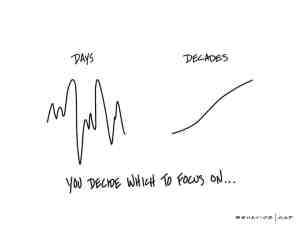
Image from Carl Richards' Behavior Gap drawings of stock market short-term volatility and long-term market gains. | The-Military-Guide.com

Carl Richards’ volatility perspective.

Ironically the talking heads and the researchers and the gurus are right about one aspect of investing: you can’t control the market’s daily volatility, even when you (think you) understand what’s happening.

As an investor, you only get to control three things: your asset allocation, the expenses you pay for it, and the amount you invest.

For the duration of the last bull market, we’ve seen plenty of bold talk about buying during the next bear market or economic recession:
“Stocks are on sale, yay!”
“Buy the dip!”
“Put that dry powder to work!!”

After 40 years, I can affirm that it’s easy to be bold during a bull market.

How bold do you feel in the second month of a bear market? How will we know exactly when to place those buy orders? What about the second year of a bear market? Forget about when you should go all-in with the market– when will this all end?!?

Now’s the time to start thinking about your emotions of a bear market’s behavioral financial psychology— and how well you’ll sleep at night.

How to handle your bear markets:

  • Have a plan.
  • Choose your asset allocation.
  • Put it in autopilot.
  • Find your support network. Turn off the financial media, don’t obsess over your account statements, and go live your life.
Image of a stack of colorful index cards for crafting your investment goals and plans. | The-Military-Guide.com

Keep it simple– try to fit your plan on just one card.

Your plan:
Your first step at every life transition is figuring out your short-term goals and long-term goals. (This applies during bull markets as well as bear markets.) Early in your career, you’re planning to pay off consumer debts (short-term goal) while claiming the match in your TSP and 401(k). You’ll boost your earnings and move through jobs (and unemployment). You’ll invest for retirement (long term) and financial independence (for your lifestyle). Maybe someday you’ll buy a house (long-term) or not (short-term).  What about raising a money-savvy familyCaring for aging parents?  Enjoying global perpetual travel?  Talk it out and write it down.

The best plan for your goals is written on an index card.

Keep it simple, especially when you’re new to investing. You want to explain your choices to your significant other, and maybe even to a six-year-old.

You can get really formal with an Investment Policy Statement if that makes you feel better, or be casually snarky with your plan. Either way you have to write it down and make it accessible for that moment when you want to panic and sell everything.

During bear markets and other stressful times, you’ll review your goals and your plans. You’ll consider why you’ve chosen your priorities and your assets, and you’ll analyze how your emotions are affecting your cognition. Maybe you’ll even ask a financial advisor (or a trusted friend) to talk you down off the (metaphorical) ledge.

Your asset allocation:
This is the tough part. All of the logic and math of an asset allocation can be hijacked by your emotions– not just fear but also greed. I’ve experienced this as a steely-eyed killer of the deep, and I’ve seen it in thousands of other military families. It’s reportedly even happened in Warren Buffett’s family.
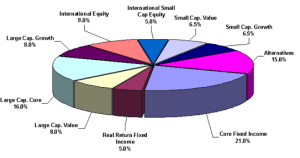
Image of 10-part asset allocation plan as a three-dimensional pie chart. | The-Military-Guide.com

Nope, too complicated. Keep it simple.

You can read the details of asset allocation at the Bogleheads Wiki.

You’re going to decide how aggressively you want to invest in stocks and real estate, and you’re going to decide how much volatility risk you’re willing to tolerate.

Intellectually you know that you’ll invest in stocks for a goal that’s at least 10 years away. You’ll use bonds for goals that are 5-10 years off. Short-term goals are in CDs and money markets. If you’re investing in real estate then you’ll build long-term cash flow instead of counting on short-term appreciation.

Image of Leonard Nimoy as Star Trek character Mr. Spock to illustrate his skepticism that emotions can derail logic. | The-Military-Guide.com

Emotions are highly illogical… and more powerful.

That’s math and logic. However, volatility will hit your emotions hard.

The problem is that the risk-tolerance quizzes don’t create the same feelings as a bear market. Everyone looks at the numbers and rationally concludes “Sure, I can handle a 50% paper loss for a year or two.” Emotionally, however, the actual experience feels completely different from the quizzes. Try to reframe the analysis for your personal timeline.

During the next bear market, can you stand to see your accounts shrink by a year of gains? Two years? Will you lose a decade of progress or end up even worse off? How long can you watch those paper losses pile up? What if you’re laid off when the market tanks? Will you lay awake night wondering “When will this end?” or even worse “OMG what have I done?!?”

No worries. Bear markets help you recalibrate your asset-allocation choices and your risk tolerance.

Keep it simple. You don’t need to boost your returns with options spreads or inverse-leverage funds. You can ignore exotic assets like cryptocurrencies, precious metals, or property-tax liens. If you’re investing in real estate then have an emergency-repair fund for each property. If you leverage your rental’s equity with a mortgage then keep enough cash to handle a vacancy of at least two months.

Diversify your asset allocation using passively-managed index funds with low expense ratios. (Lower than 0.25%/year. 0.10% is better. 0.04% is great.) If you’re going to pick individual stocks or bonds (or investment rental properties in the same ZIP code) then limit those assets to 10% of your overall asset allocation. 10% is big enough to boost your returns if you’re brilliant, and small enough to limit the damage if you’re… not.

Don’t “go all in” on a cheap asset, let alone a cheap stock. During 2008-09 on the Early-Retirement.org forum we watched an investor buy more stock in Bank of America every month. He understood the industry and the company, he did the math, and he loooooved the stock’s dividend. He loaded up every time the shares “went on sale.” He wasn’t greedy but he thought it was a safe haven, and he definitely confirmed his bias by deciding to “believe in his analysis” and “have faith in the numbers.” He left no margins for error or surprises.

His tactics worked… until they didn’t. BoA abruptly revealed billions of dollars of poorly performing loans and cut their dividend to a penny. Over half of this poster’s investment income vaporized overnight, and his assets lost 75% of their value. He could have controlled his asset allocation, but the company’s operations (and its results) were all totally beyond his control.

If you read those last two paragraphs and thought “Eh, I know how to do better than that”, then experiment with the 10% part of your asset allocation. The more you read about it and work at it, then the higher your returns might rise. However it also might turn into a full-time side job, and you might be reluctant to turn your back on it for a military deployment with minimal bandwidth.

If you lay awake at night worrying about what you need to do with your investments when the markets open in the morning, then you’re working too hard. Keep it simple.

Put it in autopilot!
This is why you choose a simple asset allocation, and limit your “brilliant investor” ideas to 10% of your asset allocation.

Image of a personal-finance blogger tweeting the question on what FIRE people would do during a market downturn. | The-Military-Guide.com

Click on the tweet to read our responses.

When you’re pursuing financial independence, bear markets are where your effort and your automation really pay off.

Set up payroll deductions or checking-account transfers to buy your asset allocation every pay period or every month. You don’t want to deal with decision fatigue and you certainly don’t want your emotions to hijack your plan.

Check your asset allocation percentages every few months, but don’t obsess over them. If you plan to split your asset allocation at 70% stocks and 30% bonds then let it drift a few percentage points each way. If it gets down to 60/40 then you buy more stock funds for a few months to bring it back to 70/30. (This is when stock index funds are on sale.) If it rises to 80/20 then you might not want to buy expensive stocks anyway, and you’ll put more of your savings into bonds or CDs.

If you have a lump sum to invest then you could buy your asset allocation in one transaction: get it over with and move on. If this feels stressful then invest that lump sum over 6-12 months.

The history of "This is the top" image of the DOW Jones index 1900-2016 annotated with many instances of the phrase "This is the top." | The-Military-Guide.com

“No, really, this time is different!”

Find a support network.
Turn off the financial TV and the daily market reports. You can check your account statements for errors and maybe think about rebalancing, but don’t obsess about the recent losses.

Go live your life. Focus on family, friends, and career… in about that order. Go outside. Try to exercise, eat better, and get some sleep. It’s not easy to do these things during stressful times, but it helps.

Like any other stressful time, during a bear market you’re going to talk with family & friends. Find people who have at least as much investing knowledge and risk tolerance as you. Read Internet forums and Facebook groups to find posters in similar situations, and ask questions.

If you’re still feeling stressed about your options then consider financial advice.

Maybe you’d want to consult a fee-only CFP from NAPFA, the Garrett Network, or XY Planning Network. They charge by the hour (or project) without commissions or upsells. You might also decide that you’d prefer a financial coach instead of a CFP. Coaches can do everything that a CFP does except recommend specific investment funds or stocks.

How will a bear market affect your FI plans?

What stage of your financial independence journey are you in?

If you’re just starting your career and your path to FI, then follow the four steps above. If you’re paying down debt then you should still invest for your employer match in your 401(k) or your Thrift Savings Plan. Adapt your investment decisions to the interest rate on your loans. If you’re paying less than 4% interest then maybe you’re comfortable at making the minimum debt payments and investing more in your asset allocation of your 401(k) or your IRA. If your debt has a higher interest rate then accelerate its payoff and sleep better at night.

If you’re carrying a mortgage or student loans then you might even want to investigate refinancing to a lower interest rate. I’d happily restart our 30-year fixed-rate mortgage if we could drop the rate from 3.50% to less than 3%.

If you’re approaching FI and planning to retire soon, then make sure you hit the tripwire of the 4% Safe Withdrawal Rate before you quit your employment. Learn about sequence-of-returns risk and consider keeping two years of your retirement expenses in cash during the first decade of financial independence.

If you’ve already reached FI (the 4% SWR or cash flow from rental properties) and quit your job, then you should be fine! The 4% SWR will survive bear markets even if your annual spending rises to 6%-7% of your shrinking investments. You’re not a spending robot. You’ll review your expenses and make smart choices. If the bear market extends longer than two years then you’ll investigate variable withdrawal schemes and consider moving to lower-cost areas. The success rate of the 4% SWR gives you plenty of time to adjust your tactics, and dealing with a bear market while you’re FI is still a far more enjoyable life than the best days in the workplace.

What we’re doing in our family:

At Hale Nords, we’re neither buying nor selling. We’re not even rebalancing.

We’re focused on long-term next-generation goals and we’re living our lives.

Short answer: we’re staying with our asset allocation.
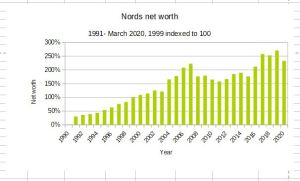
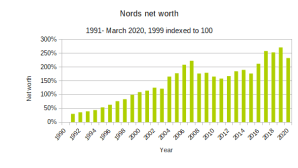
Image of spreadsheet bar chart of Nordman family net worth from 1991-2020 with 1999 indexed to 100. | The-Military-Guide.com

March 2020 update: still more than enough.

Long-term answer: after 18 years of retirement, our investments will survive bear markets. Our emotions are still challenging, but the 4% SWR follows its math.

My spouse and I reached FI for the first time in late 1999 (in retrospect), along with everyone else who invested in a high-equity portfolio during the Internet bull market. We didn’t know about the 4% Safe Withdrawal Rate back then and my military billet did not suck, so I stayed on active duty.

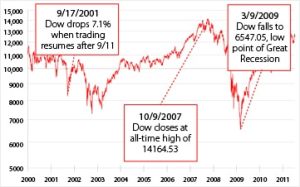
After 9/11 when the stock markets re-opened, we ran our numbers again. This time we knew about the 4% SWR, and despite the market’s epic meltdown we were about a nickel over the tripwire.

I retired from active duty in June 2002, just as the Internet recession was headed for the bottom.  The next few months were not fun, and there were several intense spouse discussions about asset allocation, but our Plan B was getting a job for a year or two. (We never needed to do that.) At retirement we had set aside two years’ expenses for sequence-of-returns risk, and we kept spending from that cash. The rest of our asset allocation was in equity mutual funds, although we began moving toward equity ETFs with cheaper expense ratios.

2008-09 was no fun, either, but we stuck to our two-year cash stash plan and our asset allocation. We did some tax-loss harvesting but we stayed invested.

After 2012 we drew down the cash stash. We’d survived the decade of vulnerability to sequence-of-returns risk and our spending had risen more slowly than inflation. Today our annual spending is around 3.5%, comfortably within the 4% SWR and invulnerable to historical returns. We’re confident that we have more than enough assets for the rest of our lives.

In 2017, in a “Well, duh” epiphany, I stopped tracking the markets. I shut off my daily e-mail summaries and my alerts and retrained myself to stop looking at our investments every week. It took a while, but I no longer obsess about the daily numbers. I check Personal Capital when I’m working on income-tax returns or totaling an expense category. (Or researching a blog post.) I’m in our Fidelity accounts when I’m transferring dividends to our checking account. Otherwise I’m blissfully ignorant.

Personal Capital also showed that our equity index ETF shares (purchased in 2003-04) had much higher expense ratios than today’s index ETFs. We’re getting rid of the last of those higher-expense ETFs and moving to Vanguard’s total stock market index fund (ticker VTI) in a tax-efficient manner. We’ve donated many of those shares to charity for the income-tax deduction.

We reached financial independence on a high savings rate, and we’ve endured bear markets before. Today we have reliable income from my military pension (and in a decade, Social Security) and a little cash flow from a rental property. Because of our volatility experience and those inflation-adjusted annuities, we have an extraordinarily aggressive asset allocation: it’s >95% equities with the rest in cash.

Image of Nordman Personal Capital asset allocation showing 95% equities. | The-Military-Guide.com

Still on track.

Instead of looking at the stock markets we’re focused on estate planning and philanthropy, and we’ll work harder on giving it away.

There’s no reason to make rapid moves. As I wrote this post, we were 98% stocks and 2% cash.
That 98% includes:
52% VTI.
24% Berkshire Hathaway “B” shares, for our heirs and charities.
12% in the dividend ETF (DVY), slowly moving to VTI.
10% angel investments, winding them down.

As this bear market began, my old reflexes kicked in. I could sell put options on our ETF shares. I could put our unused cash to work in more shares of a total stock market index fund. We could do more aggressive marketing on our next book and pursue freelance writing with public speaking. I’ve done those things before, they work, and I can do them again.

But we don’t need the extra income or assets. Life is already awesome.

Our worst drop in this bear market (so far) is 18%. In 2009 our net worth dropped 56% from peak to trough and then recovered, so in 2020 we’re not worried.

We’re living our long-term goals now.

Image of Doug Nordman napping with his eight-week-old baby granddaughter Arya in his lap. | The-Military-Guide.com

“After the midwatch.”

Our daughter and son-in-law recently gave birth to our first grandchild. We’ve gifted Arya the cash to start her 529 account, and her parents are really happy to buy the index funds at a 30% discount.

In the “living our lives” goal, we visited them for a month of diaper duty. There was grandparent sleep deprivation (I took the midwatches), but we gave the parents a much-needed break. I enjoy taking naps with a baby in my lap.

Arya’s parents have a high savings rate for their own financial independence, and they’re well on their way. Poopie diapers are a great metaphor for a bear market, and during our visit, our granddaughter offered many opportunities for that financial discussion. My daughter Carol and I also finished editing our book about raising money-savvy families, and now we’re starting the marketing with social media and podcasts.

That’s our legacy for everyone’s next generation. Arya seems pretty satisfied.

Image of Doug Nordman's eight-week-old baby granddaughter Arya smiling in her bouncer chair. | The-Military-Guide.com

“I like bear markets!”

Your call to action:

Make a plan.

Choose your asset allocation.

Put it in autopilot.

Find your support network.

[earnist ref=”the-military-guide-to-financial-independence” id=”70177″]

Related articles:
How Should I Invest During Retirement?
Yet Another Decade In Review Post
The 1980s-2000s: How I Wish I’d Invested Back Then
Our Retirement – The Spending Smile Of Financial Independence
“Hey, Nords: How’s Your Net Worth?!?”
REVEALED: Our Asset Allocation During Financial Independence (published in 2015)
How Do You Survive A Stock Market Crash?
Lifestyles in Financial Independence: Your Mortality

Posted in Financial Independence, Investing & TSP | Leave a comment

Slow Travel Is Wonderful, Yet We Still Had Challenges


I’ve had a bunch of reader requests for our lessons learned from slow travel.

I’ll mention parts of our trips during this post, and the “Related articles” section at the bottom will have more information about our destinations. All of our Facebook photos in those links are public, and they have location tags & captions. This post will focus on the process, not so much the destinations or experiences.

2018 was a busy year, and we’d predicted that our life was just going to get busier in 2019.

Boy, were we right.

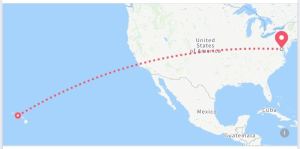
Image of Facebook flight path from Honolulu to Washington DC for Nordman trip in 2019 | The-Military-Guide.com

Starting our second trip of 2019.

We might have let our ambition get ahead of our abilities… in a good way.

In 2019 we left Oahu for two separate two-month trips. We logged over 17,000 miles on the first trip and over 19,000 miles on the second trip. All of it went to Western Europe through the Mainland, and we happily wandered among a dozen small towns (on both sides of the Atlantic) in six different languages. You can see more of those details in our photos.

You can read about the first trip happening mostly by Space A on Navy aircraft and the second trip covering three life-changing financial conferences on two continents.

This post discusses long-term sustainable lifestyle travel, either with a home base or as perpetual travel. We’re going to assume that you already understand passports, Global Entry, TSA Precheck, the Mobile Passport app, rewards credit cards, smartphone maps, and Google Translate’s camera + microphone.

Now let’s get to those lessons we learned. Again. And this time we really mean it!

Travel with kids and without kids

Image of Nordman family with in-laws at Mauna Loa Macadamia tour on Hawaii Island. | The-Military-Guide.com

Family and in-laws on the Big Island, 2003.

This was our most frequent reader question. It’s also our most important lesson learned.

Some families travel very well with kids, and other families prefer staycations. We did all right with our family trips in the 1990s and 2000s, mostly to neighbor islands, Disney, and Mainland relatives. We did much better as our daughter got older and started touring universities.

During Carol’s college years we traveled around her schedule. We were usually home when she was on break, and we visited her Mainland campus once or twice a year when our other travel passed nearby. We made one family trip to Bangkok over her 2013 winter break, which turned into a fun Navy ROTC tutorial on liberty ports.

Yet even as your teens launch from the nest, you’re still a parent. You’re still being responsible (darn it) and you’re still trying to model good behavior. You’re also struggling to react to your former kid as a young adult, especially when they’re old enough to legally outdrink you.

Meanwhile, your progeny might need the family vacation period for personal recovery time. Maybe they just want to sleep in through lunch and see what’s different in their ol’ familiar neighborhood. They’ll gain a new homecoming perspective as they reflect on how they’ve changed as they leave the nest. The good news is that sometimes it’s simply easier to stay home.

After Carol graduated and started her military career, Marge and I have had much more fun visiting our young adult at her homeports as part of enjoying our own empty-nester slow travel. We’ve visited Carol (and later K.J.) at least once at every duty station. We greatly appreciated the free lodging (thanks again, guys!) while we enjoyed the chance to share their travails and triumphs in person. Carol was stationed in a couple of our 1980s ports, and we really had fun revisiting the old places and meeting shipmates. Maybe it’s because this time we had more liberty and more money… although admittedly less energy.

Image of book cover of "40 Day Trips From Rota" by Melinda and Jim Ronka | The-Military-Guide.com

Visiting Rota? Get this book.

I think we also enjoyed those homeports as personal victory tours of seeing & doing everything that we never had time for between deployments and duty sections. During two separate trips to visit Carol in Rota, we did 36 chapters of “40 Day Trips from Rota.”  (Thanks for the advice and the excellent maps, Melinda & Jim!) At every visit, we’ve also had fun helping Carol & K.J. by unpacking (a few) moving boxes of household goods and hanging (some) pictures.

Best of all, during those trips, we’ve built new relationships with Carol and K.J. as adults and travel buddies. This simply did not happen with my parents when I was in my 20s, and I’m glad that I’ve tried harder with our next generation.

In every other way, empty-nester travel is fantastic. It’s a second adulthood with more personal time and a bigger entertainment budget.

If your family has figured out how to enjoy six-week extended trips, then keep going! But if family vacations have been tough for you to organize & execute, then take heart: your empty-nester travel years let you reset the rules and enjoy yourself.

Travel with a purpose

Image of Hickam Passenger Terminal Space A flights to Washington DC, northern California, Guam, and Japan.

“Where would you like to go today?”

My spouse and I can get a free seat on a military Space-Available flight at just about any part of the month. Typical non-stop destinations are not only the Mainland but Guam and Japan. With three hours’ notice we can grab our passports, stuff a backpack, close up the house, and mark ourselves present at the Hickam Passenger Terminal.

Yet we don’t do that. Not yet anyway.

We allocate enough funds for just about anywhere in our travel budget, but we don’t even “pick up and go” to a neighbor island without making plans. We’ve never scampered down to the Aloha Tower cruise terminal for a last-minute pier-jump fare. Not yet anyway.

Maybe we had too much of that no-notice travel during our Navy days. (Admittedly back then it was a different type of “cruise.”) Perhaps we’re slowing down, or we’re just lazier.

Frugality runs deep in my bones, but our travel seems more complicated than that. Our recurring theme focuses on the value, not the money. I hesitate to mindlessly pay full retail for commercial flights, let alone first class. Instead, I have a great time on military Space A with a $6 box lunch, or we flex our frugal skills by travel-hacking a commercial flight. At this point in our lives, we should relax and stop fretting about the expense of an occasional first-class commercial airline ticket. Yeah, it’s a #FirstWorldProblem, and we worked hard to earn it.

We’re also optimizers. We like to plan the big picture and then be open to the opportunities within that plan. Oahu is over 2500 miles from the closest continent, and we don’t want to make that flight more often than necessary. We’d rather spend two months exploring a destination’s neighborhoods and living like locals instead of racking up the airline miles in a two-week whirlwind.

We’re certainly fulfilled by visiting family, but we also enjoy attending financial conferences and smaller financial-independence meetups. We like bookending our plans with a couple of those events and then filling in the details between them.

Travel with stamina

We’re in our late 50s, but our travel stamina is not only related to our age.

Marge and I like each other a lot and we have very complementary travel styles. We’re both introverts, and we need daily quiet time to recharge. We prefer exploring on our own instead of guided tours, and we’ve learned to leave at least half of the day unstructured. Our idea of a great routine is a leisurely breakfast, a 10 AM departure to a local destination with a few hours of wandering through it, and a late lunch. We’re generally back in our AirBnB for a break before dinner. Sometimes we’re out in the evenings for dinner and an event, while other times we’re lazy at our lodgings.

We are absolutely not out the door at sunrise, racing in a rental car to six destinations for selfies while eating 2-3 meals on the road and then returning home after sunset. We know how to do that, but we deliberately avoid it.

We’ve also learned a few skills with managing our energy levels– and our sanity.

Image of Doug Nordman relaxing with a cup of cafe Americano on lanai of the museum at the Roman ruins of Conimbriga Portugal. | The-Military-Guide.com

“How did we miss that bus?!?”

The first one is “the down day” every 3-4 days. Instead of exploring the town we take care of laundry and e-mail, catch up on social media or writing, and talk about our weekly plans. We’ll shop for groceries or visit a nearby pub for a meal. We might hang out in the local park for a short walk or the farmer’s market. If we’re in a popular weekend destination (like Amsterdam) then we almost always end up doing a down day on Saturday or Sunday while the rest of the crowds race around us.

Our other skill is taking a break during the day for an ice-cream cone or a cup of coffee. What we’re actually doing is sitting down in a quiet corner where we can really figure out how we missed that connecting bus, or which train we need to catch next, or the best walking route to the museum. This usually happens when we’re trying to navigate a crowded sidewalk or figure out directions in a hurry while reading a tour book. We’ve learned to take a break whenever we’re a little rushed, a little frazzled, and a little too locked-in at pushing to a target.

Our military careers taught us how to get stuff done, but we no longer need to crush through obstacles to reach our travel goals. Nobody’s keeping score. It’s far better to take a 20-minute pause instead of racing to make up the 10 minutes you just lost from that wrong turn.

There’s no need to take on mission risk, which brings me to our next lesson.

Travel healthy

Image of horse-drawn carriages parked on the street in Sevilla Spain. | The-Military-Guide.com

Horses on the right, tram tracks on the left.

Our #1 travel rule is “Don’t get hurt.”

It’s not pickpockets or muggings and it’s certainly not ziplines or rugged hiking trails. I’m far more concerned about sneaky trams, loose cobblestones, horse-drawn carriages, aggressive cyclists, and suicidal scooters. When you’re walking while distracted by your map or the scenery, you’re even closer to disaster. It’s one more reason to slow down and not pack too many activities into the day.

In Amsterdam, we quickly learned to fear the cute little “Ding-ding!” bells of cyclists, and we will not jaywalk in Bangkok.  We don’t walk on the bicycle trails in Spain, and we try not to walk on wet cobblestones anywhere.

Image of bicycle parking in Amsterdam, including compartment with seating for kid passengers. | The-Military-Guide.com

“Ding!-Ding!-Ding!” *THUD*

We’ve both had bad colds during travel, and we know we have to take it easy for a few days (even extend our stay) while we recover. We both got nailed with a nasty virus at Ramstein Air Base in Germany, and Marge might even have had the flu. (She still doesn’t remember much of her Space A Patriot Express flight from the Ramstein Inn to a Baltimore hotel. She finally perked up on the fifth day after the flight.) This happened despite our 40-year records of annual flu shots.

Our defense is imperfect, but we have good casualty procedures. I pack a four-day supply of decongestants and antihistamines to tide us over to a drugstore. We pack large bottles of ibuprofen and acetaminophen. We pack a small bottle of Pepto-Bismol (unopened so far!) and we’ve visited pharmacies from Bangkok to Barcelona. We stay hydrated and we try to minimize the self-imposed stress & fatigue.

We also practice medical tourism. I’ve had two very thorough physical exams at Bumrungrad Hospital, and I have at least as much faith in their skilled care as I do in our local Queens or Tripler hospitals. We’re also treated a lot better in Bumrungrad than any American hospital I’ve ever visited.

We no longer carry dental insurance, so we routinely get dental exams and cleanings in our destinations. We’ve paid $45 in Coimbra for the same dental care that’s 3-4 times the price on Oahu. We’ve paid a lot less for that in Thailand– and with discounts on full-body massages from the place next door.

We walk as much as we can during our daily travel routine. After two months of 2-6 miles per day during our last trip, I’m back to handling at least three miles with minimal knee pain. On Oahu, I do more surfing (and less walking), but now I’m going to maintain the walking and knee-stability work. And this time I really mean it.

Travel light(er)

We struggle with packing lighter, and we still take a checked bag.

We’re routinely under 35 pounds, but it’s the volume. Some of this is aloha omiyage for friends or thanking a host. Some of it is a few copies of my books (preferably the smaller pocket guides) and business cards for financial conferences.

A lot of it is packing for three climates: hot, rainy, and freezing Space A military aircraft.

We’re not hardcore minimalists, but we’re certainly living lighter. When you travel for two months with less than 35 pounds then you start to apply those principles at home too.

On our last trip we learned several packing tips from Kristy & Bryce of Millennial Revolution. When we take shorter trips then I’m going to consolidate from a roller bag (and a 25-liter day pack) to “just” a 40-liter backpack.

What about our home, our rental property, and our mail?

Our “worst” home problems have been our rental property’s tenants and the U.S. mail.

Neighbors & friends have our lockbox code and can get into the house for emergencies– or they can simply text or e-mail.

Burglars would be frustrated. We don’t own valuables and we don’t keep cash in the house.

We rig the place for hurricanes if we’ll be gone during the season.

Image of the water shutoff valve for a refrigerator. | The-Military-Guide.com

No water leaks in this refrigerator icemaker.

I’m a submarine vet, and we’ve upgraded our home’s infrastructure. Our photovoltaic system generates solar power while we’re away (and gives us extra credits with our electric company). We leave the refrigerator running, and melted ice cubes would tell us if there was a long power outage. We’ve replaced old water valves on every faucet & toilet with new reliable ball valves. We leave the solar water heater system running instead of isolating it, and a leak there would simply flow out of our garage or off the roof.

The most important part of abandoning your home is recognizing that it’s only a house. It’s an awesome home, but if something happened to it then we’d fix it and resume our lives. If a hurricane or a fire destroyed it then we’d file the insurance claim and rebuild.

Our rental property was more of a hassle during travel. Last year our tenants gave their 30-day notice on the night before we left for two months of travel. It’s the first time that’s happened to us!

A friend recommended a property manager who took care of turning over the tenants. The tenants had a lot of trouble moving out, and they held over for nearly two more weeks (at pro-rated rent). We returned home just two weeks after they left, so it was a good thing that we didn’t shorten our trip. They left the rental in decent condition and our son-in-law (thanks, K.J.!) helped us return their security deposit on time.

A full-time property manager didn’t work out (for various reasons) and we’re still self-managing. If this happens again, though, we’ll hire another property manager (or ask a favor of a friend) to handle the turnover.

Image of speeding ticket in Washington DC mailed by contractor for a rental-car agency. | The-Military-Guide.com

This must’ve been too hard to e-mail? Right.

The U.S. Postal Service does a great job of holding our mail, and we could see most of the envelopes through their Informed Delivery service.  However, we could have used a mail-opening service for the government agencies (we’re lookin’ at you, IRS and the state of Hawaii) who insist on mailing letters instead of using e-mail. Nothing bad happened but officials had to wait a month for our response.

Last September as we left FinCon and Washington DC, a traffic camera caught me driving our rental car at 47 MPH in a 35-MPH zone on NY Avenue. Hertz did not notify us of the fine, although they sent us plenty of other unsolicited e-mails. Instead, they turned the ticket over to a contractor who… three weeks later snail-mailed a letter to our Hawaii address. 50 days after my crime I picked up our mail and almost threw that spammy-looking envelope in the junk-mail trash. I paid the $100 fine only a few days before it was due to double.

I wonder how much traffic-camera revenue the District earns from us clueless visitors.

USPS technically only holds mail for 30 days but our local post office has tolerated up to 60 days. (We get very little mail.) We could use a mail-scanning service, a P.O. box, or another favor from a neighbor, but we still haven’t found a short-term mail service that’s worth the setup hassle. It’s also convenient for us to mail packages home from travel, where our local post office will hold them until we return.

Travel on a budget

Sorry, we spend generously on this part of our lives. We do a little travel hacking with loyalty programs and credit-card rewards but we prefer to rent more expensive centrally-located AirBnB apartments.

However, we can point you to a couple of studies.

My friend Tom Wahl (remember “The Wandering Wahls?”) found a fascinating financial report from the Center for Retirement Research at Boston College. The Employee Benefit Research Institute reports survey data that travelers in their mid-60s spend over 20% less than those in their 50s. The biggest drops in expenses were in food (after the kids leave the nest) and entertainment.

Other EBRI reports suggest that empty nesters spend less with age, and the “retirement spending smile” has also been observed by many financial advisors.

Travel while you still can, knowing that this portion of your spending will decline. Cut expenses on the parts which aren’t important to you (especially off-season) and live like a local instead of staying in resorts.

Our cheapest travel comes from military Space A flights and the occasional AirBnB discount for longer stays. We are not foodies and we rarely eat more than one meal a day at a restaurant. (We prefer cafes and street food.) We follow the typical guidebook advice on discounted admission and we use a travel rewards credit card as much as possible.

“Could we live here for a while?”

Financial independence gives you the opportunity to find out how much you want to travel– and where. You may have already found your mythical “forever home”, but you’d be surprised what you can discover in the rest of the world.

If I had to pick a new place right now, we’d live in southern Portugal or Andalucia on a retiree visa. Chiang Mai is certainly near the top of the list, and we should explore Chiang Rai someday. Italy’s hill towns and Padua are good, too, although we’d find one of the less-touristy locations.

Before I make a long-term commitment to any of those places, though, we need to do more research in Australia and New Zealand. Japan’s on the list too.

Wherever we ended up, we’d use those rentals as a base to explore the rest of Europe and Asia.

Image of Doug Nordman's granddaughter with a copy of the book "The Military Guide To Financial Independence and Retirement" | The-Military-Guide.com

She’s saving her money for travel, too.

That’s our long-term contingency plan, but for the next few years, we’re going to focus on our granddaughter. We have no idea where the Navy will send her family, but I’m pretty sure we’ll enjoy visiting her. (And her parents, too, of course!) Then we’d spend a few more months in their surrounding area and maybe attend a financial conference or two along the way.

Could we do this for the long term?

Heck yeah. Try to stay healthy and plan to travel while you still can.

Paul & Vicki Terhorst have been expatriate perpetual travelers for over 35 years. Billy & Akaisha Kaderli have lived the same lifestyle for nearly 30 years. Kristy & Bryce of Millennial Revolution have been homeless for over four years. Alan & Katie Donegan of PopUp Business School (and FI Chautauqua) recently ditched their home for extended travel.

I get regular updates from Heather Hope and Volkan Akkurt on their years of house-sitting around the world, and Tim & Amy Rutherford document their experiences on YouTube.

My personal idols are an elderly couple we met in a Space A passenger terminal. He was dragging a small roller bag in one hand and using a cane with the other. She had a backpack and a small bag. Both were slim & trim and looked like they could walk all day. They had signed up for “any part of Europe”. (Our flight happened to be going to Rota.) They preferred Germany but they were quite happy to wander through Spain, France, and Italy along the way. They planned to spend at least a week at each stop, but they hadn’t made reservations yet. They were going to leave before their 90-day Schengen limit to spend another month visiting their three families of grandkids on their way home. On earlier trips, they’d applied for longer visas and spent most of a year wandering the continent.

As we talked about Europe, he mentioned that he was 85 years old. He’d recovered from a broken hip and expected the trip to be good physical therapy. He’d flown military Space A longer than I’d been alive.

After hearing their stories, I gained a new life goal.

It’s your turn in the comments. Are there any other questions about slow travel? What lessons have you learned on your trips?

[earnist ref=”the-military-guide-to-financial-independence” id=”70177″]

Related articles:
Should You Attend FinCon, Military Influencer Conference, Camp Mustache, CampFI, and FI Chautauqua?
Military Space Available Travel: Tips for Flying Space-A The Navy Way
Good News! How Our Nords Family Financial Independence Life Will Change In 2019
Surprising Secrets Of Slow Travel
Fast Personal Growth Through Slow Travel
Travel While You Can
Our Retirement – The Spending Smile Of Financial Independence
Lifestyles In Retirement: 90 Days In Spain
Lifestyles In Financial Independence: Your Mortality

Here are public photos from the trips. All of them have dates, location tags, & commentary. Please drop a comment or contact me if you have questions about a specific location or activity!
Facebook photos & captions from Europe 2019 part 1
Facebook photos & captions from Europe 2019 part 2

Posted in Military Life & Family, Travel | 8 Comments

The “What’s Up Next?” Podcast: “Looking Out For Mom And Dad”


A few months ago I joined Doc G and Paul Thompson of the What’s Up Next? podcast for a panel discussion about a family financial problem:

How do you look out for your parents when you don’t know anything about their finances or their wishes?

Image of financial journalist Cameron Huddleston's book "Mom and Dad, We Need to Talk" how to have essential conversations with your parents about their finances | The-Military-Guide.com

Click the image to learn more.

Our panel included Cameron Huddleston, whose book “Mom And Dad, We Need to Talk” has been out since June 2019.  She’s taken care of her mother for over a decade of Alzheimer’s Disease. A few years before when Cameron was drafting the manuscript, she interviewed me for over 90 minutes about managing my father’s finances.

We were joined by Stephen Chen of New Retirement who discussed how he started his retirement calculator company after helping his mother figure out her retirement finances. He’s had lots of feedback from his thousands of clients, some of whom are dealing with aging parents who are reluctant to discuss their wealth and their estate plans.

We heard from Jen Smith of Modern Frugality with stories of her mother’s financial difficulties, which her Mom didn’t share until it was too late.  You can listen to that audio snippet here:


The six of us talk about our family experiences of sharing our financial situations and our plans with our parents. Everyone worries that Mom & Dad might want (or need) our help, while we’re simultaneously concerned that our parents will think we’re invading their privacy or even trying to take away their control.

We also spend most of the podcast talking about ways to start those awkward conversations. Cameron’s book is filled with scripts for opening the subject and sharing your own financial concerns before bringing up your questions about your parents’ finances.

You can listen to the podcast episode at this link.

It’s a difficult conversation. You won’t want to talk about it with your family, and you’ll keep putting it off. When you finally do bring it up, your parents won’t want to talk about it either. They might not only put it off but could even shut down and be offended at your apparent intentions.

But if you think that parental conversation is hard, let me share the consequences of not having those talks.


Getting “the call”

Nine years ago this month, I got the 4 AM phone call from my father’s hospital. Dad, a widower since the 1980s, was recovering in the ICU from repairs to a perforated ulcer. The surgeon said Dad had shown up in the Emergency Room shortly after midnight, incoherent with pain. Dad lost consciousness as the ER team frantically tried to check for a heart attack and to do a CAT scan for other clues. By the time they discovered the hole in his duodenum, the situation had deteriorated to thoracic “slash and mop” only minutes before it was too late. The trauma doc was exhausted after spending the night saving Dad’s life, and he had a lot of questions about Dad’s dementia symptoms. How had his situation become so dire?

Image of Dean Nordman, Doug Nordman's father, at Colorado Monument National Park in December 2009 | The-Military-Guide.com

Dad at Colorado Monument National Park

Months later, I figured out from Dad’s medical records that he had first felt his “slipping memory” in mid-2008. In late 2009 he told us he could no longer use his computer, and we realized that he was dealing with dementia. He refused all offers of help (I explain why in the podcast) and he lived independently in his two-bedroom apartment until February 2011. He recovered from the surgery (and malnutrition from poor self-care) and spent over six years in care facilities before passing away in late 2017.


Figuring out the money

While Dad regained his health in the care facility, my brother and I spend over $10K of his money on legal fees to be appointed his guardian and financial conservator. I also covered another $25K of Dad’s bills at the care facility while we argued with his insurance company about the claim on his long-term care policy.

During the 10-month legal process, Dad’s pension and Social Security deposits piled up at his local bank and his investments continued in autopilot. It was only two years after the bottom of the Great Recession, and Dad had let his asset allocation drift to 85% equities and 15% bonds. This is not considered the optimal asset mix for a potential decade of long-term care expenses, but I couldn’t legally do anything about it.

Image of Dean Nordman and Doug Nordman (Dean's son) sitting on a couch in Dean's apartment. | The-Military-Guide.com

Our last photo together.

While Dad was in the hospital I knew nothing about his finances, and I didn’t have his computer password or any of his account logins.  (Dad could no longer remember any of his finances, and he hadn’t paid his bills in several months.)  After many hours of research I was able to figure out most of the picture from the four-drawer file cabinet in his small apartment. By the end of 2011 I had a conservator’s appointment and the legal authority to sort things out. It took several more years before I was sure that I’d found everything and had solved all of the mysteries.

During Dad’s first few years in the care facility, one of his perpetual conversations was his worry that he couldn’t remember how to go back to his apartment to pay his rent and his other bills. We always assured him that he’d left us a complete set of records and we knew what to do. We told him that he had plenty of money, and we were able to take care of everything. When he heard this, we could always see the fear and concern drain away as his face relaxed into happiness. We had a lot of practice at it because he’d replay that loop at least hourly.

In retrospect, we realized that Dad had probably been living with depression for decades. Alzheimer’s freed him of that for him to enjoy some of the happiest years of his life. He passed away in November 2017.

You can read more about managing a parent’s finances (and many more related posts) at this link.


Doing the annual paperwork

It’s an ironic coincidence that the podcast episode was posted this week. This used to be the peak of my busiest financial time of the year.

From 2011-2018, the months of December through March were crazy stressful. Along with the holiday drama gatherings and celebrations, I was taking care of two sets of family finances. (I had the easier part. My brother was handling Dad’s day-to-day concerns at the care facility, his medical exams and prescriptions, and his deteriorating symptoms.) As a typical member of the sandwich generation I was wrapping up our annual Marge & Doug financial chores, helping our daughter manage the college fund, and gathering Dad’s year-end financial data. I’d easily spend 10 hours of January putting together Dad’s annual report for the probate court on their particular forms: a full checkbook register, a balance sheet, and projected expenses.

All of that was subject to the critique of the probate court before they’d extend my appointment for another year. There was a perpetual implied threat of being “fired” and replaced by a court-appointed professional conservator– for a suitable fee charged to Dad’s assets.

One year our reports were lost on the court’s computer network and we were declared late. I was on travel and only learned about the judge’s summons (mailed by letter) when my brother called for help. (I was managing Dad’s affairs from Hawaii and wherever we traveled, but the Denver probate court required me to voluntarily waive extradition and appear at their behest as a condition of my conservator’s appointment.) When I e-mailed the court the U.S. postal receipt from mailing in my report, the probate clerk miraculously found our “missing” documents and got them (back) on the network.  The judge canceled our summons.

In two other years the court rejected my report’s analysis and asked for a new financial projection… with another 10 hours of filling out their forms to reach a different conclusion.

In between dealing with the annual reports and the probate court, I was also doing two sets of income taxes. (By this time our daughter was handling her own income-tax returns with only an occasional question.) Dad’s deductions usually wiped out all of his taxes, but I still had to carefully adjust his asset allocation without triggering IRMAA’s higher Medicare premiums.

Even when I got the reports and tax returns under control there would be other “surprises”. The long-term care insurer would change a reporting requirement, or Dad’s medical insurer would decide that his prescriptions needed a new round of reviews and approvals before January’s refills ran out. The conversations seemed to repeat themselves every year:  Why yes, yes I did want the bills sent to a Hawaii address and the medications sent to a Denver address. No, the care facility would not do prescription refills via the U.S. mail. You claim you can’t talk to me because of HIPAA patient privacy?!? Did you want me to pay your invoice or would you rather debate my appointment with the probate court? Well then.


And each year when the paperwork was finally finished…

Image of seven different probate court reports and petitions reporting the death of a conservator's ward and requesting termination of the conservator's appointment. | The-Military-Guide.com

Paperwork for the probate court.

Maybe my conservator’s appointment would be extended so that we could do this next year. No pressure.

By the time April started, I was usually burned out on all the paperwork and wincing at every official letter in our mailbox.

You know what makes this paperwork even harder? Settling your parent’s estate after they pass away. It was another six months after Dad’s death before I could process the conflicting emotions of grief and relief.

2019 was the first time in eight years that I was able to relax over the holidays without dealing with reports or income-tax returns or other caregiver financial issues swirling around in my head. This year has been much better, although I still feel the sad memories of the stress. I’m pretty sure they’ll fade over the next few years.


The next generation(s)

Image of Doug Nordman's granddaughter holding a copy of the book "The Military Guide To Financial Independence and Retirement" | The-Military-Guide.com

She’s getting a head start!

My father only visited his granddaughter three times in over 18 years before Alzheimer’s took his cognition. He was attentive with holiday cards & gifts and the occasional letter, but he never really connected with her as much as I connected with my grandparents. My daughter’s memories of Grandpa Dean have to come from my stories and our family photo archives.

Now that I’m a rookie grandpa, I’m going to help my granddaughter enjoy having her grandparents in her life. As you’re reading this post, we’re getting ready to spend a month of bonding over bottles and diaper changes.

As you might imagine, Marge and I also have some pretty firm opinions on our estate planning.

If the time comes for our disability care, our daughter will have all the powers of attorney and financial tools she’ll need… without gatekeepers and with minimal caregiver stress.

Our family had our own difficult conversations, but now our daughter knows that we’re not going to dump these issues on her new family. It’s given her a tremendous sense of relief and reassurance.

We hope that our experiences will help you have those talks in your family.


Your Call To Action

Please listen to the podcast. (You’ll enjoy our rotating conversation!) Use the resources we explain during our Q&A, and figure out how to have the hard conversation with your parents. Do it while you still can. Believe me, it only gets harder if you put it off until later.

Maybe you can jumpstart the conversation by sending this post (and the podcast) to your parents.  Share what you’ve done for your estate planning, and then ask them what you need to know about theirs.


[earnist ref=”the-military-guide-to-financial-independence” id=”70177″]


Related articles:
The Facebook group for the What’s Up Next? podcast:
Links to all the other related posts about being my father’s financial caregiver

Posted in Insurance, Military Life & Family, Money Management & Personal Finance, Reviews | 2 Comments

Yet Another Decade In Review Post


My spouse and I enjoyed a heck of a year. The end of 2019 marks 20 years of our financial independence and over 17 years of my military retirement. I’ve written about military personal finance for over 15 years and I hope I have a few decades left!

And yeah, I empathize with my fellow math nerds who insist that 2019 isn’t the end of the decade. We might be missing the point, though. Just like we did for Y2K and 2009, I’m here for both parties when we celebrate the end of the teens and then celebrate the end of 2020.

We have a lot to celebrate. Let’s hit the highlights.

The Military Guide

Image of the website "The Military Guide" made up of a blue text box with red wings. | The-Military-Guide.com

The latest logo.

This site turned nine years old last year. The very first question that we answered back in September 2010 was “But… But… But What Will I DO All Day?!?”

It’s the agonized concern of everyone who achieves financial independence and quits working for a paycheck.

Speaking of agony, you can still track down the blog’s very first post with its original theme right here.

I wanted to title it “Hello world” after the computer programmer sentiment, but I eventually went with the even more clever title “The first post.” Remember blogrolls and sidebar archives? That was at least four blog themes ago.

Those posts were followed by several months of excerpts from the book. While the blog was building its audience, the book was published in June 2011.  Other editions include a bargain-price abridged 4”x6” 64-page pocket guide and the eBook.

The top three posts of the site from all of those years have aged well: VA disability compensation and calculating a Reserve pension.

VA Disability Compensation Rates (updated for 2020)
How To Calculate A Reserve Retirement
Using Reserve & Guard Retirement Calculators To Estimate Your Military Pension
As many of us have learned, those are the military’s most complex personal-finance topics with some of the most obscure details. What you don’t learn can really hurt your finances.

The site has earned millions of visitors and pageviews over the years, but the real traffic compliment is that it’s blocked nearly a million malicious login attempts and deleted a half-million spam comments.

I’ve written over a thousand posts during the decade, although our last content audit pruned that back over the years to the top 522. (Well, 523 now.) We’ve attempted to index the heck out of the database with the search box and categories and tags, yet your best navigation tool is still the archives of the post titles.  Scroll down to browse them by year, or search that page for keywords.

When’s the next edition? The next book?

We’re working on it!

“The Military Guide To Financial Independence And Retirement” is evergreen. I deliberately focused on the long-term issues of investments and lifestyle. I knew this was important way back in 2005 when I started the first draft, and I’ll keep writing evergreen books.

Woodcut of The Caxton Celebration - an image of William Caxton showing specimens of his printing to King Edward IV and his Queen. | The-Military-Guide.com

How traditional publishing feels today.

Today’s military pays pensions to retirees under at least four different pension plans. (We still have people in uniform who started their active duty in the 1970s!) The book’s next edition could add a chapter on the Blended Retirement System, and it could remove the debate about the value of the Career Status Bonus of the REDUX retirement system. I’ve already updated that material on the blog.

Meanwhile topics like “The Fog of Work” will always be relevant.

The warehouse at Impact Publications may still hold a pallet or two of hardcopy books from the current print run, and hopefully the future is print on demand. For those of you who’ve purchased the eBook version of The Military Guide, we’ll update your file when we publish new editions.

Our second book is in editing now with ChooseFI Media.  We expect to publish that in spring 2020, after my co-author (my daughter!) and her spouse finish the first part of their own important long-term project. I’ve written more about that at the end of this post.

My third book(!) grew out of attending FI Chautauqua in September 2019.  I’ve put together that outline and some of the blog posts will go into the book chapters. I’ll work on the rest of the book after the second book is launched and running.

The fourth book (yeah, I know) has been sitting on my hard drive for a few years. It’s a guide to making good decisions with military insurance benefits. I’ve let myself get distracted by the second & third books, and I’ll finish the fourth one during the next decade. And this time I really mean it!

The 4% Safe Withdrawal Rate

Let’s deal with the most important question of the decades: is financial independence sustainable? Will our portfolio survive the 4% SWR?

Spoiler alert: Yes.

Image of a bar graph of the Nordman family net worth with 1999 indexed to 100 (the start of our financial independence) and 2019 showing 271% of that ratio. | The-Military-Guide.com

The financial independence growth curve.

Our money will survive the 30-year simulation of the 4% SWR, and we now know that it’ll last the rest of our lives. We have 271% of the net worth we started with 20 years ago, and far more than we need. Despite spending our assets through two recessions, the vast majority of that wealth has come from investment growth.

By the way, that wealth has not come from book royalties or the blog. I donate all of my writing revenue to military-friendly charities. That’s not “a portion of the profits”– it’s all of the checks and deposits.

Here’s more context for that 271%:

Another implication of 271% is that our withdrawal rate has dropped well below the 4% SWR. This means that our investments will survive for longer than 60 years.  If our investments keep growing in the next decade then it’s quite possible that we’ll stop withdrawing principal and live off the dividends.

A statistician would note that this success is typical because it was very likely to happen in the first place. In 1999 the survival probability of our portfolio was over 90%, and years ago William Bernstein showed that any probability over 80% was good enough.

Imagine if casinos ran blackjack tables with an 80% probability that you’d win more than you’d lose… and even threw in free food & lodging. That’s what your life can become when your net worth is at least 25x your annual spending.

My military pension is another reason that we’ve felt comfortable with the 4% SWR for the rest of our spending. We’ve annuitized a portion of our investments, and that effectively drives the failure rate of the 4% SWR to zero. We’re even self-insured for long-term care.  Today it’s clear that our assets will last longer than either of us.

Any annuity is better longevity insurance than the attitude of working “Just One More Year” to minimize the risk of portfolio failure. The 4% SWR simulations don’t even include Social Security, and for many people, it’s all the longevity insurance that the vast majority of portfolios will ever need.

Enough money talk. Are we bored and unfulfilled yet?

Boredom happens when you’re trapped in something that you’re not interested in doing. My spouse and I have completely redesigned our lifestyles around “not boring”.

We’re responsible for our own entertainment, and after 17 years of practice we’re pretty good at it. We’re perpetually curious and we’re constantly exploring new ideas & activities. We’re optimizing every aspect of our lifestyles. We’ve stayed open to changing our priorities as we age and go through other life transitions.

Those are the types of decades that I love reviewing.

Image of Doug Nordman sipping coffee at a cafe among the Roman ruins in Conimbriga Portugal. | The-Military-Guide.com

Slow travel, still not bored.

I retired from active duty at the age of 41 while we were raising a nine-year-old. We worked on our home and our rental property. I made a lot of new friends, both online and in person. We spent time with relatives and explored the islands. We optimized our finances. I even started learning about angel investing. All of that kept life exciting for the rest of my 40s. In my spare time I got better at surfing and I wrote a book.

We published the book a few months after I turned 50 years old. We also coached our young adult through college and helped my father cope with Alzheimer’s.  We survived our second recession of retirement. I attended my first FinCon, my first Camp Mustache, and my first CampFI.  We did a major renovation of our home’s family room and of our entire rental property. I made many more new friends. We spent time with family and traveled the world. In between financial meetups, I learned more about active investing, and I spent time optimizing rest of our finances to do even less of it. We vicariously enjoyed watching our daughter launch into life, career, and marriage. My life also managed to smack me upside the head with a reminder that I was no longer invulnerable, let alone immortal.  In my spare time, I got better at surfing and we wrote another book.

This year we’ll spend lots of time with family and hanging out with friends. We’re planning to travel the world some more. There’ll be at least one financial meetup, and we’re trying to schedule a couple more. We’re wrapping up our estate planning and simplifying our finances even more. My daughter and I are editing our book, and we’ll publish it a few months before I turn 60 years old. In the meantime I’m doing all the surfing I can handle, I’d like to get better at stand-up paddleboarding, and I’m intrigued by hydrofoil boards. We even came up with another book idea.

I’ll reach 18 years of retirement in June. I’m really glad I didn’t spend those years in the workplace.

Image of Doug Nordman surfing at White Plains Beach on Oahu. | The-Military-Guide.com

Home break, still not bored.

I’m not precisely sure how we’ll spend the next decade but I bet it involves: Travel. Meetups. Family. Friends. Home improvement. Surfing. Publishing a book (or two).

Financially, we’ll focus more on philanthropy. I’ll write more about that in another post.

At the end of the 2020s decade I’ll turn 70 years old. I don’t understand how the heck that happened, but I know that I’m not bored or unfulfilled.

Will society’s financial independence trend continue?

As I was drafting this post (among everything else in our daily routine), a Bloomberg executive editor tweeted a thoughtful question:

Image of a tweet from Bloomberg Executive Editor Tracy Alloway asking: “One thing I’ve often wondered- does the financial independence/retire early movement (#FIREmovement) survive the eventual end of the current bull market? The idea of pouring all your money into $VTSAX and living off it for the rest of your life feels like such a bull market thing.” | The-Military-Guide.com

“One thing I’ve often wondered- does the financial independence/retire early movement (#FIREmovement) survive the eventual end of the current bull market? The idea of pouring all your money into $VTSAX and living off it for the rest of your life feels like such a bull market thing.”

Of course I immediately replied that certainly our finances will survive for the rest of our lives.  Yet in retrospect I realized that I’d missed her point: Will the FI movement survive the next recession?

Will people still find careers they love, yet save for the life security of financial independence?

Will people still push for FI so that they can choose the work they love?

Image of the American DOW Jones stock index from 1900-2016 with annotations of "The History of This Is The Top" | The-Military-Guide.com

No seriously, this really must be the top.

Will they still save and invest for enough financial security to ditch an unfulfilling career that they no longer enjoy and find a new career path to FI?

Or will everyone end up hoarding gold, rice, water, and ammunition while hoping that this month the stock market can’t possibly go any lower?

Your call to action

I can’t predict the dates of the next bear market or economic recession, but they will happen. When world events smack us upside the head again, what do you want the next decade of your life to look like?

Do you want to find a challenging and fulfilling career while you’re investing for financial independence? Will you break free of the fog of work to spend more time with family & friends? Will you take responsibility for your own entertainment and plan for your FI life? Will you have the financial flexibility to consider all of these options no matter what the short-term stock market does?

How will you handle your next decade?

Please post your goals in the comments, or ask me more questions about your planning.

See you next year… when we’ll celebrate a new decade with all of us math nerds too!

Postscript

Why am I posting this decadal review in late January?Image of a cartoon silhouette of a surfboard with a baby on top and the caption "Baby On Board" | The-Military-Guide.com

Well, my spouse and I have been waiting for one more project to wrap up.

Last week our daughter and son-in-law delivered a healthy baby girl. Marge and I are enjoying our new names: GrandDoug and GrandMarge.

[earnist ref=”the-military-guide-to-financial-independence” id=”70177″]

Related articles:
Here are the top FI posts of 2019 and the best posts of each year from 2010-2018:

Best posts of 2019:
Should You Attend FinCon, Military Influencer Conference, Camp Mustache, CampFI, and FI Chautauqua?
Family Estate Planning For Your Disability
Military Space Available Travel: Tips for Flying Space-A The Navy Way
“I Inherited Money And Now I Can’t Blog About Financial Independence Anymore”
The 1980s-2000s: How I Wish I’d Invested Back Then
Will Your Retirement Plan Handle Long-Term Care Needs? How Your Genome Impacts Disability, Caregiving, And Estate Planning
Our Retirement – The Spending Smile Of Financial Independence
Good News! How Our Nords Family Financial Independence Life Will Change In 2019
2018: Don’t Gut It Out To 20: Leave Active Duty For The Reserves Or National Guard
2017: “Hey, Nords: How’s Your Net Worth?!?”
2016: Why You File Your Veterans Disability Claim (Not Just How) (a four-post series)
2015: Getting Older In Early Retirement
2014: Why I Won’t Buy Long-Term Care Insurance
2013: Save Just One Percent More
2012: How much cash in a retirement portfolio?
2011: Five reasons to NOT retire early
2010: Frugal Living is Not Deprivation – How Living on Less Can Result in a Richer Life

Posted in Financial Independence, Money Management & Personal Finance, Travel | 6 Comments