Charitable Gift Funds – How to Set Up An Account to Donate to Your Favorite Cause


Several readers have asked about this donation system.  I’m not an expert, but let me tell you what I know and you can share what you know.

Like most people, my spouse and I started our philanthropy by donating to charities somewhat randomly. We supported our military command’s drives for the Combined Federal Campaign. We spend a lot of time giving to and buying from Goodwill. We support school fundraisers, where any kid with the guts to ring our doorbell and talk with us can get a $10 donation. (Especially for Zippy’s chili or School Kine Cookies!!) We contribute to drives for the local food bank or a shelter.

Cash donations are anonymous (unless you get a receipt), but writing a check usually puts you on a non-profit’s mailing list. That generates two surges of mail:  one wave from the non-profit, and later an even stronger tsunami of appeals from all the other non-profits with access to the first one’s mailing list. Some of my Mainland friends heat their homes by fueling their wood-burning stoves with junk mail, but here in Hawaii, the slick brochures aren’t even suitable for composting.

Volunteering our time & labor with non-profits has had mixed results. Spouse (mostly) likes working with a couple, but the only long-term commitment I’ve enjoyed has been writing “The Military Guide.” Over the last decade, I’ve concluded that I’d much rather offer my money than my time.

Helping local schools was another problem. We’d be happy to contribute to a class project, but we became concerned that the teachers might treat our daughter differently. Most teachers are way too professional for that, but a few would publicly thank our family in front of the other kids and make everyone feel uncomfortable about the attention. While we liked helping out the teachers with computers or science equipment, we had no interest in getting involved with the parent’s groups or the other school organizations. Our alma mater and our daughter’s college have been particularly aggressive, and it’s taken substantial time and effort to persuade them to leave us alone.

We enjoy helping by giving, but we crave anonymity.

Charitable Gift Funds & Donor Advised Funds Make Giving Easy

[There may be some legal distinction between those two terms, but I’m going to use them interchangeably as “CGFs”.]

Then we discovered donor-advised charitable gift funds. Fidelity has done this for 20 years, and both Vanguard & Schwab have had their own versions for over a decade. Other fund companies have started their own, and a number of independent CGFs have sprung up. I’ll mention one of the independent ones later on.

Charitable Gift Funds are regulated by the IRS like any other charity. They take your donation like most other charities, and they’ll use it according to your wishes. The difference is that your contributions and grants are tracked for you and disbursed in accordance with your specifications. A CGF can send your grant to almost any U.S. charity and many international ones. The larger charities are usually electronically linked to the CGF’s systems, but even the smallest local non-profits can be approved by the CGF staff and receive a paper check in the snail mail. At a minimum, the group has to be listed with the IRS’ approved charities and have a tax ID number.

CGFs will happily accept cash, of course, but they’ll also handle stock or shares of mutual funds. Larger CGFs may accept donated real estate, works of art, or other valued possessions. Again the IRS regulates the types of donations that a CGF can accept, and the CGFs may have additional restrictions. When I was trying to figure out how to donate the book’s royalties to charity, I learned that CGFs won’t accept royalty rights.

Once you set up an account with a CGF, you direct how your grants are acknowledged. You can name your account just like any charitable foundation, although your foundation’s mailing address is usually your home address. When you choose the grants you want to distribute, you can make them in your foundation’s name (although that will reveal your mailing address to the grant recipient). Better yet, you can make the grant in honor (or in memoriam) of someone– or you can remain anonymous. The CGF itself knows who made the grant, but that information is not shared with the recipient.

The CGF offers the convenience of tracking your generosity. You can link your brokerage account to the CGF, so your shares of appreciated stocks or mutual funds can be donated directly to the CGF and you’ll know the exact amount of the deduction. After you’ve set up a non-profit in your account, you can make additional grants with just a few mouse clicks. You can analyze your grants by date, amount, or charity sector. You can search the CGF’s database for additional charities to support. You can even automate recurring grants and let the CGF take care of the details.

You can make the contribution whenever you want, and you can disburse your grants whenever you deem best. Unlike writing a check to your local charity, the two actions become separate events.

When you make a tax-deductible donation to the CGF, you’re free to use the deduction on that year’s tax return. However, you can disburse the grants at any time, even years later, as long as you comply with the CGF’s restrictions.

For example, you may be required to disburse at least an average of 5% of your account balance every year, similar to the IRS’ guidance for non-profit organizations. This convenience is especially useful for a one-time fundraising campaign (like repairing the USS ARIZONA Memorial) or a challenge drive (where your grant is matched by other donors).

A fund company’s CGF may grow your contribution by investing it in an index fund. We used to leverage ours in a mutual fund while we decided what charities would get our grants. Then in 2008, the fund lost 40% in just a few months, so now we put our contributions in the CGF’s money market. We usually do it only a week or two before we send out our grant to our chosen charities, but we still appreciate the flexibility to be able to make CGF contributions any time of the year and send out the grants at any other time.

Why Would a Charitable Gift Fund Offer These Services to You?

Well, first, they’re not free. The CGF will either deduct a fee directly from your account or will include it as an expense of operating the fund. Second, their customers have asked for it. Once Fidelity took the initiative, Vanguard and Schwab followed suit for fear of losing customers to Fidelity’s convenient donation system. Finally, it’s great marketing. The grants are chosen by the donors but the CGFs don’t hesitate to take a share of the credit for all the good work.

Another immensely popular non-profit is Donors Choose. Their job is connecting educators with donors by maintaining a huge database and certifying legitimate requests. Donors Choose adds a fee for their expenses, but you know that your donation is really going to the project you’ve selected.

Motivated Teachers Use Donors Choose to Leverage Their Grants.

They don’t have to enter contests or apply to multiple organizations or send home repeated appeals to their student’s parents. They can explain their plans in detail, supply keywords for database searches, and even include photos & video. They can form a team or apply individually. They can remain anonymous, although you can probably figure out which of your high school’s teachers is applying for that History Day video camera. Donors can sort the database by many criteria, including a specific school or subject or activity. They can fund all or part of a project. After donors have contributed, the teacher (and students!) can even post a “Thank you!” to show the donors how their money is being put to work.

If you register directly with Donors Choose then you’ll end up supplying contact information. However, your CGF can also disburse a grant by using the Donors Choose project number/name while preserving your anonymity. You won’t get a “Thank you!” in your e-mail, but you can see the project’s results on the Donor’s Choose website.

We use a Charitable Gift Fund to Donate Book Royalties

We have been donating royalty checks from “The Military Guide” from day one. The contributors have already asked me to split the donation between the Wounded Warrior Program and Fisher House. I’ll transfer the money to the CGF, set up the two military charities, and send out the grants in honor of the book. As the royalty checks roll in, all I’ll have to do is transfer the money and send more grants with a couple of mouse clicks. Unlike signing the royalties over to one charity, we have tremendous flexibility. If a military charity falls on its sword, or if the contributors decide that we’d like to donate to another organization, then it just takes me a few seconds to change the plan. (More on this below).

How to Use Your Charitable Gift Fund to Support Other Charitable Causes

You can also use your Charitable Gift Fund to support causes at any time. For example, you can use it to make regular contributions or in times of great need.

Last week I was only dimly aware that hurricane season is approaching. Instead, my spouse and I have been casting a wary eye on our retirement investment portfolio.  After nearly six years, it’s returning to new highs, and we all know how that trend ended the last time.

Our asset allocation and our rebalancing triggers are subjects for another blog post, but one part of that process is our Fidelity charitable gift fund.

So rebalancing and donations were already on my mind when a recent natural disaster struck. And this is a good time to look at a different way to give money to relief organizations while rebalancing your portfolio.

Ideally, we’d all have a philanthropic donation plan just like our investment plans. We’d choose our charity goals just like our asset allocations, and we’d regularly support our chosen organizations in ways that maximize their benefits.

However, we humans are just as emotional as we are logical, and when disaster strikes we feel a strong affinity for helping others.

Bankrate.com author Judy Martel, a CFP and an expert on family wealth, has a few suggestions on how to donate to natural disaster victims. When we impulsively give $50 to the Red Cross or one of the other organizations on her list, it makes us feel better next time the video & photos start scrolling across our screen.

But where is that $50 coming from? If you’re striving for financial independence then you’re already running a budget. It probably lacks a category for “miscellaneous charity donations.”

You might allocate part of your spending to charity, but the organizations that you normally support are still every bit as deserving of your donation as natural disaster victims.

You’re probably pulling that $50 out of some other cell in your budget spreadsheet. If you’re planning to donate more, like $500 or even $5000, then it’s a lot more than just a part of your monthly budget.

You could pull the cash out of your emergency fund. However, most people want their emergency fund to support their own personal emergencies so that they don’t need a relief organization. Cannibalizing your own emergency fund to help someone else is not in everyone’s best interests. Besides, you never want to get in the habit of frequently withdrawing “just a little bit of money” out of your emergency fund.

There’s another source of funds: your investments.

If you’re reading personal-finance blogs then you’re probably already familiar with the concept of rebalancing your investment accounts. You bring your asset allocation back to your personal comfort level by selling some assets (presumably at a gain) and using the cash to buy other assets (ideally on sale). You do it annually or whenever your chosen allocations get too far out of whack.

It’s fairly easy to sell assets from a taxable account, transfer the cash to your checking account, and then write a check to your chosen charity. However, when you sell appreciated assets in a taxable account, you pay taxes on the gains. Now you have to have a little more cash available to pay your tax bill, and your $50 donation to the Red Cross has been contaminated by another involuntary donation to the U.S. Treasury.

That’s the beauty of charitable gift funds and donor-advised funds.

[There may be some legal distinction between those two terms, but I’m going to use them interchangeably as “CGFs”.]

The Internal Revenue Service already lets taxpayers donate many types of appreciated assets to charities without (in most cases) paying taxes on the gains. Your charitable donation means that your profits on the sale are no longer subject to tax. In fact, if you meet the additional IRS limits on your other income and deductions, you may even save a little on your tax bill. I’m just a personal-finance blogger, so please seek professional advice before trying to save a little on your own tax bill.

In the past this meant obtaining actual paper share certificates, physically signing them and turning them over to the charity, and then having the charity cash them in to obtain the funds for their programs. In the 1990s, however, investment firms began acting as intermediaries. Instead of sending you a paper certificate they’d transfer the shares electronically to their own charitable funds. You, as the donor, could “advise” the fund on how you want to distribute the asset that you just donated. Three of the largest CGFs are run by Fidelity, Vanguard, and Schwab.

The fine print of a CGF agreement says that they’re only going to distribute your contributions to approved charitable organizations. For example, you can tell a CGF to send your donation to support tornado victims in Oklahoma when there’s an IRS-approved charity for that cause. Even then, you might only want your contribution to go to that charity if you feel that they’re responsible stewards of your money. However, by the time you read this post, all major CGFs will have suggestions on their websites for where your tornado relief contribution will do the most good.

Although the CGFs are sending money to charities, they’re not completely altruistic. Fidelity will deduct a fee from your account every quarter, and the other fund companies will cover their expenses either with similar direct fees or through processing costs. However, you can send appreciated shares to these funds much more efficiently via electronic transfers than by paper share certificates in the postal mail, and I think their fees are well worth the convenience. Best of all they’ll track your donations and your charitable distributions while sending you the appropriate tax forms.

Now when you want to send $50 to the Red Cross, you can sign up for an account at one of the CGFs. If you already own funds at Vanguard then it’s probably easier to set up an account at Vanguard’s CGF, but you can transfer your shares electronically among almost all major financial companies and a CGF of your choice. If you’re transferring shares from your Schwab account to your Schwab CGF, then it also happens overnight instead of over 3-4 days.

How to Use Your Charitable Gift Fund to Rebalance Your Investments

Next, you have to choose which of your investments will provide the $50. You’re probably going to pick the fund or stock that’s appreciated the most (for the largest capital gain) or the asset class that’s farthest above its desired allocation.

Instead of selling shares and transferring the cash to your checking account, you’re going to transfer the shares directly to the CGF account. Your trade will go through at the next available transaction price and $50 worth of shares will disappear from your taxable account. The CGF will let you deposit those shares into another investment fund if desired, but since you’re sending the money straight to a charity then you’ll probably direct them into the CGF’s money-market fund.

Once the shares have cleared the CGF’s processing and are credited to your account, you’ll select the Red Cross for a grant of your $50 worth of shares. Since the Red Cross is already on the CGF’s list of IRS-approved charitable organizations, your grant recommendation is immediately approved. The money-market fund shares are cashed in and $50 is transferred electronically directly to the Red Cross’ accounts. A Red Cross volunteer in Oklahoma uses the money to buy supplies for a shelter or hands a debit card directly to a tornado victim.

That’s all it takes. The Red Cross has your $50 in Oklahoma faster than you could have tossed the cash to a volunteer. You didn’t have to write a check or deplete your emergency fund. You didn’t have to pay taxes on the donation, and the CGF will send you the IRS form in time for your next tax return.

By the way, you’ve just done a little rebalancing in your investment accounts. Now you can relax a bit and enjoy the stock-market trend.

[This example was for assets in a taxable account, but if you’re older than 70½ then you can also make a charitable donation from your IRA. If you’re younger than 70 ½ then you’re going to have to wait until you’re old enough to qualify to use your IRA for charity.]

Other Charitable Gift Fund Conveniences

When you have the fund send a grant to a charity, you can tell the charity how you want them to recognize your donation. CGFs do the task for you in your name. You can use the CGF’s website to designate the grant “In honor of…” or “In memory of…”. For example, revenues from my book, “The Military Guide to Financial Independence and Retirement,” are donated to their military charities “In honor of the contributors to the book ‘The Military Guide to Financial Independence and Retirement’.”

You can distribute the grant for a specific purpose. When you send it to a large organization like the Red Cross without any conditions, they can use your “unrestricted” grant wherever they want. It’ll probably go to tornado relief but it could also go to a local Red Cross chapter in your area, or it could be used to buy laser printer toner cartridges at the Red Cross headquarters office. If you check the box labeled “Use the money where it’s needed most” then it’s spent on their top priority for their annual program plan. When you specify “For relief efforts to Oklahoma tornado victims” then that’s how they’re required to spend it.

You can send the grant in your name– or not. If the charity receives a donation letter from your CGF with your name on it, then the charity can put you on their mailing list and contact you directly. Even worse, some charities will sell their mailing lists to other organizations who will send you their own appeals. When you’re trying to help tornado victims, it’s annoying to see a tornado of unsolicited mail descend on your own house (pun intended).

However, you can tell the CGF to make your grant anonymously, and the charity won’t be able to send you monthly appeals or other invitations. Now the charity is spending contributions on relief efforts instead of sending you junk mail.

My spouse and I really appreciate distributing anonymous grants. We don’t want the charity wasting our money on direct-mail fundraising expenses. We have a philanthropy plan, and we might want to change it without the charity sending us reminders or guilting us into donating more. We know how much we’re doing, and nobody else needs to know that information. You’ll never see my name on a park bench, let alone a hospital wing.

Now that you’ve set up a CGF account, you can make donations to it at any time. You can do your tax planning separate from your charity support. Instead of waiting for a specific event at one of your philanthropic organizations you can transfer appreciated assets to a CGF now, stash the funds in a money-market account, and wait for a charitable event to recommend a grant. This means that you can carry out your philanthropic plans on your schedule (quarterly donations or whenever you rebalance) and distribute grants to your chosen charities on their schedule (emergency relief, matching donation challenges, fundraising drives, or other events). We rebalance our investments every 2-3 years, and we transfer enough of that to our CGF’s money-market fund to fund three years of annual grants.

A CGF Lets You Organize Your Philanthropy and Put it on Autopilot

If you decide to add tornado relief to the causes that you support, then you could use your CGF’s website to schedule an annual grant from your taxable investment account. It could be sent anonymously every March to the Red Cross in memory of someone (or in their honor) to be used for tornado relief efforts. Now when you see a tornado on the news, your heart still goes out to the victims. However, you also know that you’re already supporting the relief efforts with your donations and grants, and you can even impulsively log into your account to send more.

A charitable gift fund is a great way for us to use our emotional investor psychological behavior to help others.

We Use Our Charitable Gift Fund To Donate Book Royalties

I’ve sent the first royalty check of “The Military Guide” ($1136.15!) to our Fidelity charitable gift fund. From there I used their website to split it into two grants for the Wounded Warrior Project & Fisher House. The Fidelity CGF makes it easy to supply the book’s contact info to the charities without getting my personal name & snail-mail address in their databases. Fidelity’s designation letter includes my custom text: “In honor of the contributors to the book ‘The Military Guide to Financial Independence and Retirement’. Please use this contribution where it’s needed most” along with my e-mail address and the blog’s URL. This lets the charity use the money however they feel is best (even a new computer for the admin assistant or more toilet paper for the staff bathrooms) while saving them the time & expense of sending unsolicited snail-mail to my address.

I started writing the book in 2005. When you’re slogging through the details of Chapter 2 (or later sending your seventh query letter) it’s a bit difficult to envision the royalties. While I was expecting that a royalty check would eventually arrive, frankly I was surprised by its size. (Thanks for buying!)

Why Donate Book Royalties?

Let’s back up a step: Why keep giving book royalties & blog revenue to charity at all? You contributors contributed. We wrote a book. I sold it and we donated royalties to charity. You guys can pat yourselves on your backs for an average charity donation of at least $20. How much longer do we keep this up?

Well, in the first place: I don’t need the money. I’m financially independent. I’m already buying a second longboard rack, and I’m out of storage space. I already have 50 t-shirts and two pairs of cool surf shorts. My military pension covers our beach-bum lifestyle. My spouse has her own military pension barreling down the pipeline in another decade. Our daughter has displayed considerable talents for earning & saving, and she won’t need our inheritance. (Sorry, honey. You go, girl!) Even if we were planning to give it to grandchildren (or a hospital wing), our longevity planning puts that at least 50 years away.

Why not declare a “dividend” and distribute the profits to your contributors?

Well, sure, we could do that. It’d upgrade your lifestyles by roughly one Starbucks trip per month (if you’re frugal). The blog revenue might boost that hedonism to two or even three times a month. But, hey, you guys are supposed to be financially independent too– or at least striving for that distinction. Readers want to know that your stories and your advice actually work on their own and aren’t just intended to generate the revenue to make it work. If we’re so smart we still may not be rich, but we’d better be financially independent.

Donating royalties to charity also ensures that we have the right author and contributors.

If I’m trying to inflate my bank account with royalties then I might make editorial & marketing decisions that aren’t necessarily in a reader’s best interests. Paying contributors might attract the wrong sort of contributors, and their stories & advice might not be so much “pay it forward” as they’d be “pay it to me!When we donate the royalties to charity, we preserve our credibility along with our integrity. We want people who are happy to share their wealth of experience, not just grab a share of the wealth.

Which gets to the final point: if we’re donating the royalties to charity, then readers feel good about buying the book. Military support organizations can also feel good about buying it in bulk, and corporations can feel good about donating a few pallets to their own customers. (If you’re a corporation looking for a few pallets, please contact me about bulk discounts.) Everyone feels that they’re getting objective advice and practical tools while donating their money to a good cause.

So we’re gonna keep donating. All of it.

How Long Will You Donate Book Royalties?

Until we’re done.

That’s a simplistic answer, but it’s also the beginning of an exit strategy. I think we have more to say, and I’d like to put out another edition of the book. (Some Impact Publications authors are on their 13th edition!) I think we can tie future editions more tightly into website tools and maybe even mobile apps. I’d like to consider tackling a different e-book format (sorry, Amazon) or even self-publishing. (Don’t worry, Impact, at least not for the 2nd edition.) I like the writing, and I think I can get better at the rest of the process.

The book may turn out to be evergreen, but in another 10 years a binding of dead trees may be considered an archaic novelty. If When that happens, the book may be absorbed into the website (or whatever we’ll be calling it) and everything may be done online… or downloaded to your smart headset in your personal flying car.

I may write the third edition, or I may move on to something else. Frankly, I don’t have a clue. However, I think a big, robust, revenue-earning website would be the proper incentive to attract my relief author. They could keep donating the earnings to charity or take a chance with earning their own income. One of you may even someday want to be that relief, or maybe it’ll be someone who’s still wondering about joining the military. But when I exit this gig, I want to leave a smooth-running machine ready to roll out with the new driver.

Ways to Donate?

Book royalties are easy: they go on Schedule C of a tax return as self-employment income. There are all sorts of deductions to offset royalty income, and the net result is taxed as regular income. One minor annoyance with that approach is paying nearly 15% of that royalty check as self-employment income tax.

I could have just signed the royalties over to (one) charity when Impact Publications offered me the contract. That’s still an option, but it also means that we lose some flexibility. We’d have to choose one charity and we wouldn’t easily be able to switch things around. New contributors wouldn’t be able to add their votes to choosing more charities.

I’d love to just sign the royalties over to our Fidelity CGF and have them totally bypass me. Unfortunately, the last time I checked, CGFs are restricted on the types of assets they can accept as charitable donations– and they’re not allowed to accept book royalty payments. If you’re a tax expert who knows a way around this restriction, I’d love to hear it.

Blogging income is also Schedule C self-employment income. That means I’d pay the self-employment tax and then donate the leftovers to charity. While I’m happy to help rescue Social Security for the rest of America, I think we’d prefer to have the blog income go directly to a charity instead of to “me”. However, we’d also want to retain the flexibility to change up charities once in a while. WWP and Fisher House do a great job, but you contributors might have other places you’d like to send the money.

Another way to donate blog revenue would be to create a “Military Guide” charitable foundation– and have all the royalties & blog revenue go to that foundation. I’d have to set up the foundation so that the revenue could be booked as donations, not unrelated business income. I know how to do that. It’s a cumbersome IRS paper shuffle. I’d file IRS Form 990 tax returns every year. But then the foundation could dispense the income to any charity it wanted to.

Unfortunately (for me), the advertising and book sales might be raising funds in all 50 states. That could mean the foundation would also need to be registered in all 50 states. I’m watching my spouse do this now at a non-profit, and it’s a full-time job for two people for several months. As much as I love writing, I’m not going to file 50 registrations– and the expenses of doing so might be far higher than paying self-employment tax. Again, if you’re an expert who knows whether I’d have to register in 50 states, I’d love to know how to figure out the rules.

A third way would be to have advertisers donate their payments directly to the charity. I’d think that an advertiser would rather donate directly instead of buying an ad, although I don’t know. Call me cynical, but I suspect that the revenue would be a lot lower– less than just paying the self-employment tax, anyway. Google AdSense also has an issue with bloggers announcing that ad revenue goes to charity. I suspect that I’d be able to convince them (with my tax returns?) but Google is too big to care and might not pay any attention to me.

A fourth option would be to sell out. No, not that way: I mean sell out to a blogger company that would… put me on royalties or salary. Which I’d donate to charity. However, the blog would have to at least triple its current hits to attract corporate attention, and again I think we’d be spending more money than we’d be saving on avoiding self-employment taxes.

Has anyone else dealt with this “problem”? Any other ideas?

Stewardship and Philanthropy Are Important – And We’re Stil Learning

My spouse and I have a lot to learn about stewardship and philanthropy. I feel as if most of the authors & websites are either writing feel-good boilerplate like “discover your bliss” (?!?) or else telling me to send it all to the Gates Foundation where their trained professionals will know what to do with it. While we’re trying to figure out our priorities, it’s a relief to know that we can remain anonymous and experiment without worrying about long-term commitments or unwelcome attention.

How do you donate to charities? Any other advice on CGFs?

Related articles:
Volunteering for charity or neighbors
During retirement: You will change. Your plans may change too.
Retirement: don’t recreate your old environment
Book review: “Give Smart”

Posted in Entrepreneurship, Military Charities | 2 Comments

Trends in retirement


After you’ve been in the military for 8-10 years, you notice the pendulum swings. At first they can turn you into a bitter, hardened cynic, but after two or three limit-cycles you realize that the pendulum’s problem is slowly getting solved. Eventually you recognize that there will always be overshoots.  You adapt to the cycle and make it work for you.

After you’ve been reading about retirement for a decade, you start to notice the same pendulum swinging away. For Baby Boomers, the doom & gloom of the 1970s gave way to the 1980s bull market, only to be overwhelmed by the 1990s irrational exuberance. The end of that bull market may have quashed many fantasies of retiring to private islands in our 30s, but people realized that they had to work harder for their retirement instead of simply depending on the endless growth of tech stocks. That lesson was brutally driven home during the Great Recession, yet it ended up leaving many questioning whether they’d ever be able to retire.

In one of her books, personal-finance professor Deena Katz claims that we Boomers are “redesigning retirement” because we’ve finally recognized that we didn’t save enough. Boomers, instead of admitting “I screwed up, I don’t have enough to retire” are denying proclaiming “Retire? I don’t want to just rust on the porch swing. Rewire!” I think this pendulum swing will reach its limit when Boomers realize that working into your late 70s is only slightly better than “rusting”.

The real goal is financial independence: work when you want to for fulfillment, not because you need to for grocery money.

So let’s take a look at some of those retirement pendulum swings.

Nearly 20 years ago financial researchers suggested that a 4% withdrawal rate for 30 years was largely “safe”.  Thousands of other research papers have looked at all aspects of this broad generalization, and some of them have identified a few flaws.

For example, one of the latest research papers tries to figure out the best way to analyze the random distribution of investment returns. Their analysis looks at major mathematical distributions and determines that a truly “safe” withdrawal rate is 2.5%.

The problem with this research is that investment returns are still random. There’s no way to precisely and exactly turn them into a “distribution” that can be mathematically crunched. The only way to handle a series of random returns involves probabilities and statistics, which will always leave a small hole for a highly unusual “black swan” event. Most retirement calculators produce an “estimate” of a plan’s success, and they almost always have a small chance of failure. Not only that, but they assume your spending stays constant (or even rises for inflation).  Calculators don’t handle changes in behavior.

Other financial surveys (statistics, not math!) have concluded that retirement spending declines over time, especially as retirees reach their 80s. Medical costs start to rise (especially prescription costs) but the majority see a net drop in spending. End-of-life care is still a large cost for some that should be hedged by a form of long-term care insurance, but overall retiree spending does decline over time. Retirement calculators don’t handle this change in behavior.

Studies of investor behavioral psychology have concluded that our spending changes when the situation changes. When the stock market is great, we feel comfortable spending more money. When the stock market dives (especially during recessions) we cut back on our spending. Retirement calculators don’t handle this change in behavior.

A recent Wall Street Journal article concluded that some of our assumptions about saving for retirement may be flawed. If we expect a certain number of promotions and pay raises along with savings rates and investment returns, then we may be blindsided later by a “pay plateau” or even layoffs.

So how should we handle these alarming revelations of poor retirement planning?

Keep watching the pendulum swing, but worry constructively. The 4% withdrawal rate has handled thousands of peer reviews and other detailed analyses while remaining intact. Instead of attacking the core proposal or producing a “better” system, research has obsessed over the improbable worst-case scenarios. When you’re planning your own retirement, start with the 4% system and assume that you can make up for the inevitable surprises by temporarily reducing your spending or even working part-time. Military retirees will survive financial adversity largely on the strength of inflation-protected pensions and cheap healthcare. Military veterans (even without a federal pension or Tricare) have the discipline, diligence, and creativity to handle these life disruptions far better than most people.

The math has not changed. It’s still possible to save money and to invest in assets that will compound faster than inflation. It’s still possible to design a retirement budget and a portfolio withdrawal plan that will last the rest of your life. The keys are to make saving & investing a priority, to avoid excessive risk, and to be patient.

It turns out that your real retirement worries may not even be financial ones. For example, noted columnist Linda Stern reports on a rising trend of “gray divorce“.  Marriages are based on shared goals, communication, and negotiation. Retirement is essentially a new life with new goals, and if your marriage skills are rusty then retirement is going to expose all the weak spots. The “life” part of retirement planning needs to begin years before the transition seminars. Couples need an environment of mutual trust to talk about what’s important to them, and to figure out how they want to handle this significant change.

Even if you’re not married, retirement can be a huge challenge to your time-management skills. Experienced early retiree Sydney Lagier points out the dangers of overcommitment in a recent U.S. News & World Report article.  During your working years, retirement can seem like a vast unpopulated wasteland of free time. The reality is that retirement is both a more leisurely “stop and smell the flowers” routine as well as a new life of exploring new activities. If you’re not paying attention then your “leisurely” approach will blow up in a frenzy of hyperactivity.  Instead, you have to deal with the feelings of “retiree guilt” while also learning how to say “No thanks.” Before you take on a new activity or commitment, consider where it could lead– and consider your “exit strategy” as well.

I’m sad to say that Sydney has taken her analysis to its logical conclusion:  she’s been blogging on early retirement for nearly four years but feels that it’s time to take a break.  Instead of analyzing her retirement, she’s going to enjoy it for a while. I suppose it’s an exit strategy that all authors and bloggers need to confront!

Related articles:
Military retirement spending: how much will I need?
Military retirement: how much can I really spend?
USAA: seven money rules to break
Back to the Trinity Study
Saving base pay and promotion raises
Dealing with “retiree guilt”

Does this post help? Sign up for more free military retirement tips via e-mail, Facebook, or Twitter!


Posted in Military Retirement | 3 Comments

Lifestyles in military retirement: Napili Bay


Here in Hawaii, we occasionally see frenzied vacation behavior from Mainland visitors who only have a week or two. They’ll race around to “do” everything on Oahu in a few days, and then charge on to a neighbor island to complete the rest of their checklist. They’ll scurry from a cultural attraction to a shopping center and on to an evening luau. Next morning they’ll step up the pace with a round of military memorials followed by more shopping, a drive around the island, and a special restaurant dinner. The following day there’s a helicopter tour or a museum or a dinner cruise– or all three. Amid all the frenzy of seeing & doing they might not even get in an hour or two on the beach, let alone a few days of surfing!

You would think that Hawaii’s early-retiree life is a perpetual vacation of leisure. If you’re living in a resort destination, you’d expect to spend all your time surfing the break or lounging in a hammock. Not so. I’m not whining (too much), but retirement in paradise still involves chores: the house needs cleaning & maintenance, the yard needs work, dinner needs cooking, the bills need paying, and the e-mail needs answering. It’s hard to “get away from it all” when you’re surrounded by tasks & objects clamoring for your attention.

Yet when we go on vacation to “take a break from retirement”, we hear it every time we leave the islands: “All y’all are from Ha-why-uh, and yew-all are vacationin’ hee-yer?!?” Of course not everyone sounds like that stereotype, but we get that question in a lot of Mainland places.

Well, they might have a point. Why fly thousands of miles to the Mainland or Asia when you can explore a tropical paradise within a few hundred miles of your neighborhood?

So last fall my spouse and I spent several days on Maui’s west coast at Napili Bay. The locals know exactly why we came: to escape the craziness of “big-city Oahu”, where nearly 80% of the state’s population is crammed into 600 square miles.

Most visitors get to Maui through its centrally-located Kahului Airport, which is a bustling international destination. West side’s Kapalua airport, however, operates at a slower pace reminiscent of the 1950s. The runway is only open during daylight hours. It serves commuter planes instead of jumbo jets. “Baggage claim” is a stainless-steel rack at the side of the runway… with an occasional feral chicken scratching around. It’s surrounded by fields that used to produce sugarcane. Most of the roads are 2-3 lanes. It’s 20-30 minutes to Lahaina and over an hour to Kahului’s big-box stores & retail outlets.

As you stroll out from the airport, you can actually feel your pulse rate and your blood pressure dropping. There’s no crowds or traffic noise. The sun is shining, the tradewinds are blowing across the parking lot, and the scenery is gorgeous. You can smell the surf and the nearby blossoms. You’re at your destination, not awash in people scrambling to make a stressed-out connection. You could rush around seeing & doing, but what’s the hurry? It’s all right there waiting for you, and it’ll still be there tomorrow.

I think it’s an especially nice touch that the rental-car agency (down Honoapi’ilani at Halawai) is right next to a surf shop. You can get roof racks with your car so that you can strap on a stand-up paddleboard before you even leave the parking lot. Sure, you could go to a major resort where they’ll rent you a board by the hour and even carry it down to the water for you, but who needs the time pressure? For not much more than the resort’s hourly rate you can rent from a local shop for several days and surf whenever the whim strikes you. If you’re mellow and a little humble about being a newbie to the area, then the staff will take the time to direct you to the best breaks and even recommend where to park.

Napili Bay is lined with condos left over from the last real-estate boom. Many are owned by snowbirds who only visit for a few winter months, and FOR SALE signs are everywhere. Rentals are plentiful, either directly from the management or through VRBO.com, and long-term discounts are flexible. It’s easy to find a cheap one-bedroom just a stone’s throw from the beach.

The bay itself has a good cross breeze with an occasional head-high shorebreak. The people on the beach are probably staying in one of the nearby condos, so there aren’t any crowds. There’s a small break in the bay and larger waves farther offshore. Slaughterhouse is a few miles up the road. (The name’s not an assessment of the surf– it refers to a former business in an old building by the break.) The bay is a safe snorkeling area and it’s filled with ocean critters.

Sea turtles are everywhere. On our first afternoon we strolled down to the south shore by a small rockpile to watch four of them crop the limu. The honu know that they’re a protected species and they pay no attention to the people. The shorebreak even tossed one of them (the honu, not the people) up on the rockpile– where it spent a few minutes cleaning the choicest bits of limu off the edges before pushing back into the water.

The first evening we walked to a nearby restaurant for dinner. The wait staff outnumbered the customers about 3:1.

The next few days were exceedingly lazy. We’d hang out on our 2nd-story lanai or the beach. It was easy to watch the bay, read a book, or surf the Internet. (I’d already loaded up the blog posts the week before!) It didn’t seem necessary to catch up on e-mail or voicemail. We drove up the road to check out the Kapalua resort’s golf course and high-end real estate. Restaurants are a short walk. A convenience store is near the condo for snacks & kitchen supplies. Ka’anapali and the bright lights of Lahaina are just a few miles down the road. When I chatted with the locals, most of them could tell by my “accent” that I was from Oahu.

We were sorry to leave. Relaxed & refreshed, we returned to Honolulu Airport’s crowds & noise. We oozed home through the rush-hour traffic, picked up a pile of mail, and started getting caught up on our chores.

It was really nice to force ourselves to take a “vacation” for no purpose other than to be lazy. It was even better to spend it in such a quiet, low-key area. Life is just fine at our home, but next time we want a break we will go back to Napili!

Related articles:
Lifestyles in military retirement: Haleakala Crater redux
Lifestyles in military retirement: learning to surf in Hawaii
Lifestyles in military retirement: surfing

Does this post help? Sign up for more free military retirement tips via e-mail, Facebook, or Twitter!

Posted in Travel | Leave a comment

Getting Rich In The Submarine Force


(Disclosure: After “seeing the real Navy” during this summer’s NROTC training, our progeny announced a desire to join the submarine force.  She’s smart, she’s persistent, and she’ll be good at it.  She’s a contender for “command at sea”.  I’m happy to support whatever decision she makes, as long as she has enough facts to make an informed decision.  And then after she makes that decision, just like me 30 years ago, she’ll have nobody to blame but herself…)

I was recently reminded about a persistent rumor circulating through the NROTC program: “Submarine junior officers earn a six-figure income!!”

Well, not right away, but eventually.  They certainly earn it.  But before we get into the pay scales of those filthy-rich nukes, maybe a little perspective is in order. I went waaaay back into my storage closet and pulled out my Leave & Earnings Statements. (Yes, I’ve saved over 30 years of pay statements. I’m worried that someday DoD will claim I owe them a refund.) In 1982 I was a brand-new ensign, finally earning the big bucks we’d been fantasizing about during four years of college. I was living in a somewhat gritty part of Alexandria, VA while on temporary duty at the nearby Naval Research Lab. My take-home pay was $1280/month and I remember being quite concerned about shelling out $355/month for a one-bedroom apartment.

I made the following table by taking those 1982 numbers from my LES and adjusting them to 2011 equivalents using this Employment Cost Index calculator and these tables.  (It’s reasonably accurate. If you know of a better method of comparing two different pay scales over time then I’d be happy to upgrade.) Finally I looked up the pay scale for this year’s brand-new ensigns, 29 years later:

Monthly Compensation 1982 ECI-adjusted to 2011 (x 2.87) 2011
Base pay $1098.90 $3154 $2784
BAH* $348.08 $999 $1674
BAS** $98.17 $223.84
Total monthly $1545.15 $4434 $4681.84
Total annual $18,541.18 $53,214 $56,182.08

* Basic Allowance for Housing. Actually BAQ+VHA, but for purposes of this post it’s close enough to BAH.
** Basic Allowance for Subsistence. It’s the officer version of a food allowance.

(Note that a military pension is based only on… base pay, which is just 71% of this total. Bonuses and other types of pay are not part of the pension calculation, and neither are allowances for housing or food. The Department of Defense would much rather hand out specialty pays, allowances, and bonuses that don’t count for retirement instead of adding to the base pay tables.)

It’s a relief to see that a 2011 ensign is keeping up with the ECI over the last 29 years.

By 1987 I’d served my obligation and had the option to leave active duty for the Reserves.  Coincidentally I had also finished my first sea duty, so my retention decision was going to be tied directly to the quality of my shore-duty orders. The assignment officers were keenly aware of this synchronicity, and part of their retention efforts included an update to the Nuclear Officer Incentive Pay program:  a $12K/year bonus for signing a contract of 3-5 years.  I could certainly use the money (I wasn’t even remotely near financial independence) so I stayed on active duty.

In 1984, after finishing nuclear training, I had also picked up eligibility for submarine pay.  “But wait, there’s more!”  By the time I returned to sea duty in 1989, I had over three years of sea duty and was entitled to sea pay.  (Retention was still low, so I was worth all of this extra money.)  Finally I added in the pay & bonus numbers for today’s six-year lieutenants:

Monthly Compensation 1989 ECI-adjusted 2011 (x 2.09) 2011
Base pay $2451 $5122 $5188.80
BAH $577.76 $1207 $2106
BAS $119.61 $223.84
Sub pay $595 $595
Sea pay $190 $210
NOIP $1000 $2090 $2500
Total monthly $4933.37 $10,310 $10,823.64
Total annual $59,200.44 $123,728 $129,883.68!

That NROTC rumor is correct— even without the bonus program, submarine junior officers can earn six figures after just six years of service!

Note that submarine pay hasn’t risen in over 20 years, and sea pay hasn’t done much better. Their actual value today is less than half of what it was only 22 years ago. NOIP has risen considerably to $30K/year, but that was boosted in 2009 due to the submarine force’s truly miserable retention numbers.  It’ll probably stay at that level for at least five more years.

BAH seems to have gone up quite a bit again. This may still be due to the inflated real estate values around Navy bases, but in the 1980s (especially in Alexandria) the housing allowance was only intended to cover about 85% of the actual off-base housing costs.  Over the last 20 years BAH has been raised to cover 100% of the area’s average housing costs.

An interesting side effect of all these incentives is that base pay in 1989 had dropped to 50% of the total, and in 2011 has shrunk even further to only 48% of the compensation package. In other words, if that 2011 O-3 submariner (with only six years’ service) could retire right now then they’d only receive 50% of $5188.80/month or $2594/month… about $31K/year or less than a quarter of their total active-duty compensation.

The good news is that the submarine officer’s overall pay has kept up with the last 30 years.  Perhaps the not-so-good news is that submarine quality of life (and work/life balance) hasn’t changed substantially in 30 years, either. But that’s just my opinion.

You submariners are chuckling ruefully and shaking your heads at the reasons behind these numbers.  Even if you’re not a submariner, you more experienced service members are already asking the question: “Why are they being so nice to the submariners?” The answer:  judging from the retention statistics, money seems to be the only way that the Navy can make up for the submariner’s quality of life… or lack thereof. I don’t have 30 years of retention statistics at hand, and I don’t think the Navy wants those numbers to be publicized, but I suspect that they’d validate my opinion on submarine quality of life.

Luckily my daughter will have two more summers of NROTC training aboard ships & submarines to ask more questions and to help her make her choice.  (Feel free to offer additional info in the comments!)

Most of all, it’ll be interesting to see what the submarine lieutenant in her NROTC unit decides to do when his tour is finished.  He’ll be eligible to either leave active duty or to start picking up his own six-figure paychecks.  If he shares his thoughts with the midshipmen about his own retention decision, he could help them avoid the “What if I miss this $$$ chance?” thinking which might make them feel compelled to go submarines.

Of course it’s good to have a job, let alone to assess these difficult choices.  But it’s even better to be able to contemplate them when you’re financially independent!

Related articles:
Sea story: Looking for an Engineer in all the wrong places
Sea story: “Hang on!!”
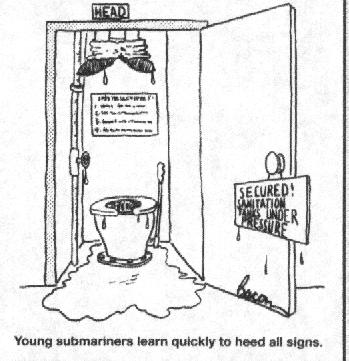
Sea story: “Secure blowing sanitaries!!!”
Sea story: “Battle Stations Missile”
Saving base pay and promotion raises
Where to put your savings while you’re in the military

Does this post help? Sign up for more free military retirement tips via e-mail, Facebook, or Twitter!

Posted in Money Management & Personal Finance | 5 Comments

“What, me worry?”


(I know, I know, that title reference may be a bit historical for some of you. Here’s the link. )

WordPress, this blog’s host, has been running a “PostADay2011” promotion with daily thought-provoking inspirational questions. The kickstarter for Tuesday 28 June was “What have you feared that turned out to be much easier than you expected?

Oddly enough, the #1 answer from the WordPress bloggers seems to be “Setting up a WordPress blog.

But in my case, the question made me think of the #3 fear of all potential early retirees: “But… but… but what will I do all day?!?”

(The #1 and #2 fears of civilian early retirees are finding affordable health insurance and coping with decades of inflation. Most military ERs have solved those issues with Tricare and a COLA pension.  If you’re a veteran without those benefits then you still have to deal with those challenges, but you have the skills & discipline to solve them.)

The short answer to the #3 fear usually materializes a couple of months after early retirement when you wake up one morning, contemplate the busy day ahead of you, and wonder what the heck you were worrying about all those months ago.

But if you’re not ER’d yet then you’re probably skeptical that it’s so easy. (I know I was.) So how do we ERs reassure you that it’s not worth the worry?  How do you educate yourself out of this anxiety?

The first approach is to think back to your carefree childhood. When school was out for the summer, did you have any trouble entertaining yourself? If you were like 99% of the world’s kids & teens then you were going from sunup (or whenever you finally got up) to well past sundown, and you still didn’t want to stop just because it was time for bed. Growing up in my household, our occasional “I’m bored!” whining was a shameless attempt to manipulate our parents into making us do yardwork taking us to the pool or on a trip. When we had our own wheels (and enough money for gas) we found even more things to do.

A second way to look at the issue is to review your “To Do” list. How many weeks would you need to knock out all of those tasks? Once you add in trips to the home-improvement store and a few do-overs, you might want to double the original estimate. Now how long would it take? What about the things you’ve wanted to try but never had the time to even contemplate, let alone plan? Now how long would you need? And would you have to repeat any of those tasks in a few months or next year?

Take the experiment one step further: imagine that you’ve crossed every task off the “To Do” list. (Yeah, I know, you married men think it’s never gonna happen, but humor me with this thought experiment.) What would you do now? Linger over an extra cup of coffee each morning with the morning news or a book? Spend more time with your kids? Exercise more often? Go surfing or play more golf or enjoy other sports? I’m not trying to suggest that you’ll spend hours on every one of these activities every day of your life, but you’ll certainly adopt a more leisurely pace.

Finally, for those of you engineers preferring a more quantitative approach to your problem-solving, start with a blank weekly schedule. (Feel free to spend some time gazing upon it and fantasizing about all the empty space on it– especially the parts that right now are filled with department meetings, mandatory training, and deployment preps.) Start filling in your daily routine– when you’d like to get up, when you’ll be ready to start the day, how much time you should spend on chores, when you’ll run errands, how often you’d like to exercise or play sports or enjoy your hobbies. If you have a family then add in their schedules too, so that you can be there for them yet still carve out plenty of your quality “alone” time. Consult your “To Do” list to break down a few of those monstrously overwhelming tasks into chunks of “20 minutes a day”. Make sure you fill in your new weekly schedule’s after-dinner time, too, even if it’s just a neighborhood walk or watching TV.

Still worried about what you’ll do all day?

Maybe some of you prefer a more experiential approach to your learning. In that case the analysis might be more difficult to set up, but it’s worth the effort. The issue is that you’re going to need a minimum of two weeks’ vacation, and six weeks would be better.

I’m not talking about the chaotic 30 days of leave you take when you’re transferring between duty stations and uprooting your whole life only to transplant it to somewhere else. (For some families that month is even more stressful than deploying to a combat zone!) I’m also not talking about the Great American Family Vacation where you burn hundreds of gallons of gas racing hither & yon across your time zone, taking in all of its sights & attractions. I’m not even talking about the staycation from hell where you paint the house, scrub & re-coat the deck, clean out the garage, and weed/fertilize the lawn.

I’m talking about weeks of unstructured laziness. I suspect that you’ll spend at least the first week catching up on your sleep and reading or watching TV. By the second week you’ll probably be back to a “normal’ sleep schedule and more interested in your surroundings. Feel free to do your normal daily/weekly chores, but don’t tackle any big projects. This might be a great time to review your early-retirement financial plans or to crunch a budget spreadsheet, but don’t turn it into a multi-hour marathon. Spend time on leisurely walks and get a little exercise. If your spouse & kids have time off, too, then spend some quiet family time together. Board games or video gaming are reliable fallbacks, but maybe you’d want to include a trip to the library or the weekly grocery shopping. You’re looking for opportunities to talk together and to enjoy each other’s company without rushing between activities.

As the end of these weeks draws near, think back on what you’ve done. Did you want to spend more weeks doing it? Did you run out of things to do? Were you bored to tears and champing at the bit to get back to the workplace?

If none of the above approaches will work for you, then don’t lose hope– go find Ernie Zelinski. He’s written two famous books on retirement: “The Joy of Not Working”  and “How to Retire Happy, Wild, and Free“.  (Check your local library.)

Each of them offers a couple of hours of light-hearted musings on what it means to be responsible for your own entertainment, along with suggestions on how to take charge. “Happy, Wild, & Free” also includes his “Get-A-Life Tree” brainstorming tool.  You start with the activities that you’re currently enjoying, add in your “To Do” list and your bucket list, and then try to decide how to fit them onto a calendar.

I’m a big fan of the “Get-A-Life Tree” technique, and I’ve recommended it to dozens of people over the years. However, I have to confess that I’ve had a blank copy of it sitting on my desk for over a decade. I meant to fill it out as I was planning my early retirement, but things were too busy. I meant to fill it out when I was on terminal leave, but I was too busy. I meant to fill it out after I retired, but I was surfing. I’ve meant to fill it out the very next time I was looking for something to do, but I’ve never made the time for it. Ironically the “Get-A-Life Tree” has ended up way at the bottom of my “To Do” list, for the extremely unlikely event that all else fails to entertain me.

Use the Tree to jumpstart your own thinking, but don’t feel obligated to complete it. It’s just a tool to help you get going, or something to put on your desk to reassure you when you wonder what you’ll do all day.

One last encouraging story: A good friend has been approaching his significant transition from active duty to early retirement, and I’ve enjoyed watching him work through the process. Several years ago his attitude was “I can’t just rust in the rocking chair. I’ll spend time in the Reserves, get a teaching job, and tackle more rental properties.” A couple years ago he mused “I don’t think I want to hang around the military, but I like the idea of teaching. Maybe a few evening classes a week, but probably not full time. Maybe just one or two more rentals.” Last year it evolved to “I’ll run an online course or two.  Maybe we just bought our last rental property.

Now his retirement is at hand, and his plans are bubbling over with activities. He’s enjoying much more time with his family. He’s coaching his kid’s sports. They’re taking short trips during summer vacation. He’s thinking about surfing lessons (in Hawaii, of course) and Space-A trips to Southeast Asia. He’s not sure how much time he’ll have for online courses or rental properties, but he appreciates having the extra cash available if needed.

I should mention that he hasn’t even networked for a bridge career, yet he’s received several job offers with eye-popping salary numbers. Unfortunately he’s too busy at this stage of his life to accept paid employment…

Related articles:
Myths of military retirement and early retirement
The “fog of work”

Posted in What Do You DO All Day?!? | Leave a comment