Book review: “All The Money In The World”


Are you tired of grubbing for money?

The financial media is gloomier than ever about the prospects of saving enough for retirement. Every day we’re admonished that we’re not saving enough, that we’ll need millions of dollars, that we can’t retire until our 70s, and that we can’t even be sure whether any of today’s numbers will turn into tomorrow’s reality.

Americans are also rumored to be suffering from frugal fatigue. We’re expected to be alert to every little latte factor while using an overwhelming plethora of tools to track our spending, our budget, and our progress toward financial independence.

But when can we start being happy? Are we there yet?
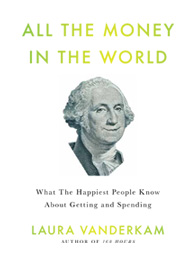
All The Money In The World book cover

Note that George has a smile on his face…

Laura Vanderkam claims that we have more than we think, and we just need to spend it more creatively. Instead of saving all our lives for happily ever after, we can find more ways to deliver little bursts of happiness now. It’ll actually make us feel more satisfied with our progress in saving for retirement, and it will help our lives feel less like deprivation.

Part of the psychology of our relationship with money is that it’s a status marker. We use money (or, more realistically, we borrow it) to show our level of wealth and to compare our progress to the rest of society. Of course the reality-show media has become very good at showing how celebrities are far ahead of all of us and we’ll never catch up. We’ll never have the big mansions or the luxury vehicles– we might not even have the fancy clothes or shoes. After a few years of trying to save for your “future”, you’re tired of being reminded that you’re the only one who seems to have given up your present lifestyle for a future fantasy.

However, it’s just as easy to compare our status to the rest of the world as it is to compare it to “celebrity world”. The global median household net worth is only about $2200, and $61K puts you in the top 10%. Yet in 2007 the American median household net worth was about $120K. Globally, we’re closer to the 1%.

If you’re a servicemember or a veteran, then you already understand that happiness status is relative. You many never spend your life in a mansion or drive a luxury vehicle, but you know exactly how you feel when you don’t get to sleep for two days. Or when you’re living in the field and digging your own toilet. Or when it’s your turn to take a submarine shower– next Tuesday. Or when there’s no fresh fruit for the rest of the month. When you come back to “civilization” then you feel pretty rich for a while, right? Even today, two decades after my last submarine deployment, I still remember an awesome rainfall showerhead in a hotel in Yokosuka, Japan, although the hotel is long gone. I still feel guilty about letting food go to waste. And, yes, I can make lettuce last for six weeks. My spouse says you don’t want to know.

Another psychological issue is the hedonic treadmill. We all tend to have a certain setpoint of happiness, and it’s not affected by money for very long. Interestingly, it also doesn’t take very much money to bump up our happiness level for a little while before it returns to its “normal” level. Research has shown that a thousand dollars won’t boost our happiness level much more or for much longer than a hundred dollars. However, the real advantage of a thousand dollars is that it can be used to deliver ten jolts of hundred-dollar of happiness as well as just one huge jolt.

I read a lot about personal finance and consumerism, yet Vanderkam brought up two examples that I’ve never considered before: weddings and yards.

Everybody “knows” that fiancées are entitled to a diamond engagement ring worth “about two months’ salary”. We’re supposed to spend the “right” amount on wedding rings, the wedding ceremony, the reception, and the honeymoon. We joke about the American version of a wedding dowry, but I didn’t know that the entire industry didn’t really ramp up these “traditions” until the 1930s. States had abolished their 19th-century “breach of promise” laws which enabled women to sue men who didn’t follow through on promises of marriage. When the promise of an engagement lost the force of law, women began to seek a more concrete demonstration of a man’s commitment– just as the diamond industry was struggling with a glut of overproduction. DeBeers persuaded Hollywood to show their stars wearing diamonds and acting out engagement scenes, both on film and in real life. Within one generation a diamond was considered a “traditional” part of an engagement, and the entire wedding industry jumped on the bandwagon. Today’s wedding-planning website TheKnot.com perpetuates the legend with statistics– and a huge online store for planning every detail, right down to personalized (yet perishable) Hershey’s Kisses.

But what about after the honeymoon is literally over? A wedding is one (very long) day but a marriage is a lifetime of challenges. If the average couple spent $5392 on an engagement ring that proved their worth to each other, how else could that “concrete commitment” help their hedonic treadmill? The money could buy over a hundred nights of babysitting alone. The $12K spent on the “average” reception could also pay for nearly five years of housecleaning (until toddlers are hopefully old enough to start cleaning up their own messes). The $2000 wedding flower bill could also buy two hundred $10 bouquets– a monthly flower surprise that could go for well over a decade of inflation-adjusted blooms.

Vanderkam isn’t suggesting that we stop spending money on weddings– only that we spend it more thoughtfully. Buy the engagement ring if it has meaning to you, but avoid the Olympian challenge of matching society’s “average” amount. Have a fun ceremony, but don’t turn it into a major logistics operation stressful day of drama and hysterics. Treat yourself to some time off together, but don’t feel obligated to “do the honeymoon” straight out of a bridal magazine. If you plan your wedding well, then you’ll deliver a great boost of enjoyment to your hedonic treadmill. However, if you also manage not to blow all your assets on that one event then you’ll be able to keep boosting your hedonic treadmill for years. Whether you spend $500 or $50K on the wedding, the boost will deliver about the same amount of happiness for about the same length of time. But if you only spend $500 on the wedding then you’ll be able to spend it on other things that will deliver the same boost– again and again and again.

You can imagine how Vanderkam feels about the American fixation with “as much house as you can afford”, including a green carpet of perfectly manicured grass. If you’re contemplating a weekend of yardwork, then read her “Laughing at the Joneses” chapter first.

She also debunks a popular myth of early retirement: “You can’t retire early if you have kids“. Instead she shows that the marginal cost of the third child can be nearly zero– unless you try to raise each kid as if they’re the only one. Admittedly “marginal cost” is a terrible reason to have children, but “cost” is also the wrong reason to stop having them. Most families make the right decision about the number of children they want (for the right reasons), and Vanderkam shows you how to make the finances work for your family values whether the number is two– or six.

So if you’re spending smaller amounts of money in favor of more frequent doses of happiness, can you retire yet? It depends on your budget. Vanderkam starts with a chapter titled “Don’t Scrimp More, Make More“. When I retired a decade ago, I kept a white-knuckle grip on the purse strings. I “knew” the statistics and the risks, and I was going to make sure that we didn’t overspend a nickel of our budget.

But I should have paid attention to our daughter’s approach. She was only 10 years old at the time, and the word “scrimp” was not in her vocabulary. If she wanted something then she saved up her money until she could afford it, and then she bought it. If she wanted something NOW then she went out and earned more money doing dirty jobs (at home and for the neighbors) until she could afford it. She’s carried that thinking into college, where she earns her “special treats” by giving $12/hour campus tours. She doesn’t have to walk backwards for a few hours just to afford a nice dinner with friends, but she enjoys bragging on her campus and meeting new people. The extra money is a pleasant bonus, and she sees these income opportunities everywhere she goes.

Vanderkam applies the same logic to her chapter on “Rethink Retirement“. She’s not one of the hardcore “Never retire, rewire!” crowd, but she points out that it’s simplistic to expect that your work week will go from decades of 50+ hours to decades of zero. Instead you’ll replace your office environment with self-directed entertainment, and some of those activities might earn you money as well as fulfillment. Or you might completely overhaul your lifestyle to spend your time doing things you enjoy instead of spending money to get things done.

It all sounds so deceptively simple, doesn’t it? In “The Military Guide“, it boils down to ignoring society’s standards and “aligning your spending with your values”. In Vanderkam’s book, it includes an eight-page handbook of exercises to jumpstart your thinking. You have the tools and the supplies– what you really need is the time for thoughtful contemplation and the creativity to find the solutions.All The Money In The World” is a very pleasurable way to reflect on your own situation and recover your creativity.


Related articles:
Book review: “Why We Buy”
Old-school frugal
Do you have affluenza?
Frugal living is not deprivation
Book review: “Your Retirement Quest”
Book review: “1001 Things to Love About Military Life”
Retiring early– with kids?

Does this post help?

Sign up for more free tips on financial independence and military retirement by e-mail, Facebook, or Twitter!

Posted in Reviews | 6 Comments

Lifestyles in early retirement: Hawaii long-term travel


Last week’s post on long-term retirement travel talked about different air & lodging resources for seeing the world. I’ve also added several military websites to the sidebar “Travel links” section. Like blogger Jan suggested a couple of weeks ago, it’s a great area for showing advertising from military lodging & recreation centers. I’d much rather have those advertising dollars for military charities than from payday loan companies.

Waianae sunset over Pearl Harbor

But for today’s post, a reader has a different slant on military travel:

My wife and I would like to be able to spend a month or two a year in Hawaii as well, to get a dose of sunshine! We’ll see how it all works out. Any advice for a couple of military retirees on how to live frugally in Hawaii for a couple of months per year? Working or volunteering somewhere in return for cheap housing?

Great question, thanks! My advice comes from these basics: cheap airfare, traveling light, finding long-term lodging, and living like a local.


Flights

My first advice on travel to the islands would be Space A. Your flight might land on the reef runway next to Honolulu International Airport, but you’ll end up on Oahu’s Joint Base Pearl Harbor Hickam. It’s possible (but unlikely) that a Navy P-3 might make the flight from the Mainland to land at Marine Corps Base Hawaii near Kaneohe. (Unless you’re a Navy aviator with deep contacts in the maritime surveillance community, I wouldn’t count on this option.) Those are your only military choices for getting to Hawaii, and you’ll have to transfer to a commercial airline (or a boat!) to get to the neighbor islands.

If you’re staying in Hawaii for a few months, and if you’re flexible on your travel dates, then you may be able to take advantage of airline pricing. In general, Hawaii flights are more expensive in the summer months when kids are out of school. June and July are also particularly busy for honeymoon travel. However, the most expensive flights to Hawaii are during the winter. The colder it is on the Mainland, the more the airlines charge you to come here. Late November through mid-February is “high season” for travel and lodging, so you’ll find more bargains if you can get here in September-October and leave in March-April.

If you don’t have to arrive on a particular date, and if you’re traveling light (no checked luggage), then be open to the possibility of getting bumped. Flights from Los Angeles and San Francisco are particularly good candidates for this option. You may spend several extra hours (or even overnight) at the airport, but you may be able to negotiate hotel/food vouchers and discounts on your next trip.


Houses, condos, cabins, and camping

Last week’s post talked about military lodging, and the “Travel links” sidebar has over a dozen links to military lodging & vacation websites. If you’re planning to live here for longer, though, I’m going to recommend other options. The advantage of these short-term military lodging options is that you have a starting point for checking out neighborhoods and rental ads before you make a longer-term choice.

The cheapest Hawaii choices are house swapping and house sitting. Of course this is challenging if you’re traveling with four kids, but older singles (and couples) are generally regarded as good candidates. My spouse and I have never done a house-sitting gig or swapped houses, so I’m going to defer to Sydney Lagier’s considerable experience and Billy & Akaisha Kaderli’s network with links that I’ve read on their websites. The largest and most popular house sitting and swapping sites are House Carers, Trusted Housesitters, Caretaker Gazette, and Home Exchange. (Of course for Home Exchange you actually have to have a home that someone from Hawaii would like to visit, too.) You’ll want to do your due diligence on these sites to learn the rules and the challenges of getting a Hawaii home. I doubt that you’ll be sitting in Kahala or Waikiki, but you could certainly end up elsewhere on Oahu or in a more rural location on a neighbor island. Make sure you understand your transportation options, too– the homeowner might not mind you sleeping in “their” bed but they could draw the line at driving their car. Bus service is available on Oahu, especially in Honolulu and other major neighbor-island towns, but as you get further away from the urban areas you’re going to want to borrow or rent your transportation.

Hawaii has a large snowbird population, and many of them are condo owners trying to rent out their places during the rest of the year. If you’re able to work around the snowbird months, or if you can find a snowbird who’s not visiting Hawaii that year, then you’ll be able to get a discount rental. We’ve seen the best success with Vacation Rentals by Owner and AirBnB. A third option is the military Automated Housing Referral Network, although this is mostly seeking military tenants for long-term rental properties near military bases. (We’ve used AHRN several times to find tenants for our rental property.) AHRN landlords would probably prefer at least a six-month lease but some of them will go month-to-month for Reservists or temporary duty personnel. Craigslist might also work if you know the neighborhoods and are willing to deal with the occasional eccentric landlord or a scammer.

Another option is lodging at military recreation areas, state campsites, and national parks. (See a few paragraphs further down for working at a national park.) You’ll be in “rustic” cabins or tent camping, and the length of your stay may be limited by high demand or agency policies. You’ll also need to carefully consider your transportation needs– for example the nearest bus stop to the White Plains Beach cabins is over two miles from the beach. Pokai Bay beach cabins are in Waianae, over an hour away from Waikiki. Kilauea Military Camp (on the Big Island) is near the middle of the island and at altitude– winter temperatures can dip down into the 40s. It’s also an hour away from Kailua-Kona and Hilo. Oh, and there’s a live volcano erupting nearby… but it’s been well-behaved for nearly three decades. No worries!

I’m sorry to say that camping in Hawaii may not be a fantasy experience. Camping is viewed as a way to “live at the beach” for quality fishing and surfing and partying, and evening noise can be a problem. Gasoline generators and sound systems can be an issue, and camp security is not always immediately available. Some state campsites and beaches have a persistent homeless population. The best tent camping I’ve experienced has been at White Plains Beach, Bellows Air Force Station, and Haleakala National Park. Camping in Haleakala is for hard-core backpackers only– at altitude, with no transportation or open fires or potable water.


Transportation, entertainment, & food

Part of the location equation is also transportation. If you’re in Waikiki then The Bus (or, as it’s more popularly known, “Da Bus”) will take you just about anywhere you want to go. Elsewhere on Oahu the nearest military base will have a car rental franchise (no airport taxes/fees). Car rentals on neighbor islands can be expensive, and unfortunately there are no RentAWreck franchises in the islands. Your maximum flexibility for minimum price in the more remote neighborhoods might be bicycles, scooters, and short-term rentals.

Once you’re here, entertainment is relatively cheap (especially outdoors). You’re living in one of the world’s biggest outdoor recreation areas where you’re only limited by water, sunscreen, and protective clothing. Oahu has an extensive network of bicycle trails (particularly on the North Shore and around Pearl Harbor) and every island has miles of hiking and beaches. If you don’t know how to surf, then this is the place to learn. Every beach rental franchise has someone available for a lesson, and military recreation areas (like White Plains Beach) will offer very cheap lessons from the lifeguards. Kayaks and stand-up paddleboards are also easy to learn, with different muscle groups and different reflexes. If you’re hooked then there’s a lively Craigslist market in used gear, and almost every surfboard shop sells reconditioned used equipment.

Living in Hawaii long-term means eating local. If you’re expecting a daily breakfast of box cereal and cow’s milk, then you will pay dearly for the privilege (especially on neighbor islands). Lunchmeat can be surprisingly expensive, too. Of course you’ll be able to find a wide variety of fish (both fresh & frozen) as well as local beef, pork, & chicken. Vegetables are plentiful & cheap, too, if you eat the local versions of greens & fibers. You can find potatoes but you could substitute yams or, for a color thrill, Okinawan sweet potato. Poi & taro products are an acquired taste but they’re easy to find, and rice is cheap. If you’re expecting to eat raspberries, blueberries, or cranberries then you’ll pay by the ounce. However, the islands grow strawberries and a surprising variety of the most exotic fruits you’ve never eaten, far beyond the typical mango & papaya options. Lilikoi, guava, lychee, and rambutan are plentiful at certain times of the year. One of your most entertaining local activities might be an hour browsing the local grocery store for menu ideas.

Restaurant dining can be expensive but there are plenty of kau kau wagons. Military bases, of course, offer commissaries and cheaper food courts. Grocery stores (outside Waikiki) help you handle your own cooking, but you’d be using loyalty cards and shopping for local foods. Hawaii has big-box store chains, too, but your lodging would have to have the storage for you to stock up on larger quantities.

Those Hawaii vacation options give you the greatest range of flexibility and recreation opportunities. But what if you’re willing to trade a little labor for your lodging and transportation?


Voluntourism and labor exchanges

The National Park Service has a wide Mainland network of volunteer labor and seasonal employment, and some of that is available here. Both Volcanoes National Park and Haleakala National Park have occasional temporary positions. If you’ve participated in this program on the Mainland then you may be ready to jump right in, but otherwise I’d advise spending a week or two at these locations exploring the programs and the facilities.

Hawaii is a popular destination for voluntourism, and most of them are outdoors working on the land or with wildlife. One of the most thorough summaries of organizations and opportunities is the Let’s Go Hawaii site, which links to other organizations and their programs. Unfortunately most of them are short-term projects, although if you’ve worked with a particular organization in other locations then you may be able to use those contacts to your Hawaii advantage. I haven’t personally worked with these organizations and I can’t vouch for their credibility or their popularity.

Another intriguing possibility is WWOOFing. By “intriguing” I mean “Sounds interesting but I’ve never done it; could be a lot of hard work.” “World Wide Opportunities on Organic Farms” is the parent organization for linking volunteers to agricultural projects in exchange for room & board. If you’re interested in sustainable living and permaculture then this is a wonderful way to learn the techniques and the lifestyle. In its harshest terms, if you’re able to weed for several hours per day then you have the rest of the day off with food & lodging. I found another review of Hawaii WWOOFing at the BootsnAll indie travel website.

If you’re willing to do your own networking then you can start at Help Exchange, where people and local organizations offer homes or nearby lodging in exchange for project work. Keep in mind that these tend to be private homeowners, businesses, farms, or monasteries looking for labor in exchange for room & board. While it’s extremely affordable, and you’re living in paradise, there will be a certain degree of occupational toil and drudgery. Again I can’t vouch for any of these organizations, and I strongly advise visiting them in person before making any decisions. This might be a good idea for your third or fourth trip to the islands, but I’d hesitate to make a commitment just based on a website and a phone call.

If you have more questions about these opportunities, or if I can make a drive-by visit on Oahu to a particular group or site, then please use the “Contact Me” box or send me an e-mail. I’d like to thank reader Chris for asking these questions. I learned a lot about these programs, and I enjoyed the research!


Related articles:
Lifestyles in military retirement: Living in Hawaii
During retirement: where do you want to go next?
U.S. Air Force Air Mobility Command
Armed Forces Recreation Center Resorts
Department of Defense Lodging
Armed Forces Vacation Club
Billy & Akaisha Kaderli’s “Retire Early Lifestyle”
Paul & Vicki Terhorst’s travel site
The “Wandering Wahls” blog

Does this post help? Sign up for more free military retirement tips by e-mail, Facebook, or Twitter!

Posted in Travel | 2 Comments

Lifestyles in early retirement: long-term travel


Veteran blogger Janette from “Ground Level in Kansas” offered her feedback on the “WordAds” post about types of ads that readers want from this site:

I come here not only for me (spouse of retired Army), but for my kids (Marine family and Army family). 20 years in– we knew nothing of MOAA, Military Advantage, PenFed, or any of the retiree travel clubs. How about advertising from the Navy Lodge or Hale Koa? Your sidebar links are so good I sometimes stop by just to pick one up (knowing it would be here….) I wouldn’t mind them looking more like advertisements so I can see what they offer.

Just saying, I think you have a lot to offer and need to head military!

I also have “Contact Me” feedback from a reader:

Just wanted to tell you that I enjoyed the book very much and have left it on my desk at work for others to see and hopefully get curious about. Also wanted to say “thanks” for being a trailblazer. It seems I’m obsessed these days with financial independence and retiring at 42, once my military career is done. It’s incredibly helpful to see and read about people like you who have done the same. My wife and I would like to be able to spend a month or two a year in Hawaii as well, to get a dose of sunshine! We’ll see how it all works out. Any advice for a couple of early retired folks on how to live frugally in Hawaii for a couple of months per year? Working or volunteering somewhere in return for cheap housing?

Thanks, guys, I admit that military travel hasn’t been on the top of my mind lately. (Why would we ever leave these islands?!?) However, the military is a wonderful way to see the world (especially when the assignment officer has sent you there)– as well as a great advertising category. Let me start by mentioning the new links I’ve added in the sidebar, and then I’ll talk about one example that I actually know something about: Hawaii.


Perpetual travel

Billy & Akaisha Kaderli and Paul & Vicki Terhorst are the world-class pioneers of perpetual travel and long-term stays. They spend most of their years overseas, but Tom Wahl and the Wandering Wahls spent months traveling across the U.S. in a recreational vehicle deciding where they’d like to settle… for now. Those families have lots of advice and details on the basics that I’ll mention here: cheap airfare, traveling light, finding long-term lodging, and living like a local.


Space A

I’ve added four big-picture links to the sidebar. (Please let me know your favorites, and I’ll add them too.) First up is the Air Force’s official Space-A website for worldwide travel on military aircraft. My spouse and I have hung out in our fair share of passenger terminals around the world (and slept in some of them) waiting for “the next flight out” to get us closer to our destination. The prices are great and the box lunches… well, that’s part of the adventure. The Internet has largely replaced the last millennium’s grease-pencil status boards, but you should also phone ahead for each base’s policies on releasing flight information.

Space A can be challenging for servicemembers, even with a 30-day leave schedule. Families will need to think ahead about kid-friendly food & lodging contingencies if the aircraft breaks down on a small base in the middle of nowhere. But Space A is a dream come true for military retirees who have all year to travel and who don’t particularly care where they’re going. Even during a drawdown when fuel is tight, the popular routes still need to carry people and supplies to remote bases around the world. If you’re flexible then the Air Mobility Command can get you near your destination, and usually sooner rather than later.


Military lodging

Next up are the Armed Forces Recreation Centers (like the Hale Koa Hotel that Jan mentioned). There are actually five hotels worldwide near family-friendly cities offering low rates (based on military rank). They cater to servicemembers and their families but they may also allow civilians (your relatives) to accompany you as well. The centers are very popular and they tend to fill up months in advance, but if you’re in the area then you can frequently take advantage of their last-minute cancellations. Use their websites to research your plans, but also phone their reservations centers to ask about their wait lists. Many times we’ve been told that the Hale Koa was full weeks in advance, joined the wait list, and then been called only a day or two before our stay began.

Military lodging is the next-best accommodation to a recreation center, but there are a lot more of them. The starting point is the DoD Military Lodging website where you can look up Navy Lodges, Inns of the Corps, Air Force Inns,and Army Lodges. Once again they fill up fast, but ask about their wait lists and last-minute cancellations. Their staff also knows the surrounding area: if they don’t have a room then they may be able to recommend a night or two in the military base’s visiting officer’s quarters or a local hotel. There are fantastic beach cottages at Bellows, Kaneohe, Waianae, and Kalaeloa (where the White Plains Beach cabins are on my favorite surf break).


Civilian lodging

One last link: the Armed Forces Vacation Club. You have to validate your military status (with your ID card) before you can sign up, but then you’re able to take advantage of consolidated deals at worldwide vacation resorts. You’re generally obligated to stay for a week but prices start about $55/night. AFVC is not sponsored or supported by the military, but they’re a great source of MWR/ITT discounts and other deals. I won’t pretend that these resorts have anything to do with the “real” local culture, but they’re another cheap way to get started on your long-term lodging research.

Admittedly these good deals are available to servicemembers & retirees, but not to all military veterans. (I’m blogging for a very diverse audience, and their benefits don’t always overlap.) However, the lodges are in business to fill rooms and make money. If you have a military affiliation or a veteran’s ID, then it’s worth parsing their websites and speaking to their reservations desks. You probably won’t be able to fly Space A but you may be able to get a waiver on the lodging policies.

These are just the military-benefits options. If you can stay longer, or if you’re able to do more research before you go, then there are even cheaper lodging options. The challenge is making your transportation dates match your lodging dates, and these military lodging options can help cover the gaps while you’re arranging the really cheap local lodging deals. Even if you’re financially independent, travel is much more rewarding when you can get away from the resort and settle into the local community.

The Kaderlis, Terhorsts, and Wahls have found dozens of civilian ways to spend months on travel at very low prices without military benefits. I’ll talk a little about their advice in the next post, but please visit their websites (linked below) for a wealth of tips & tricks on living like locals instead of spending like a tourist.

Next week: living long-term and cheap in Hawaii.


Related articles & websites:
Lifestyles in military retirement: Living in Hawaii
During retirement: where do you want to go next?
U.S. Air Force Air Mobility Command
Armed Forces Recreation Center Resorts
Department of Defense Lodging
Armed Forces Vacation Club
Billy & Akaisha Kaderli’s “Retire Early Lifestyle”
Paul & Vicki Terhorst’s travel site
The “Wandering Wahls” blog

Does this post help? Sign up for more free military retirement tips by e-mail, Facebook, or Twitter!

Posted in Military Retirement, Travel | Leave a comment

Lifestyles in Early Retirement: Habits and getting things done


Charles Duhigg’s new book, “The Power of Habit”, already has 120 people on the waiting list at the Hawaii State Library system. (That means it’s popular!) As part of his book marketing, last week he put up a guest post about spending habits on Get Rich Slowly. So while I’m waiting to read the book, I thought I’d blog about retirement habits.

One of the quotes from Duhigg’s guest post made an impact:

Most of the choices we make each day may feel like the products of well-considered decision making, but they’re not. They’re habits. And though each habit means little on its own, over time, how we spend our money — as well as the meals we order, how often we exercise, and the way we organize our work routines — have enormous impacts on our health, productivity, financial security, and happiness.

He doesn’t mention retirement, but habits have the same enormous impacts there too.

Apparently the human brain has evolved to favor running on autopilot. If we don’t have to think about every little thing then we use less energy and we respond faster. Regrettably we don’t wake up each morning, look at the schedule on our nightstand (the one we wrote the night before), and spend the entire day carefully measuring our accomplishments against the clock and the list. Instead we start our morning habits that get us going while we’re trying to wake up. Instead of focusing our entire attention on a specific task like fixing breakfast, we’re thinking about other things. All day long we respond almost unconsciously to behavioral cues around us. Habits don’t just derail our train of thought– most of the time there’s not even a train on the thinking tracks.

Part of “habit” is avoidance. If you have to do something during your “routine” that you’d rather not do, then you’re going to unconsciously keep finding other “higher priority” things to do first. Eventually your unpopular task becomes a priority only because it’s a deadline crisis. We don’t want to live that way, but somehow there’s always something that we know we should be doing and yet don’t get started on until it’s almost too late.

Luckily for most of our lives, an externally imposed autopilot routine keeps us more or less on schedule. When we’re kids, it’s our parents and the school system. When we transition to the workplace, it’s an extension of the same routine with slightly different tasks. Even when we’re out of the workplace for the rest of the day (or a weekend, or a vacation) and we decide that “We don’t want to do anything!” we’re still carrying out our own personal routines. They may involve TVs and frosty beverages instead of workplace reports, but they’re still a habit.

You can see where this is going. For most of your life, your daily routine is imposed upon you by life’s priorities. You fill in the rest of the time with your habits. You only spend a few minutes a day planning the schedule for tomorrow, and you may not ever get around to changing your habits. What happens when you retire?

The popular joke about retirement is that you have to be responsible for your own entertainment. Well, the reality is even harsher than that: When you retire, you have to be responsible for your own habits.

If financial independence really gave us control of our own time, then we’d have our lives squared away. We’d spend an hour a day at the gym, we’d be eating a healthy diet, we’d be learning our fourth language, and we’d have read all those books on our “great literature” list. The reality is that retirement gives us even more time to spend on the habits that we’ve developed during our lives. If we tend to have the “habits” of eating too much food, drinking too much alcohol, and watching too much TV… then in retirement we’re going to be spending our time on those habits.

The other side of “making new habits” is trying too hard. If you decide to overhaul your life and fix all of your bad habits at once, then you’re rapidly going to wear yourself out. Part of that is the problem of “decision fatigue“– instead of living by habit, every new situation that you put yourself in requires you to make a new choice. Before long you’re tired of making the “right” choice, you use up all your willpower, you revert to your old bad habits (unconsciously or deliberately!) and you feel like a failure.

Retirement is still a great time to fix all those bad habits, but take it slow. Focus on one habit at a time. Make a list if you want, but only work on one habit from the list at a time. Once you’ve created that new habit and it’s really working for you then you’re ready to start on the next. Be ready for setbacks, too. You’re still learning how to be a retiree, and it may take you some time to figure out your new life. You may need different habits than you expected, or you may take on a new role in managing your household or your family duties.

I thought I had my new retirement habits all figured out, but I’m still learning.

Six months ago we completed a major demolition renovation of our familyroom. We’d been planning it for nearly a decade, and when the time was right we made it happen. In retrospect the project went very well and the contractors did a great job, but life was total chaos for several months. Every day was noisy, sweaty, and cramped. We completely exhausted ourselves trying to keep up with the daily cleaning and painting and problems decisions, and at night our sleep would be interrupted by plastic flapping in the breeze– or by a rodent exploring the new work. We stopped working out. I even dropped out of taekwondo training for a few months.

I eventually stepped on a weight scale realized that I needed to get back to taekwondo. I actually missed it and wanted to get back to it. However, after seven years of training I’d seen a number of martial artists go through that same restart, and I’d watched most of them fail at it. They literally tried to jump right back in to a workout, and they’d quickly wear out or even injure themselves.

By this point I was writing every morning for at least 20 minutes, and that habit was going well. However, I needed to add the taekwondo habit back into my life. Instead of starting each morning with the computer, I started it with basic stretches. After 10 minutes of that I’d get on the computer and start my usual routine of writing.

Some mornings that daily stretching would take 15 minutes, but I knew I needed to keep working on it. After two weeks I was surprised to notice how good I felt when I started writing. I used to sit down at the computer while I was still waking up, perhaps favoring a sore muscle or even just yawning for a minute. Now I was relaxed, awake, and ready to work.

For two more weeks, I kept stretching. I also added in a few minutes of practicing my taekwondo forms. By now I’ve learned over a dozen forms, but I still needed to spend time with my training books and videos.

I also deliberately told my instructor the date that I’d return to training. Now I was committed, and I had a deadline. There was no way that I’d try to make up an excuse to avoid it.

I returned to taekwondo two months ago, and it’s going well. Surprisingly, the break let my body heal a chronic injury. The month of stretching and forms practice helped me avoid starting any new injuries. I’m much more flexible and I’m (finally) able to hit a couple of advanced moves. I’ve learned my fifth black-belt form, too.

But more importantly, I’m still stretching most mornings and I’m still reviewing my forms. I’ve “cut back” that morning routine to just 4-5 times a week, but I look forward to it. It’s become part of what I do… and it’s a habit.

Another indulgence I carried into retirement was Windows Solitaire. It’s actually a minor rebellion because my military commands forbade even having these little casual games on workplace computers, let alone using them.

However, even that little amusement can become too much of a good thing. When I’d be waiting for my computer to start up a program or a website to load up, I’d distract my impatience with a little Solitaire. After a few years I noticed that my competitive nature meant that I’d spend 15-30 minutes getting my score up instead of doing my computer work. If I was tired or if the writing wasn’t going well, then I’d spend an hour pondering the writing problem playing Solitaire while I was waiting for inspiration to strike.

I inadvertently got rid of the need for the habit: I finally upgraded our PC to Windows7. It’s much faster. There’s no need to play Solitaire while I’m waiting for the operating system or the Web browser to catch up.

I was curious whether I could break the habit, so I deleted the Solitaire shortcut from my desktop. I could still go find the file and start it up, but that would take more effort than just clicking the desktop icon or the Start menu.

However, having to find the file was a huge revelation: I’d been clicking that little icon a dozen times a day. Sometimes it had been frustration with the computer, but mostly it was a habit that had grown out of control. It’s been three weeks so far, and I miss it less every day, but I still miss it. I know now, though, that I’m going to break the habit. I’m going to add a couple more gigabytes of RAM to this old machine to help speed things up even more, but I’ve also learned that I need to take an occasional writing break to do something else.

Next week marks my 10th year of retirement. You would think that I’d have it all figured out by now, but apparently I’m still learning.

Those little successes over the past few months have added up, and I’m clearing out a lot of the project backlog. Letters are getting written, research is getting finished, new plans are being developed. I feel much more productive. I enjoy seeing all the things that I’m getting done, and I’m looking forward to more.

Now I just have to wait for those other 120 readers to finish Duhigg’s book…

Related articles:
Retirement: relax, reconnect and re-engage
Update to “Just Write It”
Retirement: don’t recreate your old environment

Does this post help? Sign up for more free military retirement tips by e-mail, Facebook, or Twitter!

Posted in Military Retirement | 5 Comments

Book review: “Why We Buy”


I came across this classic while reading about frugal lifestyles and debt payoff. The author talks about retail stores and merchandising and marketing, but he unintentionally offers another benefit. If you understand how the stores are marketing to you, then you can understand why you buy. You’ll have more control over what you buy.

When Paco Underhill started his shopping research back in the late 1970s, he used college students to carry out anthropology field studies with clipboards and video cameras. They tracked shoppers moving through the stores, watching how they interacted with the layout and the products. Underhill’s teams used their video and data to prove to the disbelieving store executives what problems the shoppers had– and then they used the same tools to see how the solutions were working.

That last paragraph makes it sound so simple, but unless you’re obsessed with human behavior then the study of shopping is actually mind-numbingly boring. Underhill’s biggest challenge in the early days was finding staff who could observe all the significant aspects of the customer’s behavior and get the data. Later, when they’d go over the raw information, they’d discover that they needed other details or that they needed to study new aspects of consumer behavior. Back to the store to generate more data!

Then there’s the whole problem of observing the customers without affecting their behavior. (Underhill says that alert kids are usually the first to figure it out.) On the rare occasions when researchers actually talked with the customers, they’d find out that their subjects don’t remember their own behavior either. If Underhill’s staff asked customers how long they’d shopped or what drove their decision, the customer would happily tell them– and it would usually be a different answer than what had just been observed on video.

Underhill’s biggest challenge was proving to skeptical retailers that they could do it better. The store managers usually felt that they knew their stores better than any consultant. (Usually the data proved them embarrassingly wrong.) Even the cashiers and stock clerks, who are at the forefront of the daily discovery, would lack the experience to realize how their front-line decisions would attract some customers and turn others away. Advertisers and graphics designers were the worst to convince– their products looked great in the studio and during the CEO’s review, but their flaws weren’t usually detected until they were already out on the sales floor.

Underhill’s company, Envirosell, barely scraped by for a decade. (When you’re schooling your customers on their own stores, they’re not eager to tell everyone about your business.) Even when he was able to prove what could be done better (by before-and-after observations and sales data), retailers didn’t want to hear the news. Executive egos, headquarters politics, corporate bureaucracy, logistics expenses, and cultural bias usually conspired to subvert all but the most easily adopted fixes. Underhill could rarely persuade the execs to try anything really innovative, and that always led to a protracted debate over how the corporation would pay for the capital expense of experimenting with something new.

Envirosell was finally “discovered” by the media in the 1990s. Eventually a young writer, Malcolm Gladwell, wrote a hugely popular profile of the company before going on to become a hugely popular author in his own regard. As the business grew, Underhill began researching overseas retailers for new ideas to use in American stores. After a few years he began licensing Envirosell teams in those other countries to apply some aspects of American practices. The payoff was leveraged when he was able to use other country’s retailing techniques across borders and even across continents. American executives might argue endlessly about how Wal-Mart was doing a better job than Costco (or not), but they had to defer to Underhill’s experience on Tesco or Kojima.

The 2009 edition of “Why We Buy” (at your local public library, of course) has an updated section on Internet retailing. It just scratches the surface of social media marketing, but Underhill has a wealth of experience to share about online selling and how websites entice customers into an actual store. It turns out that Internet marketing & retailing is not being done very well, either, but it succeeds because brick & mortar operations are doing it so much worse.

Once Underhill has taken you through Envirosell’s research and the mechanics of shopping, he covers the demographics. You’d expect his gender descriptions of the differences in how men and women shop, but he also explains how middle-age folks, elders, and kids go shopping. Everyone wants to have “their” products at the right height and within easy reach, and everyone wants information on labels or signs. However, the similarities end there, and retailers have to decide what customers they’re marketing to. It’s not always obvious, and it’s not easy to execute.

However, it’s not just the store’s layout and its selection of merchandise. It’s also how the employees interact with the customers, whether clerks help shoppers make decisions or ignore them, and how quickly the purchase moves through the cash-register line.

It’s a fascinating story of human behavior. It’s an interesting tale of how an entrepreneur invented a whole new category of research and consulting and then grew the business to a worldwide powerhouse. However, the book is also a self-defense manual for shoppers.

After reading “Why We Buy”, you’ll understand your own shopper behavior– especially if you haven’t even been aware of it. You’ll understand why some stores always make you feel at home and why others annoy you the moment you enter the parking lot. You’ll appreciate the store’s efforts to make it easier for you to buy. You’ll also be more wary of how your “shopper emotions” are being manipulated while you’re occupied with looking, listening, and touching. You’ll know when you’re in the “wrong” store for your behavior and preferences, and you’ll know how to get the customer service you want. You’ll be a better negotiator and you’ll feel more in control of your impulses. You’ll learn better ways to shop over the Internet, even if you have to go to the physical store for the actual buying. If you’re a parent then you’ll be keenly aware of how your kids are affected by the marketing, and you can even show them how the tricks are done.

When you’re saving for financial independence, you’re already trying to track your spending and figure out your budget. You may be able to see where the money is going, but you may not understand how to change your behavior. You won’t get rich by cutting out the daily latte, but this book will teach you how to avoid being manipulated by marketing. You’ll even enjoy observing the retailer’s tactics, both in the store and online, and you’ll learn how to find the bargains that are important to you. Not only will you be a more efficient and effective shopper, but you’ll actually spend less. Once you’ve figured out how retailers are pushing your buttons, you’ll be able to align your spending to your own values– not theirs!

Now I need to reserve my library copy of “What Women Want”.  No, not that book.  I’m talking about Paco Underhill’s latest, “The Science of Female Shopping“…

Related articles:
Completely worth the money
A complete waste of money
Book review: Stop Acting Rich
Five Money Missteps
Frugal living is not deprivation
Simple ways to start saving

Does this post help? Sign up for more free military retirement tips by e-mail, Facebook, or Twitter!

Posted in Reviews | Leave a comment